Friedemann Johannes Wieland - Per Tutti (2018)
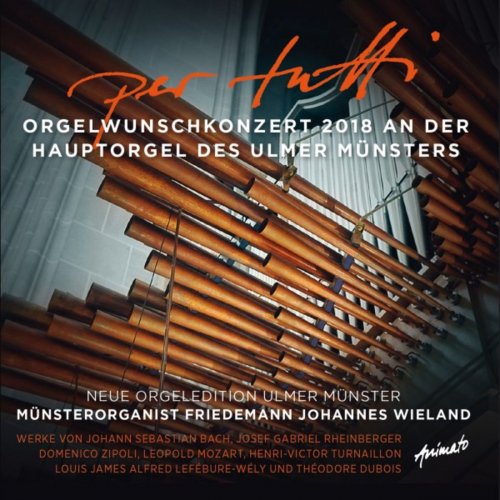
Artist: Friedemann Johannes Wieland
Title: Per Tutti
Year Of Release: 2018
Label: Bauer Studios
Genre: Classical
Quality: FLAC (tracks)
Total Time: 76:43 min
Total Size: 337 MB
WebSite: Album Preview
Tracklist:Title: Per Tutti
Year Of Release: 2018
Label: Bauer Studios
Genre: Classical
Quality: FLAC (tracks)
Total Time: 76:43 min
Total Size: 337 MB
WebSite: Album Preview
01. Passacaglia et Fuga in C BWV 582
02. Toccata in D
03. Pastorale in C
04. Introduction et Marche
05. Boléro de concert, Op. 166
06. "Der Morgen und der Abend" - 12 Musikstücke für das Hornwerk ("salzburger Stier") der Festung Hohensalzburg: Für den Jenner: Aria [Eberlin]
07. "Der Morgen und der Abend" - 12 Musikstücke für das Hornwerk ("salzburger Stier") der Festung Hohensalzburg: Für den Hornung: Die Fastnacht [Mozart]
08. "Der Morgen und der Abend" - 12 Musikstücke für das Hornwerk ("salzburger Stier") der Festung Hohensalzburg: Für den Merz: Adagio [Mozart] / Einige [Sechs] Veränderungen des Stückes für den Merz [Mozart]
09. "Der Morgen und der Abend" - 12 Musikstücke für das Hornwerk ("salzburger Stier") der Festung Hohensalzburg: Für den April: Menueto [Eberlin]
10. "Der Morgen und der Abend" - 12 Musikstücke für das Hornwerk ("salzburger Stier") der Festung Hohensalzburg: Für den May: Menueto Pastorello [Mozart]
11. "Der Morgen und der Abend" - 12 Musikstücke für das Hornwerk ("salzburger Stier") der Festung Hohensalzburg: Für den Brachmonat: Scherzo [Mozart]
12. "Der Morgen und der Abend" - 12 Musikstücke für das Hornwerk ("salzburger Stier") der Festung Hohensalzburg: Für den Heumonat: Menueto [Mozart]
13. "Der Morgen und der Abend" - 12 Musikstücke für das Hornwerk ("salzburger Stier") der Festung Hohensalzburg: Für den Augustmonat: Aria [Eberlin]
14. "Der Morgen und der Abend" - 12 Musikstücke für das Hornwerk ("salzburger Stier") der Festung Hohensalzburg: Für den Herbstmonat: Die Jagd [Mozart]
15. "Der Morgen und der Abend" - 12 Musikstücke für das Hornwerk ("salzburger Stier") der Festung Hohensalzburg: Für den Weinmonat: Menueto [Mozart]
16. "Der Morgen und der Abend" - 12 Musikstücke für das Hornwerk ("salzburger Stier") der Festung Hohensalzburg: Für den Wintermonat: Menueto [Eberlin]
17. "Der Morgen und der Abend" - 12 Musikstücke für das Hornwerk ("salzburger Stier") der Festung Hohensalzburg: Für den Christmonat: Das Wiegenlied [Eberlin]
18. Orgelsonate No. 11, Op. 148: I. Satz Agitato
19. Orgelsonate No. 11, Op. 148: II. Satz Cantilene
20. Toccata in G
In the series "New Organ Edition Ulmer Münster" Münster organist Friedemann Johannes Wieland hereby presents the third recording.
The compilation of the well-rehearsed program consists exclusively of listener requests, which they had wished for the traditional organ wish concert in the Advent in the past years.
Another focus of the program was the organist's wish to depict the diversity of the main organ in Ulm Minster: filigree works of the Baroque and Classical era alternate with the rich sounds of German and French organ romance.
And so the CD title "PER TUTTI" reflects the conception and content of this CD without wanting to appeal: full, full-bodied sounds, soft tones and a work selection in which every organ friend finds himself.
In addition, this CD contains two German first recordings: Henri-Victor's "Introduction et Marche" and "Leopold Mozart / Johann Ernst Eberlin's" The Morning and the Evening ".
The CD program begins with the "Passacaglia in C" by Johann Sebastian Bach: The Ostinatothema is being developed in 21 variations, which will be continued in the following fugue in 12 thematic assignments.
Domenico Zipoli will perform the "Toccata in D" and the "Pastorale in C". The Toccata presents a virtuoso variety of sounds, while the Pastorale swings calmly over a pedal point. A short, cheerful middle part leads to a chromatically enriched variant of the beginning part.
Two works of French organ romance follow. The "Introduction et Marche" by Henri-Victor Turnaillon unfolds magnificent sounds of the tongue parts, while Louis James Alfred Lefébure-Wély's "Boléro de concert" presents the cheerful and humorous side of this era.
This is followed by the cycle "The Evening and the Morning", 12 pieces of music for the Hornwerk ("Salzburg Bull") of the Hohensalzburg Fortress. The Hornwerk is a 200-pipe drum organ that sounds three times a day. For each month, L. Mozart and Eberlin have composed a suitable sentence in their commissioned work, and added a variation cycle to March.
The first two movements from Organ Sonata No. 11, op. 148 by Joseph Gabriel Rheinberger then depict the German organ romance. While in the first movement, chromatic progression and modulations dominate "agitato," the "cantilena" flows calmly and atmospherically with its beautiful theme.
The conclusion of the CD program is Théodore Dubois' "Toccata in G", whose sonic splendor and virtuosity are the main reason for their great popularity.
The main organ of the Ulmer Münster presents itself filigree, differentiated and sometimes chamber music in the typical spatial sound of the cathedral. In the registrations of the compositions there are some surprising and unique sound combinations, which also underline the peculiarity of this instrument.
Not only musically, but also in terms of recording, all stops were drawn for this recording - with the great goal of bringing the ever-present polyphony of music and the extremely dynamic sound spectrum of the instrument to full advantage in this overpowering space.
The compilation of the well-rehearsed program consists exclusively of listener requests, which they had wished for the traditional organ wish concert in the Advent in the past years.
Another focus of the program was the organist's wish to depict the diversity of the main organ in Ulm Minster: filigree works of the Baroque and Classical era alternate with the rich sounds of German and French organ romance.
And so the CD title "PER TUTTI" reflects the conception and content of this CD without wanting to appeal: full, full-bodied sounds, soft tones and a work selection in which every organ friend finds himself.
In addition, this CD contains two German first recordings: Henri-Victor's "Introduction et Marche" and "Leopold Mozart / Johann Ernst Eberlin's" The Morning and the Evening ".
The CD program begins with the "Passacaglia in C" by Johann Sebastian Bach: The Ostinatothema is being developed in 21 variations, which will be continued in the following fugue in 12 thematic assignments.
Domenico Zipoli will perform the "Toccata in D" and the "Pastorale in C". The Toccata presents a virtuoso variety of sounds, while the Pastorale swings calmly over a pedal point. A short, cheerful middle part leads to a chromatically enriched variant of the beginning part.
Two works of French organ romance follow. The "Introduction et Marche" by Henri-Victor Turnaillon unfolds magnificent sounds of the tongue parts, while Louis James Alfred Lefébure-Wély's "Boléro de concert" presents the cheerful and humorous side of this era.
This is followed by the cycle "The Evening and the Morning", 12 pieces of music for the Hornwerk ("Salzburg Bull") of the Hohensalzburg Fortress. The Hornwerk is a 200-pipe drum organ that sounds three times a day. For each month, L. Mozart and Eberlin have composed a suitable sentence in their commissioned work, and added a variation cycle to March.
The first two movements from Organ Sonata No. 11, op. 148 by Joseph Gabriel Rheinberger then depict the German organ romance. While in the first movement, chromatic progression and modulations dominate "agitato," the "cantilena" flows calmly and atmospherically with its beautiful theme.
The conclusion of the CD program is Théodore Dubois' "Toccata in G", whose sonic splendor and virtuosity are the main reason for their great popularity.
The main organ of the Ulmer Münster presents itself filigree, differentiated and sometimes chamber music in the typical spatial sound of the cathedral. In the registrations of the compositions there are some surprising and unique sound combinations, which also underline the peculiarity of this instrument.
Not only musically, but also in terms of recording, all stops were drawn for this recording - with the great goal of bringing the ever-present polyphony of music and the extremely dynamic sound spectrum of the instrument to full advantage in this overpowering space.

![Helena Day - When All the Birds Have Flown Away (2026) [Hi-Res]](https://img.israbox.com/img/2026-10/04/zwt6urlwuvjmgt5hgre8br9h4.jpg "Helena Day - When All the Birds Have Flown Away (2026) [Hi-Res]")
![Caris Hermes & WDR Big Band - Rise (2026) [Hi-Res]](https://img.israbox.com/img/2026-10/02/ct6otvb6u0yeg5dy1vlodhnzd.jpg "Caris Hermes & WDR Big Band - Rise (2026) [Hi-Res]")