Thomas Quasthoff - The Art of Thomas Quasthoff (2020)
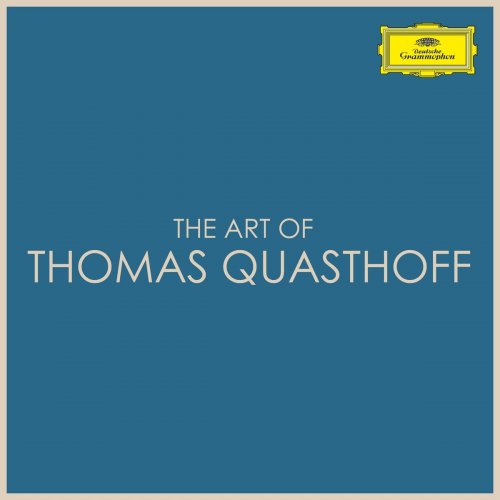
Artist: Thomas Quasthoff
Title: The Art of Thomas Quasthoff
Year Of Release: 2020
Label: UMG Recordings, Inc.
Genre: Classical
Quality: FLAC (tracks)
Total Time: 9:25:21
Total Size: 2.05 GB
WebSite: Album Preview
Tracklist:Title: The Art of Thomas Quasthoff
Year Of Release: 2020
Label: UMG Recordings, Inc.
Genre: Classical
Quality: FLAC (tracks)
Total Time: 9:25:21
Total Size: 2.05 GB
WebSite: Album Preview
01. Die Zauberflöte, K.620 / Act 1 : "Der Vogelfänger bin ich ja"
02. Don Giovanni, ossia Il dissoluto punito, K.527 / Act 1 : "Là ci darem la mano"
03. Die schöne Müllerin, D.795 : 1. Das Wandern
04. Die schöne Müllerin, D.795 : 2. Wohin?
05. Die schöne Müllerin, D.795 : 3. Halt!
06. Die schöne Müllerin, D.795 : 4. Danksagung an den Bach
07. Die schöne Müllerin, D.795 : 5. Am Feierabend
08. Die schöne Müllerin, D.795 : 6. Der Neugierige
09. Die schöne Müllerin, D.795 : 7. Ungeduld
10. Die schöne Müllerin, D.795 : 8. Morgengruß
11. Die schöne Müllerin, D.795 : 9. Der Müllers Blumen
12. Die schöne Müllerin, D.795 : 10. Tränenregen
13. Die schöne Müllerin, D.795 : 11. Mein!
14. Die schöne Müllerin, D.795 : 12. Pause
15. Die schöne Müllerin, D.795 : 13. Mit dem grünen Lautenbande
16. Die schöne Müllerin, D.795 : 14. Der Jäger
17. Die schöne Müllerin, D.795 : 15. Eifersucht und Stolz
18. Die schöne Müllerin, D.795 : 16. Die liebe Farbe
19. Die schöne Müllerin, D.795 : 17. Die böse Farbe
20. Die schöne Müllerin, D.795 : 18. Trockne Blumen
21. Die schöne Müllerin, D.795 : 19. Der Müller und der Bach
22. Die schöne Müllerin, D.795 : 20. Des Baches Wiegenlied
23. Frühlingsglaube, D.686b
24. Heidenröslein, D. 257 (Op.3/3)
25. Die Forelle, D.550 (Op.32)
26. Im Frühling, D.882
27. Auf der Bruck, D.853 (Op.93/4)
28. Im Abendrot, D.799
29. Die schöne Müllerin, D.795 : 7. Ungeduld
30. Belsatzar, Op.57
31. Myrthen, op.25 : 1. Widmung (Text: Rückert)
32. Myrthen, op.25 : 2. Freisinn (Goethe)
33. "Du bist wie eine Blume", Op.25, No.24
34. 12 Lieder, Op.9 : 8. Frühlingsglaube
35. Auf Flügeln des Gesanges, Op.34, No.2 : "Auf Flügeln des Gesanges, Herzliebchen, trag ich dich
36. Mörike-Lieder : 15. "Auf einer Wanderung"
37. Mörike-Lieder : 1. "Der Genesene an die Hoffnung"
38. Mörike-Lieder : 48. "Storchenbotschaft"
39. Odins Meeresritt op.118
40. Drei Balladen Op.2 : No.2: Herr Oluf
41. Tom der Reimer op.135a
42. Zueignung, Op.10, No.1
43. Allerseelen, Op.10, No.8
44. Heimliche Aufforderung, Op.27, No.3
45. Morgen, Op.27, No.4
46. Danny Boy (Traditional) Irish tune from County Derry
47. "Ich will den Kreuzstab gerne tragen" Cantata, BWV 56 : 1. Aria: "Ich will den Kreuzstab gerne tragen"
48. "Ich will den Kreuzstab gerne tragen" Cantata, BWV 56 : 2. Recitativo: "Mein Wandel auf der Welt"
49. "Ich will den Kreuzstab gerne tragen" Cantata, BWV 56 : 3. Aria: "Endlich, endlich wird mein Joch"
50. "Ich will den Kreuzstab gerne tragen" Cantata, BWV 56 : 4. Recitativo: "Ich stehe fertig und bereit"
51. "Ich will den Kreuzstab gerne tragen" Cantata, BWV 56 : 5. Choral: "Komm, o Tod, du Schlafes Bruder"
52. "Der Friede sei mit dir" Cantata, BWV 158 : 1. "Der Friede sei mit dir"
53. "Der Friede sei mit dir" Cantata, BWV 158 : 2. "Welt, ade, ich bin dein müde"
54. "Der Friede sei mit dir" Cantata, BWV 158 : 3. "Nun, Herr, regiere meinen Sinn"
55. "Der Friede sei mit dir" Cantata, BWV 158 : 4. "Hier ist das rechte Osterlamm"
56. Cantata "Ich habe genug" BWV 82 : 1. "Ich habe genug, ich habe den Heiland"
57. Cantata "Ich habe genug" BWV 82 : 2. Recitativo: Ich habe genug! Mein Trost ist nur allein
58. Cantata "Ich habe genug" BWV 82 : 3. Aria: Schlummert ein, ihr matten Augen
59. Cantata "Ich habe genug" BWV 82 : 4. Recitativo: Mein Gott! wann kommt das schöne Nun!
60. Cantata "Ich habe genug" BWV 82 : 5. Aria: Ich freue mich auf meinen Tod
61. Zar und Zimmermann / Act 1 : Nr.4 Arie: "O sancta justitia!"
62. Zar und Zimmermann / Act 3 : Nr.13 Ensemble: "Den hohen Herrscher würdig..."
63. Zar und Zimmermann / Act 3 : No.14 Lied:"Sonst spielt' ich mit Zepter, mit Krone.."
64. Der Wildschütz / Act 2 : Fünftausend Taler!... Träum oder wach' ich?
65. Der Wildschütz / Act 1 : "Lass Er doch hören"/"Bei diesem schlimmen Fall"
66. Der Wildschütz / Act 3 : Wie freundlich strahlt die holde Morgensonne
67. Euryanthe / Act 2 : Wo berg' ich mich? ... Schweigt, glüh'nden Sehnens
68. Tannhäuser / Act 2 : "Gar viel und schön"
69. Tannhäuser / Act 3 : Wie Todesahnung... O du mein holder Abendstern (Wolfram)
70. Die schweigsame Frau, Op.80, TrV 265 / Act 3 : Wie schön ist doch die Musik
71. Lieder eines fahrenden Gesellen : Wenn mein Schatz Hochzeit macht
72. Lieder eines fahrenden Gesellen : Ging heut' morgen übers Feld
73. Lieder eines fahrenden Gesellen : Ich hab' ein glühend Messer
74. Lieder eines fahrenden Gesellen : Die zwei blauen Augen von meinem Schatz
75. Rückert-Lieder : Blicke mir nicht in die Lieder
76. Rückert-Lieder : Ich atmet' einen linden Duft
77. Rückert-Lieder : Liebst du um Schönheit
78. Rückert-Lieder : Ich bin der Welt abhanden gekommen
79. Rückert-Lieder : Um Mitternacht
80. Kindertotenlieder : Nun will die Sonn' so hell aufgeh'n
81. Kindertotenlieder : Nun seh' ich wohl, warum so dunkle Flammen
82. Kindertotenlieder : Wenn dein Mütterlein
83. Kindertotenlieder : Oft denk' ich, sie sind nur ausgegangen
84. Kindertotenlieder : In diesem Wetter
85. Schwanengesang, D.957 (Cycle) - Order As Printed/All Verses : 1. Liebesbotschaft: Rauschendes Bächlein
86. Schwanengesang, D.957 (Cycle) - Order As Printed/All Verses : 2. Kriegers Ahnung: In tiefer Ruh
87. Schwanengesang, D.957 (Cycle) - Order As Printed/All Verses : 3. Frühlingssehnsucht: Säuselnde Lüfte
88. Schwanengesang, D.957 (Cycle) - Order As Printed/All Verses : 4. Ständchen: Leise flehen meine Lieder
89. Schwanengesang, D.957 (Cycle) - Order As Printed/All Verses : 5. Aufenthalt: Rauschender Strom
90. Schwanengesang, D.957 (Cycle) - Order As Printed/All Verses : 6. In der Ferne: Wehe dem Fliehenden
91. Schwanengesang, D.957 (Cycle) - Order As Printed/All Verses : 7. Abschied: Ade du muntre, du fröhliche Stadt
92. Schwanengesang, D.957 (Cycle) - Order As Printed/All Verses : 8. Der Atlas: Ich unglückseliger Atlas
93. Schwanengesang, D.957 (Cycle) - Order As Printed/All Verses : 9. Ihr Bild: Ich stand in dunklen Träumen
94. Schwanengesang, D.957 (Cycle) - Order As Printed/All Verses : 10. Das Fischermädchen: Du schönes Fischermädchen
95. Schwanengesang, D.957 (Cycle) - Order As Printed/All Verses : 11. Die Stadt: Am fernen Horizonte
96. Schwanengesang, D.957 (Cycle) - Order As Printed/All Verses : 12. Am Meer: Das Meer erglänzte weit hinaus
97. Schwanengesang, D.957 (Cycle) - Order As Printed/All Verses : 13. Der Doppelgänger: Still ist die Nacht
98. Schwanengesang, D.957 (Cycle) - Order As Printed/All Verses : 14. Die Taubenpost: Ich habe eine Brieftaub (D965A)
99. 4 Ernste Gesänge, Op.121 : 1. Denn es gehet dem Menschen
100. 4 Ernste Gesänge, Op.121 : 2. Ich wandte mich und sahe
101. 4 Ernste Gesänge, Op.121 : 3. O Tod, wie bitter bist du
102. 4 Ernste Gesänge, Op.121 : 4. Wenn ich mit Menschen - und mit Engelszungen redete
103. Lieder und Gesänge Op.32 : 1. Wie raff' ich mich auf in der Nacht
104. Lieder und Gesänge Op.32 : 2. Nicht mehr zu dir zu gehen
105. Lieder und Gesänge Op.32 : 3. Ich schleich' umher
106. Lieder und Gesänge Op.32 : 4. Der Strom, der neben mir verrauschte
107. Lieder und Gesänge Op.32 : 5. Wehe, so willst du mich wieder
108. Lieder und Gesänge op.32 : 6. Du sprichst, daß ich mich täuschte
109. Lieder und Gesänge Op.32 : 7. Bitteres zu sagen denkst du
110. Lieder und Gesänge Op.32 : 8. So stehn wir, ich und meine Weide
111. Lieder und Gesänge Op.32 : 9. Wie bist du, meine Königin
112. Fünf Gesänge Op.72 : 1. Alte Liebe
113. Fünf Gesänge Op.72 : 2. Sommerfäden
114. Fünf Gesänge Op.72 : 3. O kühler Wald
115. Fünf Gesänge Op.72 : 4. Verzagen
116. Fünf Gesänge Op.72 : 5. Unüberwindlich
117. Fünf Lieder Op.94 : 1. Mit vierzig Jahren (Rückert)
118. Fünf Lieder Op.94 : 2. Steig auf, geliebter Schatten
119. Fünf Lieder Op.94 : 3. Mein Herz ist schwer
120. Fünf Lieder Op.94 : 4. Sapphische Ode
121. Fünf Lieder Op.94 : 5. Kein Haus, keine Heimat
122. Tre Sonetti di Petrarca, S. 270 - 1st Version For Tenor, Transposed Into The Keys Of The 2nd Version For Baritone By Justus Zeyen : 1. Pace non trovo
123. Tre Sonetti di Petrarca, S. 270 - 1st Version For Tenor, Transposed Into The Keys Of The 2nd Version For Baritone By Justus Zeyen : 2. Benedetto sia 'l giorno
124. Tre Sonetti di Petrarca, S. 270 - 1st Version For Tenor, Transposed Into The Keys Of The 2nd Version For Baritone By Justus Zeyen : 3. I' vidi in terra angelici costumi
125. Die Loreley, S.273 - 1. Fassung
126. O lieb, so lang du lieben kannst, S.298
127. "Es muss ein Wunderbares sein" S.314
128. Songs from "Des Knaben Wunderhorn" : Revelge
129. Songs from "Des Knaben Wunderhorn" : Rheinlegendchen
130. Songs from "Des Knaben Wunderhorn" : Trost im Unglück
131. Songs from "Des Knaben Wunderhorn" : Verlor'ne Müh
132. Songs from "Des Knaben Wunderhorn" : Der Schildwache Nachtlied
133. Songs from "Des Knaben Wunderhorn" : Das irdische Leben
134. Songs from "Des Knaben Wunderhorn" : Lied des Verfolgten im Turm
135. Songs from "Des Knaben Wunderhorn" : Wer hat dies Liedlein erdacht?
136. Songs from "Des Knaben Wunderhorn" : Des Antonius von Padua Fischpredigt
137. Songs from "Des Knaben Wunderhorn" : Lob des hohen Verstandes
138. Songs from "Des Knaben Wunderhorn" : Wo die schönen Trompeten blasen
139. Songs from "Des Knaben Wunderhorn" : Der Tamboursg'sell
140. Songs from "Des Knaben Wunderhorn" : Urlicht
141. It's Beginning To Look Like Christmas
142. Von guten Mächten treu und still umgeben
143. Die gute Nacht
144. Maria
145. I'll Be Home For Christmas
146. Advent
147. Geburt Christi
148. Die Heiligen drei Könige: Legende
149. Es gibt so wunderweiße Nächte
150. Merry Christmas Baby
151. Schenken
152. Weihnachten
153. Weihnachtsabend
154. Ein Winterabend
155. Der störrische Esel und die süße Distel
156. White Christmas
Thomas Quasthoff was a thalidomide baby, growing to only about four feet tall and, in common with many of his fellow victims of the drug, has severely undeveloped arms. However, his voice and breathing apparatus are normal -- if a bass-baritone voice that is uncommonly magnificent can be considered normal.
When Quasthoff reached school age, he was assigned, according to government policy, to school programs designed for children with cerebral palsy. A lively, intelligent, and artistic child, Quasthoff clearly needed the stimulation of normal schooling, which a change in policy soon permitted. He was raised in a highly supportive environment, being treated in exactly the same way as his normal brother. The phrase he remembers being said most often to him when he was young was "Tommy, you can do that. Do it!" As a result he grew up with a sunny and optimistic outlook. Music was special to him. But when he tried to get a musical education, he found that the highly regarded conservatory to which he applied had a strict policy that all students had to learn to play piano, and turned him away on the grounds that this was impossible for him. "That was legally correct. I have to admit that," he says. "Morally -- well, that raises a big question."
His parents procured private voice lessons for him with Charlotte Lehmann, a concert singer of Hannover. She taught him for 17 years, and proved a superb voice teacher. The great baritone Dietrich Fischer-Dieskau said "It's clear to everyone who has heard Thomas Quasthoff that he has a wondrously beautiful voice and that he has had excellent previous training...."
While studying, Quasthoff found a position as a radio announcer in Hannover, becoming highly popular. In 1988 he won first prize in voice at the prestigious ARD music competition of Munich. This led to his beginning a concert and recital career that rapidly grew, although cautiously, Quasthoff retained his radio job for six more years. He finally adopted music as his full-time profession in 1996, the year he won the Shostakovich Prize in Moscow and the Hamada Trust/Scotsman Festival Prize, and in 1998 he won the Echo Prize. In 1996 he was appointed professor at the Detmold Music Academy, where he was one of the most popular voice teachers. He was also associated with the University of Oregon at Eugene, where he appeared regularly in the Oregon Bach Festival.
Watch What Happens: The Jazz AlbumHe has performed with many leading orchestras and conductors. His repertory includes the great choral/vocal/orchestral works of Bach, Mozart, Beethoven, Berlioz, Brahms, Mahler, and Britten. He sings opera arias in his programs, and has sung operatic roles in recordings of Beethoven's Fidelio, Haydn's L'Anima del Philosopho, and Schumann's Genoveva. It wasn't until 2003 that he appeared in opera on stage, in Fidelio (as Don Fernando) and in 2004 as Amfortas in Parsifal. Quasthoff is also a great fan of other vocal music and dedicated 2007's Watch What Happens to jazz songs and 2010's Tell It Like It Is to soul and pop songs.
He has recorded on the Hännsler, MDG, RCA, Teldec, Orfeo, and Philips labels, and since mid-1999 has been an exclusive artist on Deutsche Grammophon. ~ Joseph Stevenson
When Quasthoff reached school age, he was assigned, according to government policy, to school programs designed for children with cerebral palsy. A lively, intelligent, and artistic child, Quasthoff clearly needed the stimulation of normal schooling, which a change in policy soon permitted. He was raised in a highly supportive environment, being treated in exactly the same way as his normal brother. The phrase he remembers being said most often to him when he was young was "Tommy, you can do that. Do it!" As a result he grew up with a sunny and optimistic outlook. Music was special to him. But when he tried to get a musical education, he found that the highly regarded conservatory to which he applied had a strict policy that all students had to learn to play piano, and turned him away on the grounds that this was impossible for him. "That was legally correct. I have to admit that," he says. "Morally -- well, that raises a big question."
His parents procured private voice lessons for him with Charlotte Lehmann, a concert singer of Hannover. She taught him for 17 years, and proved a superb voice teacher. The great baritone Dietrich Fischer-Dieskau said "It's clear to everyone who has heard Thomas Quasthoff that he has a wondrously beautiful voice and that he has had excellent previous training...."
While studying, Quasthoff found a position as a radio announcer in Hannover, becoming highly popular. In 1988 he won first prize in voice at the prestigious ARD music competition of Munich. This led to his beginning a concert and recital career that rapidly grew, although cautiously, Quasthoff retained his radio job for six more years. He finally adopted music as his full-time profession in 1996, the year he won the Shostakovich Prize in Moscow and the Hamada Trust/Scotsman Festival Prize, and in 1998 he won the Echo Prize. In 1996 he was appointed professor at the Detmold Music Academy, where he was one of the most popular voice teachers. He was also associated with the University of Oregon at Eugene, where he appeared regularly in the Oregon Bach Festival.
Watch What Happens: The Jazz AlbumHe has performed with many leading orchestras and conductors. His repertory includes the great choral/vocal/orchestral works of Bach, Mozart, Beethoven, Berlioz, Brahms, Mahler, and Britten. He sings opera arias in his programs, and has sung operatic roles in recordings of Beethoven's Fidelio, Haydn's L'Anima del Philosopho, and Schumann's Genoveva. It wasn't until 2003 that he appeared in opera on stage, in Fidelio (as Don Fernando) and in 2004 as Amfortas in Parsifal. Quasthoff is also a great fan of other vocal music and dedicated 2007's Watch What Happens to jazz songs and 2010's Tell It Like It Is to soul and pop songs.
He has recorded on the Hännsler, MDG, RCA, Teldec, Orfeo, and Philips labels, and since mid-1999 has been an exclusive artist on Deutsche Grammophon. ~ Joseph Stevenson
![Sacha Boutros - Sacha : Paris Après Minuit (2026) [Hi-Res]](https://img.israbox.com/img/2026-09/03/jy3h2w0opsuy56r59a56g0d82.jpg "Sacha Boutros - Sacha : Paris Après Minuit (2026) [Hi-Res]")
![Kosmonauci - Brudna - Bielizna (2026) [Hi-Res]](https://www.dibpic.com/uploads/posts/2026-08/1788069357_xalsyo9fro9x5_600.jpg "Kosmonauci - Brudna - Bielizna (2026) [Hi-Res]")
![PAKT - Live Montreal / Toronto 2025 (2025) [Hi-Res]](https://www.dibpic.com/uploads/posts/2026-08/1788202009_o1mffwt7aafev_600.jpg "PAKT - Live Montreal / Toronto 2025 (2025) [Hi-Res]")
![Future Bubblers - Future Bubblers 9.0 (2026) [Hi-Res]](https://img.israbox.com/img/2026-09/03/azlhfpmpj74x7p6famt7uyxrn.jpg "Future Bubblers - Future Bubblers 9.0 (2026) [Hi-Res]")