Rohan De Saram - J.S. Bach: Cello Suites Nos. 1-6 (2021)
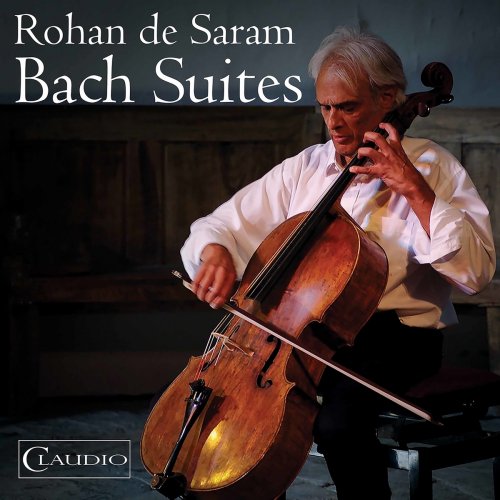
Artist: Rohan De Saram
Title: J.S. Bach: Cello Suites Nos. 1-6
Year Of Release: 2021
Label: Claudio Records
Genre: Classical
Quality: FLAC (tracks)
Total Time: 150:51 min
Total Size: 665 MB
WebSite: Album Preview
Tracklist:Title: J.S. Bach: Cello Suites Nos. 1-6
Year Of Release: 2021
Label: Claudio Records
Genre: Classical
Quality: FLAC (tracks)
Total Time: 150:51 min
Total Size: 665 MB
WebSite: Album Preview
01. Cello Suite No. 1 in G Major, BWV 1007: I. Prelude
02. Cello Suite No. 1 in G Major, BWV 1007: II. Allemande
03. Cello Suite No. 1 in G Major, BWV 1007: III. Courante
04. Cello Suite No. 1 in G Major, BWV 1007: IV. Sarabande
05. Cello Suite No. 1 in G Major, BWV 1007: V. Menuetts I & II
06. Cello Suite No. 1 in G Major, BWV 1007: VI. Gigue
07. Cello Suite No. 2 in D Minor, BWV 1008: I. Prelude
08. Cello Suite No. 2 in D Minor, BWV 1008: II. Allemande
09. Cello Suite No. 2 in D Minor, BWV 1008: III. Courante
10. Cello Suite No. 2 in D Minor, BWV 1008: IV. Sarabande
11. Cello Suite No. 2 in D Minor, BWV 1008: V. Menuetts I & II
12. Cello Suite No. 2 in D Minor, BWV 1008: VI. Gigue
13. Cello Suite No. 3 in C Major, BWV 1009: I. Prelude
14. Cello Suite No. 3 in C Major, BWV 1009: II. Allemande
15. Cello Suite No. 3 in C Major, BWV 1009: III. Courante
16. Cello Suite No. 3 in C Major, BWV 1009: IV. Sarabande
17. Cello Suite No. 3 in C Major, BWV 1009: V. Bourrées I & II
18. Cello Suite No. 3 in C Major, BWV 1009: VI. Gigue
19. Cello Suite No. 4 in E-Flat Major, BWV 1010: I. Prelude
20. Cello Suite No. 4 in E-Flat Major, BWV 1010: II. Allemande
21. Cello Suite No. 4 in E-Flat Major, BWV 1010: III. Courante
22. Cello Suite No. 4 in E-Flat Major, BWV 1010: IV. Sarabande
23. Cello Suite No. 4 in E-Flat Major, BWV 1010: V. Bourrées I & II
24. Cello Suite No. 4 in E-Flat Major, BWV 1010: VI. Gigue
25. Cello Suite No. 5 in C Minor, BWV 1011: I. Prelude
26. Cello Suite No. 5 in C Minor, BWV 1011: II. Allemande
27. Cello Suite No. 5 in C Minor, BWV 1011: III. Courante
28. Cello Suite No. 5 in C Minor, BWV 1011: IV. Sarabande
29. Cello Suite No. 5 in C Minor, BWV 1011: V. Gavottes I & II
30. Cello Suite No. 5 in C Minor, BWV 1011: VI. Gigue
31. Cello Suite No. 6 in D Major, BWV 1012: I. Prelude
32. Cello Suite No. 6 in D Major, BWV 1012: II. Allemande
33. Cello Suite No. 6 in D Major, BWV 1012: III. Courante
34. Cello Suite No. 6 in D Major, BWV 1012: IV. Sarabande
35. Cello Suite No. 6 in D Major, BWV 1012: V. Gavottes I & II
36. Cello Suite No. 6 in D Major, BWV 1012: VI. Gigue
The four essential movements of the Suite as used by J.S. Bach are Allemande, Courante, Sarabande and Gigue. Between the Sarabande and the Gigue the so-called “galanteries” were placed. In the cello Suites these were Minuets I & II for Suites I & II, Bourrées I & II for Suites III and IV and Gavottes I and II for Suites V and VI. Considering the period of history in which we are living and the fact that a united Europe and its evolution is a prominent part of our political thinking, it is interesting to note that the form of the Suite is a microcosm of the idea: Allemande from Germany, Courante or Corrente from France or Italy, Sarabande from Spain, the “galanteries” from France, “galanteries” sometimes including Polonnaise from Poland and finally Gigue from Ireland or England.
Like the six so-called English Suites and the six Partitas, both written for keyboard, the six cello Suites each start with a substantial Prelude. It is interesting to know that the six Partitas formed the first of a four-part series published under the title “Clavierübung” or “Keyboard practice” or “Keyboard studies”. The rest of the series include such works as the Italian Concerto, French Overture and the Goldberg Variations not to mention the third part which includes some of Bach’s finest Chorale Preludes for organ. The idea of studying and practising written finger exercises merely in order to acquire technical dexterity was foreign to Bach and the period in which he lived. In a similar way to the “Clavierübung” and other keyboard works by Bach, the cello Suites grow in musical dimensions and technical demands, starting with the relatively light-weight 1st Suite to the infinitely larger build of the 6th Suite. This is immediately apparent when comparing the structure and character of the six Preludes, let alone the thirty other movements of the Suites. The flowing and idyllic first Prelude in G major has a climax built around its dominant pedal point, in this instance D, shortly before the end. As we shall see, all the Preludes have this characteristic building to, or towards, a climax on a dominant pedal point, sometimes close to, at other times further away from, the end.
The Allemande following this flowing Prelude is an even more flowing two-in-a bar ₵ movement rather than the more typical 4/4, which is at a more moderate tempo, as the Allemandes of the 2nd and 3rd Suites. Unusually the 4th and 5th Suites both have the ₵ marking for their Allemandes and the 6th Suite has one of Bach’s highly ornamental, recitative-like, great slow movements, having no connection with the more usual Allemande character or rhythm.
All the Courantes in the six cello Suites are in the fast Italian style 3/4 time except the French Courante of the 5th Suite which has the 3/2 tempo with a broader and often rhythmically complex style.
The Sarabandes, apart from those of the 4th and 5th Suites, have the characteristic, slow three-in- a-bar rhythm with the stress occurring on the 2nd beat thus:
The Sarabande of the 4th Suite, although not focusing on this typical rhythm, uses its first bar as a dominant 7th harmony moving towards the sub-dominant, giving a very Romantic colouring, such as Brahms used at the very beginning of his German Requiem. The Sarabande of the 5th Suite has the rhythm of with an appoggiatura on its 2nd beat, thereby approximating the characteristic Sarabande rhythm, pervading most of its single line texture with the most unusual harmonies to be found anywhere in the cello Suites.
“Galanteries” is the name usually given to the pairs of dances placed between the Sarabandes and the Gigues. In these six Suites they have a certain symmetry in that the 1st and 2nd Suites each have a pair of Minuets, the 3rd and 4th Suites a pair of Bourées and the 5th and 6th Suites a pair of Gavottes. The second of each pair of Minuets, Bourées and Gavottes is invariably more delicate, softer and thinner in texture and is often in the contrasting major or minor theme of the main key of the Suite. This change of key is present in the first three Suites but not in the 4th, 5th and 6th Suites. Hence the second Minuet of the 1st Suite in G major, is in G minor; the second Minuet of the 2nd Suite in D minor, is in D major and the second Bourée of the 3rd Suite in C major, is in C minor.
The Gigue is a rustic dance associated with Ireland and England, but its name originates from the French “gigot” meaning “leg of lamb”, which resembles the shape of a fiddle from which the German “geige” (fiddle) would be derived. Hence the use of open strings used by the village fiddler to accompany his tunes. This is very noticeable in the Gigues of the 2nd and 3rd Suites in the passages using open strings to support the melodic line. The Gigues of the 1st, 2nd, 3rd and 6th Suites have a family resemblance in their use of 3/8 or 6/8 as their basic time-signatures. The Gigue of the 4th Suite is a fast moto perpetuo in 12/8 and that of the 5th Suite is dominated by the angular rhythm 3/8 said to belong particularly to the Irish Gigue.
As already mentioned at the beginning of this very brief survey of the cello Suites, the Preludes have a very important function of establishing the dimensions and character of each Suite. The first Prelude is flowing and lyrical; the second Prelude, contemplative with a passionate middle section built around a dominant pedal point closing with a calm ending; the third Prelude becomes even larger in dimension, bringing to mind the Preludes for organ, with an impressive build-up around its pedal-point and rhetorical passages punctuated by majestic four-part chords towards the end. The fourth Prelude in E flat major, approximating the organ style even more than the 3rd Prelude, is the largest of the Preludes in the normally-tuned cello, and poses certain technical problems mainly due to the key of E flat which doesn’t have open strings on its closely- related keys, as the other Suites do, but more importantly due to its sheer size and technical demands. I mentioned “for the normally-tuned cello” as the 5th Suite is entitled “Suite discordable” because Bach wished the A string to be tuned down to G. The 6th Suite was written for a different instrument, the “viola pomposa”, said to have been invented by Bach himself with a 5th string tuned to E above the cello’s top A string.
The 5th Prelude in C minor is on a large scale with a serious opening in French Ouverture style, followed by a fugue which could certainly be compared to those for organ or for solo violin, its unique feature being that it is written throughout in a single melodic line, with no double, triple or quadruple stopping except for the very occasional double stop or chord at some cadences. Yet, the exposition with four entries of the theme, sometimes separated by short episodes, is clearly laid out, with longer episodes and varied entries of the theme, punctuated by cadences at the closely related keys, including the relative major key of E flat occurring at the first major cadence.
As mentioned above, Bach wrote the 6th Suite for the “viola pomposa”, an instrument he invented to facilitate playing on a higher register than the cello techniques of his time allowed. The jubilant Prelude of the 6th Suite is in the bright key of D major, the Courante of this Suite celebrating the connection of this key with the trumpet in D. The Allemande, as already mentioned, is one of Bach’s greatest slow movements. The Sarabande is in triple and quadruple stopping throughout and could be thought of as a piece for voices. The two Gavottes have become among the most popular of Bach’s smaller pieces and have been transcribed for many instruments. The Gigue of the 6th Suite is possibly the most brilliant of all the final movements of these Suites.
Like the six so-called English Suites and the six Partitas, both written for keyboard, the six cello Suites each start with a substantial Prelude. It is interesting to know that the six Partitas formed the first of a four-part series published under the title “Clavierübung” or “Keyboard practice” or “Keyboard studies”. The rest of the series include such works as the Italian Concerto, French Overture and the Goldberg Variations not to mention the third part which includes some of Bach’s finest Chorale Preludes for organ. The idea of studying and practising written finger exercises merely in order to acquire technical dexterity was foreign to Bach and the period in which he lived. In a similar way to the “Clavierübung” and other keyboard works by Bach, the cello Suites grow in musical dimensions and technical demands, starting with the relatively light-weight 1st Suite to the infinitely larger build of the 6th Suite. This is immediately apparent when comparing the structure and character of the six Preludes, let alone the thirty other movements of the Suites. The flowing and idyllic first Prelude in G major has a climax built around its dominant pedal point, in this instance D, shortly before the end. As we shall see, all the Preludes have this characteristic building to, or towards, a climax on a dominant pedal point, sometimes close to, at other times further away from, the end.
The Allemande following this flowing Prelude is an even more flowing two-in-a bar ₵ movement rather than the more typical 4/4, which is at a more moderate tempo, as the Allemandes of the 2nd and 3rd Suites. Unusually the 4th and 5th Suites both have the ₵ marking for their Allemandes and the 6th Suite has one of Bach’s highly ornamental, recitative-like, great slow movements, having no connection with the more usual Allemande character or rhythm.
All the Courantes in the six cello Suites are in the fast Italian style 3/4 time except the French Courante of the 5th Suite which has the 3/2 tempo with a broader and often rhythmically complex style.
The Sarabandes, apart from those of the 4th and 5th Suites, have the characteristic, slow three-in- a-bar rhythm with the stress occurring on the 2nd beat thus:
The Sarabande of the 4th Suite, although not focusing on this typical rhythm, uses its first bar as a dominant 7th harmony moving towards the sub-dominant, giving a very Romantic colouring, such as Brahms used at the very beginning of his German Requiem. The Sarabande of the 5th Suite has the rhythm of with an appoggiatura on its 2nd beat, thereby approximating the characteristic Sarabande rhythm, pervading most of its single line texture with the most unusual harmonies to be found anywhere in the cello Suites.
“Galanteries” is the name usually given to the pairs of dances placed between the Sarabandes and the Gigues. In these six Suites they have a certain symmetry in that the 1st and 2nd Suites each have a pair of Minuets, the 3rd and 4th Suites a pair of Bourées and the 5th and 6th Suites a pair of Gavottes. The second of each pair of Minuets, Bourées and Gavottes is invariably more delicate, softer and thinner in texture and is often in the contrasting major or minor theme of the main key of the Suite. This change of key is present in the first three Suites but not in the 4th, 5th and 6th Suites. Hence the second Minuet of the 1st Suite in G major, is in G minor; the second Minuet of the 2nd Suite in D minor, is in D major and the second Bourée of the 3rd Suite in C major, is in C minor.
The Gigue is a rustic dance associated with Ireland and England, but its name originates from the French “gigot” meaning “leg of lamb”, which resembles the shape of a fiddle from which the German “geige” (fiddle) would be derived. Hence the use of open strings used by the village fiddler to accompany his tunes. This is very noticeable in the Gigues of the 2nd and 3rd Suites in the passages using open strings to support the melodic line. The Gigues of the 1st, 2nd, 3rd and 6th Suites have a family resemblance in their use of 3/8 or 6/8 as their basic time-signatures. The Gigue of the 4th Suite is a fast moto perpetuo in 12/8 and that of the 5th Suite is dominated by the angular rhythm 3/8 said to belong particularly to the Irish Gigue.
As already mentioned at the beginning of this very brief survey of the cello Suites, the Preludes have a very important function of establishing the dimensions and character of each Suite. The first Prelude is flowing and lyrical; the second Prelude, contemplative with a passionate middle section built around a dominant pedal point closing with a calm ending; the third Prelude becomes even larger in dimension, bringing to mind the Preludes for organ, with an impressive build-up around its pedal-point and rhetorical passages punctuated by majestic four-part chords towards the end. The fourth Prelude in E flat major, approximating the organ style even more than the 3rd Prelude, is the largest of the Preludes in the normally-tuned cello, and poses certain technical problems mainly due to the key of E flat which doesn’t have open strings on its closely- related keys, as the other Suites do, but more importantly due to its sheer size and technical demands. I mentioned “for the normally-tuned cello” as the 5th Suite is entitled “Suite discordable” because Bach wished the A string to be tuned down to G. The 6th Suite was written for a different instrument, the “viola pomposa”, said to have been invented by Bach himself with a 5th string tuned to E above the cello’s top A string.
The 5th Prelude in C minor is on a large scale with a serious opening in French Ouverture style, followed by a fugue which could certainly be compared to those for organ or for solo violin, its unique feature being that it is written throughout in a single melodic line, with no double, triple or quadruple stopping except for the very occasional double stop or chord at some cadences. Yet, the exposition with four entries of the theme, sometimes separated by short episodes, is clearly laid out, with longer episodes and varied entries of the theme, punctuated by cadences at the closely related keys, including the relative major key of E flat occurring at the first major cadence.
As mentioned above, Bach wrote the 6th Suite for the “viola pomposa”, an instrument he invented to facilitate playing on a higher register than the cello techniques of his time allowed. The jubilant Prelude of the 6th Suite is in the bright key of D major, the Courante of this Suite celebrating the connection of this key with the trumpet in D. The Allemande, as already mentioned, is one of Bach’s greatest slow movements. The Sarabande is in triple and quadruple stopping throughout and could be thought of as a piece for voices. The two Gavottes have become among the most popular of Bach’s smaller pieces and have been transcribed for many instruments. The Gigue of the 6th Suite is possibly the most brilliant of all the final movements of these Suites.
![Diana Marcovitz - Joie De Vivre! (1976) [Hi-Res]](https://img.israbox.com/img/2026-07/30/vxlwvfezx326w3co8px2i5tax.jpg "Diana Marcovitz - Joie De Vivre! (1976) [Hi-Res]")
![Firas Zreik - Tarabesque (2026) [Hi-Res]](https://img.israbox.com/img/2026-07/30/n3cqj78x1ea5uesw4kpal7rb8.jpg "Firas Zreik - Tarabesque (2026) [Hi-Res]")

![Stan Getz - Big Band Bossa Nova (1962/2026) [Hi-Res]](https://www.dibpic.com/uploads/posts/2026-07/1785431844_cover.jpg "Stan Getz - Big Band Bossa Nova (1962/2026) [Hi-Res]")