Herbie Mann - The Groove (2018)
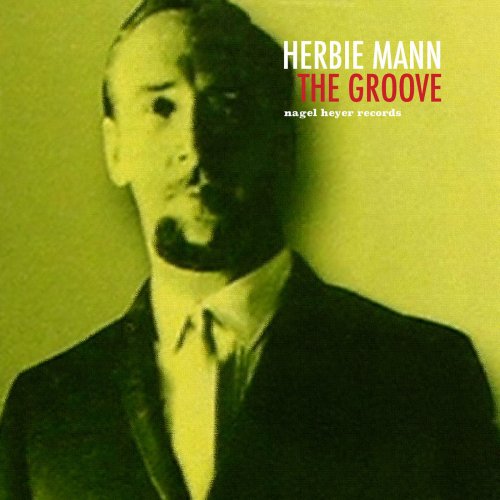
Artist: Herbie Mann
Title: The Groove
Year Of Release: 2018
Label: nagel heyer records
Genre: Jazz, Latin Jazz, Bossa Nova
Quality: FLAC (tracks) / MP3
Total Time: 1:39:42
Total Size: 609 / 239 MB
WebSite: Album Preview
Tracklist:Title: The Groove
Year Of Release: 2018
Label: nagel heyer records
Genre: Jazz, Latin Jazz, Bossa Nova
Quality: FLAC (tracks) / MP3
Total Time: 1:39:42
Total Size: 609 / 239 MB
WebSite: Album Preview
01. Soul Montuno
02. Dream Garden
03. One Note Samba
04. Meditação
05. Feeling Good
06. Porquinho
07. The Joker
08. It's so Peaceful in the Country
09. Desafinado
10. It Isn't Enough
11. Delilah
12. Sawa Sawa Dé
13. Where Would You Be Without Me
14. This Little Girl of Mine
15. Who Can I Turn To (When Nobody Needs Me)
16. Right Now
17. Challil
18. West African High Life
19. Cool Heat
20. This Dream
21. Come on Mule
22. Free for All
23. Jumpin' with Symphony Sid
24. Carnival
25. Look at That Face
26. Hey Ho
27. Todos Locos
Herbie Mann played a wide variety of music throughout his career. He became quite popular in the 1960s, but in the '70s became so immersed in pop and various types of world music that he seemed lost to jazz. However, Mann never lost his ability to improvise creatively as his later recordings attest.
Herbie Mann began on clarinet when he was nine but was soon also playing flute and tenor. After serving in the Army, he was with Mat Mathews' Quintet (1953-1954) and then started working and recording as a leader. During 1954-1958 Mann stuck mostly to playing bop, sometimes collaborating with such players as Phil Woods, Buddy Collette, Sam Most, Bobby Jaspar, and Charlie Rouse. He doubled on cool-toned tenor and was one of the few jazz musicians in the '50s who recorded on bass clarinet; he also recorded a full album in 1957 (for Savoy) of unaccompanied flute.
After spending time playing and writing music for television, Mann formed his Afro-Jazz Sextet, in 1959, a group using several percussionists, vibes (either Johnny Rae, Hagood Hardy, or Dave Pike) and the leader's flute. He toured Africa (1960) and Brazil (1961), had a hit with "Comin' Home Baby," and recorded with Bill Evans. The most popular jazz flutist during the era, Mann explored bossa nova (even recording in Brazil in 1962), incorporated music from many cultures (plus current pop tunes) into his repertoire, and had among his sidemen such top young musicians as Willie Bobo, Chick Corea (1965), Attila Zoller, and Roy Ayers; at the 1972 Newport Festival his sextet included David Newman and Sonny Sharrock. By then Mann had been a producer at Embroyo (a subsidiary of Atlantic) for three years and was frequently stretching his music outside of jazz. As the '70s advanced, Mann became much more involved in rock, pop, reggae, and even disco. After leaving Atlantic at the end of the '70s, Mann had his own label for awhile and gradually came back to jazz. He recorded for Chesky, made a record with Dave Valentin, and in the '90s founded the Kokopelli label on which before breaking away in 1996, he was free to pursue his wide range of musical interests. Through the years, he recorded as a leader for Bethlehem, Prestige, Epic, Riverside, Savoy, Mode, New Jazz, Chesky, Kokopelli, and most significantly Atlantic. He passed away on July 1, 2003, following an extended battle with prostate cancer. His last record was 2004's posthumously released Beyond Brooklyn for Telarc. ~ Scott Yanow
Herbie Mann began on clarinet when he was nine but was soon also playing flute and tenor. After serving in the Army, he was with Mat Mathews' Quintet (1953-1954) and then started working and recording as a leader. During 1954-1958 Mann stuck mostly to playing bop, sometimes collaborating with such players as Phil Woods, Buddy Collette, Sam Most, Bobby Jaspar, and Charlie Rouse. He doubled on cool-toned tenor and was one of the few jazz musicians in the '50s who recorded on bass clarinet; he also recorded a full album in 1957 (for Savoy) of unaccompanied flute.
After spending time playing and writing music for television, Mann formed his Afro-Jazz Sextet, in 1959, a group using several percussionists, vibes (either Johnny Rae, Hagood Hardy, or Dave Pike) and the leader's flute. He toured Africa (1960) and Brazil (1961), had a hit with "Comin' Home Baby," and recorded with Bill Evans. The most popular jazz flutist during the era, Mann explored bossa nova (even recording in Brazil in 1962), incorporated music from many cultures (plus current pop tunes) into his repertoire, and had among his sidemen such top young musicians as Willie Bobo, Chick Corea (1965), Attila Zoller, and Roy Ayers; at the 1972 Newport Festival his sextet included David Newman and Sonny Sharrock. By then Mann had been a producer at Embroyo (a subsidiary of Atlantic) for three years and was frequently stretching his music outside of jazz. As the '70s advanced, Mann became much more involved in rock, pop, reggae, and even disco. After leaving Atlantic at the end of the '70s, Mann had his own label for awhile and gradually came back to jazz. He recorded for Chesky, made a record with Dave Valentin, and in the '90s founded the Kokopelli label on which before breaking away in 1996, he was free to pursue his wide range of musical interests. Through the years, he recorded as a leader for Bethlehem, Prestige, Epic, Riverside, Savoy, Mode, New Jazz, Chesky, Kokopelli, and most significantly Atlantic. He passed away on July 1, 2003, following an extended battle with prostate cancer. His last record was 2004's posthumously released Beyond Brooklyn for Telarc. ~ Scott Yanow
![Kit Ebersbach - Ala Pōʻai (2026) [Hi-Res]](https://img.israbox.com/img/2026-10/26/deksenqtfxvdyqndbpg64lqy5.jpg "Kit Ebersbach - Ala Pōʻai (2026) [Hi-Res]")
![Coleman Hawkins Quintet - High and Mighty Hawk (Stereo Version) (1959/2012) [Hi-Res]](https://www.dibpic.com/uploads/posts/2026-10/1792926143_3610154548241_600.jpg "Coleman Hawkins Quintet - High and Mighty Hawk (Stereo Version) (1959/2012) [Hi-Res]")
![Mario Iannuzziello - THE TOWN DOES NOT EXIST (2026) [Hi-Res]](https://img.israbox.com/img/2026-10/24/o97zshoynrqek0h1duwcd3tn3.jpg "Mario Iannuzziello - THE TOWN DOES NOT EXIST (2026) [Hi-Res]")