Orange Juice - You Can't Hide Your Love Forever (1982)
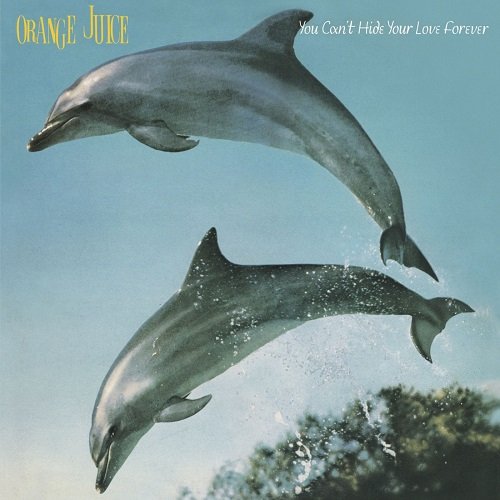
Artist: Orange Juice
Title: You Can't Hide Your Love Forever
Year Of Release: 1982
Label: Analogue Enhanced Digital Limited
Genre: Sophisti-Pop, Indie Rock, Post-Punk, New Wave
Quality: Mp3 320 / Flac (tracks)
Total Time: 38:19
Total Size: 96/271 Mb
WebSite: Album Preview
Tracklist:Title: You Can't Hide Your Love Forever
Year Of Release: 1982
Label: Analogue Enhanced Digital Limited
Genre: Sophisti-Pop, Indie Rock, Post-Punk, New Wave
Quality: Mp3 320 / Flac (tracks)
Total Time: 38:19
Total Size: 96/271 Mb
WebSite: Album Preview
01. Falling and Laughing
02. Untitled Melody
03. Wan Light
04. Tender Object
05. Dying Day
06. L.O.V.E. Love
07. Intuition Told Me, Pt. 1
08. Upwards and Onwards
09. Satellite City
10. Three Cheers for Our Side
11. Consolation Prize
12. Felicity
13. In a Nutshell
The leaders of the Scottish neo-pop uprising Orange Juice formed in Glasgow in late 1976. Originally dubbed the Nu-Sonics, the group comprised vocalist/guitarist Edwyn Collins, guitarist James Kirk, bassist David McClymont, and drummer Steven Daly; following the formation of the Postcard label by Collins protégé Alan Horne, the quartet renamed itself Orange Juice in 1979, adopting the new moniker as well as an aura of romantic innocence as a direct reaction to the increasingly macho aggression of punk.
As Postcard's flagship band, Orange Juice quickly distinguished the label as a leading proponent of independent pop music; their 1980 debut single "Falling and Laughing," recorded for less than 100 pounds, garnered massive critical acclaim, and subsequent releases like "Blueboy," "Simply Thrilled Honey," and "Poor Old Soul" further established the group as a major new talent. Soon, sessions began for a full-length album; however, in the midst of recording, Orange Juice left Postcard to sign to Polydor, which funded the LP's completion. After the 1982 release of the album, titled You Can't Hide Your Love Forever, ex-Josef K guitarist Malcolm Ross joined the group, hastening the exit of Kirk and Daly (who went on to form Memphis) and paving the way for Zimbabwe-born drummer Zeke Manyika.
The addition of Manyika gave Collins the new capability of exploring a more complex fusion of pop and blue-eyed soul; consequently, 1982's Rip It Up was a more ambitious affair than its predecessor, veering from the buoyant Motown tribute "I Can't Help Myself" to the energetic pop of the title track, Orange Juice's lone Top Ten single. However, subsequent releases failed to chart, and relations between the group and Polydor began to disintegrate; amid these tensions, both Ross and McClymont quit, with Ross later resurfacing in Aztec Camera. Reduced to the duo of Collins and Manyika, Orange Juice enlisted reggae producer Dennis Bovell to record the 1984 EP Texas Fever.
After a makeshift tour, Collins and Manyika returned to the studio to record a dark, ambitious full-length effort; released in 1984, neither The Orange Juice nor its singles "What Presence?!" and "Lean Period" charted, and Collins was dropped from his contract, although Polydor kept Manyika on as a solo act. Only in 1995 did the stunning single "A Girl Like You" finally win Collins the commercial respect that had so long eluded him and his former bandmates. Later on, throughout the late '90s and early 2000s, the rise of Scottish bands as disparate as Belle & Sebastian and Franz Ferdinand won Orange Juice a younger set of fans, helped in great part by the 2005 compilation The Glasgow School.
As Postcard's flagship band, Orange Juice quickly distinguished the label as a leading proponent of independent pop music; their 1980 debut single "Falling and Laughing," recorded for less than 100 pounds, garnered massive critical acclaim, and subsequent releases like "Blueboy," "Simply Thrilled Honey," and "Poor Old Soul" further established the group as a major new talent. Soon, sessions began for a full-length album; however, in the midst of recording, Orange Juice left Postcard to sign to Polydor, which funded the LP's completion. After the 1982 release of the album, titled You Can't Hide Your Love Forever, ex-Josef K guitarist Malcolm Ross joined the group, hastening the exit of Kirk and Daly (who went on to form Memphis) and paving the way for Zimbabwe-born drummer Zeke Manyika.
The addition of Manyika gave Collins the new capability of exploring a more complex fusion of pop and blue-eyed soul; consequently, 1982's Rip It Up was a more ambitious affair than its predecessor, veering from the buoyant Motown tribute "I Can't Help Myself" to the energetic pop of the title track, Orange Juice's lone Top Ten single. However, subsequent releases failed to chart, and relations between the group and Polydor began to disintegrate; amid these tensions, both Ross and McClymont quit, with Ross later resurfacing in Aztec Camera. Reduced to the duo of Collins and Manyika, Orange Juice enlisted reggae producer Dennis Bovell to record the 1984 EP Texas Fever.
After a makeshift tour, Collins and Manyika returned to the studio to record a dark, ambitious full-length effort; released in 1984, neither The Orange Juice nor its singles "What Presence?!" and "Lean Period" charted, and Collins was dropped from his contract, although Polydor kept Manyika on as a solo act. Only in 1995 did the stunning single "A Girl Like You" finally win Collins the commercial respect that had so long eluded him and his former bandmates. Later on, throughout the late '90s and early 2000s, the rise of Scottish bands as disparate as Belle & Sebastian and Franz Ferdinand won Orange Juice a younger set of fans, helped in great part by the 2005 compilation The Glasgow School.
![Peter Knight, Jannis Anastasakis - Feather (2026) [Hi-Res]](https://img.israbox.com/img/2026-09/24/cl5ywh8nazfr3muk2auhbaih8.jpg "Peter Knight, Jannis Anastasakis - Feather (2026) [Hi-Res]")



![Dino Siani - Classic Strings (2026) [Hi-Res]](https://img.israbox.com/img/2026-09/26/2n6j4qycki63cwebflfzs7ns6.jpg "Dino Siani - Classic Strings (2026) [Hi-Res]")