Aaron Myers-Brooks - Aaron Myers-Brooks: Oblique (2022)
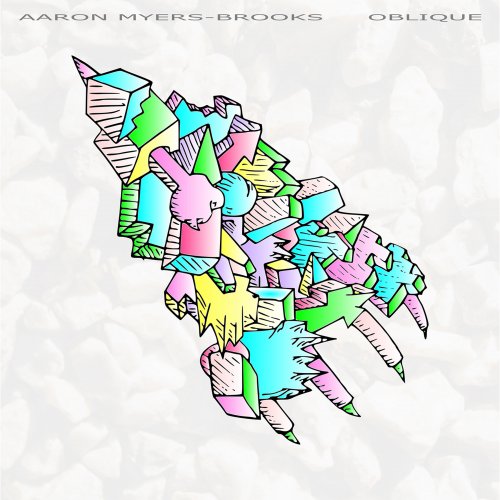
Artist: Aaron Myers-Brooks
Title: Aaron Myers-Brooks: Oblique
Year Of Release: 2022
Label: New Focus Recordings
Genre: Classical, Guitar
Quality: FLAC (tracks+booklet)
Total Time: 45:58 min
Total Size: 208 MB
WebSite: Album Preview
Tracklist:Title: Aaron Myers-Brooks: Oblique
Year Of Release: 2022
Label: New Focus Recordings
Genre: Classical, Guitar
Quality: FLAC (tracks+booklet)
Total Time: 45:58 min
Total Size: 208 MB
WebSite: Album Preview
1. The 11th and 6th Caves
2. Prelude and Entity for Guitar & Digital Piano
3. I. Wisp
4. II. Oblique
5. III. Chop
6. IV. DeSync
7. V. Emerge
8. Triads and Arpeggios (2022)
9. I. Wistful and Halting
10. II. Angular and Aggressive
11. III. Somber and Deliberate
12. I. Climb
13. II. Ridge
14. III. Undulate
15. IV. Thunk
16. V. Pop
17. VI. Overwind
18. VII. Chitter
19. VIII. Grow
Guitarist/composer Aaron Myers-Brooks specializes in microtonal music, specifically writing in a 17 equal division of the octave system that provides a fresh and striking set of intervals and colors to the listener's ears. The works on Oblique balance Myers-Brooks' sophisticated approach to pitch with an equally rigorous approach to polyrhythm, making for a unique musical system existing at the vanguard of contemporary compositional practice.
Far from monolithic, the world of contemporary microtonality splinters into many different systems. From just intonation to alternate divisions of the octave and beyond, composers cultivate individual voices and carve their own paths through this subtle world of pitch, reveling in intervallic flavor and new harmonic relationships. One such system is 17 equal divisions of the octave, and Pittsburgh based Aaron Myers-Brooks is an active champion of this beguiling tuning. On Oblique, Myers-Brooks presents his works for 17 EDO electric guitar, with and without electronics and digital piano accompaniment. His sensitive shadings of 17 EDO colors figures that would be at home in equal temperament and highlighting unique relationships that grow from the tuning itself.
The opening track, The 11th and 6th Caves, alternates quickly between clean and distorted passages, establishing a dialogue between the two timbres and between fiery, rock oriented material and incandescent chordal playing. Van Halen-esque artificial harmonics, tapping, and trills take on a unique quality in this pitch system, enhanced by the thick overdrive.
Prelude and Entity for electric guitar and digital piano (tuned to 17 EDO) opens with an expansive harmonic palette, exposing the listener to a more consonant side of the tuning. Gentle polyrhythmic accompaniment in the keyboard supports tolling harmonics and melodic figurations that become progressively more soloistic. Entity is notated proportionally without the steady pulse of Prelude and also becomes more chromatic, passing constellations of pitches between the instruments.
The five movement Energy Shapes No. 3 is a trio for one performer between the 17 EDO electric guitar, digital processing generated in the Ableton Live platform, and an FM synthesizer. “Wisp” establishes a spatialized series of delays that enter at different rates, and begin to pitch shift in beguiling ways. “Oblique” traffics in space age arpeggios that are arranged in irregular groupings, harmonized, and timbrally transformed. In “Chop,” the quixotic flavors of 17 EDO are processed with heavy chorus, oscillating the sound to create a warbling effect, further obscuring the already adventurous pitch landscape. “DeSync” features percolating synthesizer attacks that surround fragmentary phrases in the shrouded guitar part. The repetitive melodic material in “Emerge” has a dystopian, cartoonish quality, with the synthesizer spinning out ascending arpeggiated figures around the guitar’s assertion of the primary line.
Triads and Arpeggios is an electronics alone work that establishes a regular pulse while Myers-Brooks explores various polyrhythms and harmonic relationships in the 17 EDO tuning. Chords are heard either as emerging swells, or as articulated blocks that are rearticulated with a delay effect that fades out. The second section of the piece presents arpeggiated flourishes at different rates of speed.
Sonata for Solo 17-Tone Guitar explores the tuning in the context of a narrative oriented three movement work. “Wistful and Halting” features jaunty rhythmic figures, angular modernist phrases, and haunting sustained sonorities. The middle movement, “Angular and Aggressive,” calls for heavy distortion and metal playing technique, with virtuosic passagework, insistent repeated notes, and palm mutes. “Somber and Deliberate” embodies its title, with watery rolled chords spilling into sustained harmonics and oblique melodic fragments.
Eight HighC Miniatures was created in Thomas Baudel’s HighC music drawing program, software that translates drawn sketches into synthesized sound. While these short pieces are not in the 17 EDO tuning that frames the other music on the album, they are freely microtonal. Myers-Brooks writes that his intention was to “provide the listener a series of alien environments to briefly inhabit,” something he has very effectively done with these evocative, cinematic snapshots. Indeed, the establishment of otherworldly sonic spaces is a hallmark of this entire album, though Myers-Brooks persuasive approach to 17 EDO so absorbs itself into our ears over time that the initially unfamiliar begins to sound natural, opening us up to the wonderful intervallic subtleties contained within.
– Dan Lippel
Far from monolithic, the world of contemporary microtonality splinters into many different systems. From just intonation to alternate divisions of the octave and beyond, composers cultivate individual voices and carve their own paths through this subtle world of pitch, reveling in intervallic flavor and new harmonic relationships. One such system is 17 equal divisions of the octave, and Pittsburgh based Aaron Myers-Brooks is an active champion of this beguiling tuning. On Oblique, Myers-Brooks presents his works for 17 EDO electric guitar, with and without electronics and digital piano accompaniment. His sensitive shadings of 17 EDO colors figures that would be at home in equal temperament and highlighting unique relationships that grow from the tuning itself.
The opening track, The 11th and 6th Caves, alternates quickly between clean and distorted passages, establishing a dialogue between the two timbres and between fiery, rock oriented material and incandescent chordal playing. Van Halen-esque artificial harmonics, tapping, and trills take on a unique quality in this pitch system, enhanced by the thick overdrive.
Prelude and Entity for electric guitar and digital piano (tuned to 17 EDO) opens with an expansive harmonic palette, exposing the listener to a more consonant side of the tuning. Gentle polyrhythmic accompaniment in the keyboard supports tolling harmonics and melodic figurations that become progressively more soloistic. Entity is notated proportionally without the steady pulse of Prelude and also becomes more chromatic, passing constellations of pitches between the instruments.
The five movement Energy Shapes No. 3 is a trio for one performer between the 17 EDO electric guitar, digital processing generated in the Ableton Live platform, and an FM synthesizer. “Wisp” establishes a spatialized series of delays that enter at different rates, and begin to pitch shift in beguiling ways. “Oblique” traffics in space age arpeggios that are arranged in irregular groupings, harmonized, and timbrally transformed. In “Chop,” the quixotic flavors of 17 EDO are processed with heavy chorus, oscillating the sound to create a warbling effect, further obscuring the already adventurous pitch landscape. “DeSync” features percolating synthesizer attacks that surround fragmentary phrases in the shrouded guitar part. The repetitive melodic material in “Emerge” has a dystopian, cartoonish quality, with the synthesizer spinning out ascending arpeggiated figures around the guitar’s assertion of the primary line.
Triads and Arpeggios is an electronics alone work that establishes a regular pulse while Myers-Brooks explores various polyrhythms and harmonic relationships in the 17 EDO tuning. Chords are heard either as emerging swells, or as articulated blocks that are rearticulated with a delay effect that fades out. The second section of the piece presents arpeggiated flourishes at different rates of speed.
Sonata for Solo 17-Tone Guitar explores the tuning in the context of a narrative oriented three movement work. “Wistful and Halting” features jaunty rhythmic figures, angular modernist phrases, and haunting sustained sonorities. The middle movement, “Angular and Aggressive,” calls for heavy distortion and metal playing technique, with virtuosic passagework, insistent repeated notes, and palm mutes. “Somber and Deliberate” embodies its title, with watery rolled chords spilling into sustained harmonics and oblique melodic fragments.
Eight HighC Miniatures was created in Thomas Baudel’s HighC music drawing program, software that translates drawn sketches into synthesized sound. While these short pieces are not in the 17 EDO tuning that frames the other music on the album, they are freely microtonal. Myers-Brooks writes that his intention was to “provide the listener a series of alien environments to briefly inhabit,” something he has very effectively done with these evocative, cinematic snapshots. Indeed, the establishment of otherworldly sonic spaces is a hallmark of this entire album, though Myers-Brooks persuasive approach to 17 EDO so absorbs itself into our ears over time that the initially unfamiliar begins to sound natural, opening us up to the wonderful intervallic subtleties contained within.
– Dan Lippel
![Vladimir Shafranov Japan Trio - What A Wonderful World (2026) [Hi-Res]](https://www.dibpic.com/uploads/posts/2026-07/1785304352_dcim5ah0r9p6f_600.jpg "Vladimir Shafranov Japan Trio - What A Wonderful World (2026) [Hi-Res]")

![Ted Heath - Big Band (1970) [Vinyl]](https://www.dibpic.com/uploads/posts/2026-07/1785339667_5.jpg "Ted Heath - Big Band (1970) [Vinyl]")