Maksim Štšura & Michael Foyle - Beethoven: Sonatas for Piano and Violin Vol. 3 (2022) [Hi-Res]
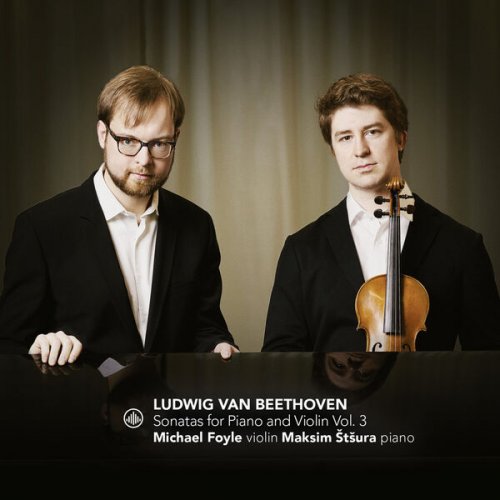
Artist: Maksim Štšura, Michael Foyle
Title: Beethoven: Sonatas for Piano and Violin Vol. 3
Year Of Release: 2022
Label: Challenge Classics
Genre: Classical
Quality: FLAC (tracks) / 24bit-96kHz FLAC (tracks+booklet)
Total Time: 56:51
Total Size: 226 / 990 MB
WebSite: Album Preview
Tracklist:Title: Beethoven: Sonatas for Piano and Violin Vol. 3
Year Of Release: 2022
Label: Challenge Classics
Genre: Classical
Quality: FLAC (tracks) / 24bit-96kHz FLAC (tracks+booklet)
Total Time: 56:51
Total Size: 226 / 990 MB
WebSite: Album Preview
1. Sonata No. 9 in A Major, Op. 47: I. Adagio sostenuto - Presto (10:53)
2. Sonata No. 9 in A Major, Op. 47: II. Andante con variazioni (14:38)
3. Sonata No. 9 in A Major, Op. 47: III. Finale. Presto (7:02)
4. Sonata No. 10 in G Major, Op. 96: I. Allegro moderato (8:13)
5. Sonata No. 10 in G Major, Op. 96: II. Adagio espressivo (5:32)
6. Sonata No. 10 in G Major, Op. 96: III. Scherzo. Allegro (2:08)
7. Sonata No. 10 in G Major, Op. 96: IV. Poco Allegretto (8:27)
The sonatas on the first two volumes were emblematic of Beethoven’s early and middle periods, showcasing the composer’s command of the Classical idiom. The last two sonatas push the boundaries of the genre even further, resulting in artistic efforts of increased emotional intensity, cyclical scope, and lyrical intimacy. They are also considered among the most dramatic and challenging works in the duo repertoire.
An early review of Sonata No. 9 in the "Allgemeine musikalische Zeitung" was rude: "The addition to the title "scritta in uno stile molto concertante, quasi come d’un concerto" appears eccentric, presumptuous and ostentatious". However, to modern audiences this "like a concerto" element that describes the equality and democratic dialogue between the two instruments is now integral to our understanding of the notion of chamber music and in this, Beethoven was a trailblazer. According to the great violinist Carl Flesch, "a flower must blossom in the souls" of those performing Beethoven’s Sonata for Piano and Violin in G major, Op. 96. The work dates from 1812, a full decade after previous six sonatas, and in its sublime beauty and pathos represents the transformation in Beethoven’s later works from the heroic, defiant drama immortalised in works like the "Kreutzer" to something far more searching and spiritual, rather akin to his late quartets.
An early review of Sonata No. 9 in the "Allgemeine musikalische Zeitung" was rude: "The addition to the title "scritta in uno stile molto concertante, quasi come d’un concerto" appears eccentric, presumptuous and ostentatious". However, to modern audiences this "like a concerto" element that describes the equality and democratic dialogue between the two instruments is now integral to our understanding of the notion of chamber music and in this, Beethoven was a trailblazer. According to the great violinist Carl Flesch, "a flower must blossom in the souls" of those performing Beethoven’s Sonata for Piano and Violin in G major, Op. 96. The work dates from 1812, a full decade after previous six sonatas, and in its sublime beauty and pathos represents the transformation in Beethoven’s later works from the heroic, defiant drama immortalised in works like the "Kreutzer" to something far more searching and spiritual, rather akin to his late quartets.

![Brand X - Masques (1978) [Vinyl]](https://www.dibpic.com/uploads/posts/2026-09/1790013148_r-4770714-1686069394-3469.jpg "Brand X - Masques (1978) [Vinyl]")
![Ships of the Pharaohs - Part 1 (feat. Last Nubian) (2026) [Hi-Res]](https://img.israbox.com/img/2026-09/19/akarwqzvzwdyf3t9biuxsdajh.jpg "Ships of the Pharaohs - Part 1 (feat. Last Nubian) (2026) [Hi-Res]")
![Jenny Frøysa's Artful Ensemble - Pauline Boty: bring her out! (2026) [Hi-Res]](https://www.dibpic.com/uploads/posts/2026-09/1789752767_cover.jpg "Jenny Frøysa's Artful Ensemble - Pauline Boty: bring her out! (2026) [Hi-Res]")
![VA - All Stars After Hours (Polish Jazz, Vol. 37 [Live]) (2019)](https://www.dibpic.com/uploads/posts/2026-09/1790063855_cover.jpg "VA - All Stars After Hours (Polish Jazz, Vol. 37 [Live]) (2019)")
![Patrick Shiroishi & Jason Nazary - here i am no i (2026) [Hi-Res]](https://img.israbox.com/img/2026-09/19/eg7figw4l7hgvcplechmqyvpt.jpg "Patrick Shiroishi & Jason Nazary - here i am no i (2026) [Hi-Res]")
![Nujakasha - NUJA (2026) [Hi-Res]](https://www.dibpic.com/uploads/posts/2026-09/1789753808_cover.jpg "Nujakasha - NUJA (2026) [Hi-Res]")