The Creation - Lay the Ghost (Live) (1993)
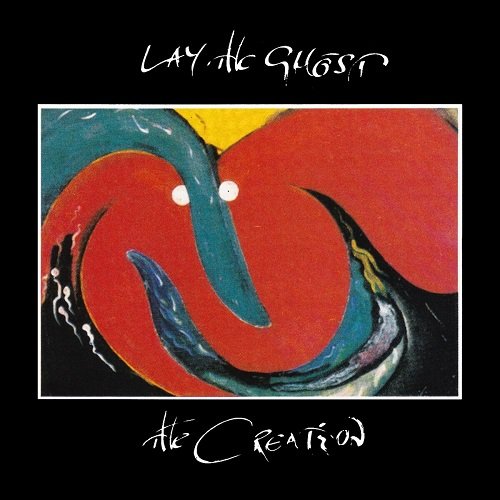
Artist: The Creation
Title: Lay the Ghost
Year Of Release: 1993
Label: Restless Records
Genre: Psychedelic Rock, Garage Rock, British Invasion
Quality: Mp3 320 / Flac (tracks)
Total Time: 01:03:30
Total Size: 156/422 Mb
WebSite: Album Preview
Tracklist:Title: Lay the Ghost
Year Of Release: 1993
Label: Restless Records
Genre: Psychedelic Rock, Garage Rock, British Invasion
Quality: Mp3 320 / Flac (tracks)
Total Time: 01:03:30
Total Size: 156/422 Mb
WebSite: Album Preview
1. Batman/Biff Bang Pow (Live) 3:37
2. Try and Stop Me (Live) 3:14
3. Life Is Just Beginning (Live) 6:13
4. I'm a Man (Live) 5:01
5. Nightmares (Live) 5:57
6. If I Stay Too Long (Live) 3:53
7. Hey Joe (Live) 6:07
8. Making Time (Live) 3:29
9. Tom Tom (Live) 3:21
10. If You Could See Through My Eyes (Live) 4:21
11. That's How Strong My Love Is (Live) 5:41
12. Lay the Ghost (Live) 3:53
13. How Does It Feel to Feel (Live) 4:10
14. Painter Man (Live) 4:35
They could've been contenders -- hell, they should've been contenders! That's the first thought that passes through one's head as one hears the early singles by the Creation -- and, indeed, how they weren't contenders is astonishing. They had it all: the in-house songwriting, the production, the voices, and the sound that should've put them right up there with the Who and ahead of the Move and Jimmy Page, among others. Their lead guitarist, Eddie Phillips, was even asked by Pete Townshend to join the Who as their second guitarist. But thanks to an unaccountable weakness in their British sales -- as opposed to their German chart action, which was downright robust -- and some instability in their lineup, they were never to enjoy any of the recognition they deserved, and a right turn from psychedelia into soul at the wrong moment took whatever wind they had out of their sails (and sales). And the final few months of their history, filled out by the work of a revived band that never quite got it together in the studio, and singles derived from early outtakes, did nothing but confuse fans and admirers, who couldn't be sure "which" Creation they were dealing with on record.
The band's history began in 1963 with a group called the Blue Jacks in Cheshunt, Hertfordshire, to the north of London. The band had just gotten a new lead singer, Kenny Pickett (who'd previously driven the van for Neil Christian & the Crusaders), and with the addition of a new lead guitarist, Eddie Phillips, they changed their name to the Mark Four. The latter band got signed to Mercury Records' British division in 1964 but the resulting two singles failed to sell. Even as British audiences were finding their work quite resistible, however, German audiences were greeting their performances at the Big Ben Club in Wilhelmshaven with rousing enthusiasm. It was during their extended residence in Germany that the band chanced to cross paths with a local band called the Roadrunners, who had attracted amazing local club attendance with their use of guitar feedback in their songs. Eddie Phillips made note of the effect and started working out how he might assimilate it into his playing.
The Mark Four got a second crack at recording success with Decca Records, which resulted in a single of "Hurt Me (If You Will)" b/w "I'm Leaving." It also failed to sell, but it did establish the beginning of a new sound; on that record, Phillips introduced his own approach to guitar feedback. It was all a little too wild for Decca, which stuck the song on the B-side, but it was a beginning of sorts. It also coincided with an ending, as the band's rhythm guitarist, Mick Thompson, and their bassist, John Dalton -- soon to join the Kinks, replacing Peter Quaife -- quit. The Mark Four finished their history with a temporary lineup and one last single in early 1966. During the weeks that followed, Pickett and Phillips, along with drummer Jack Jones, held the group together and began rethinking their precise image and direction -- for a brief time, future superstar bassist Herbie Flowers even sat in with them. By the spring of that year, the group had evolved into the Creation, with ex-Merseybeats bassist Bob Garner filling out the lineup, and they had also signed with an ambitious young Australian-born manager -- then closely associated with Brian Epstein -- named Robert Stigwood.
The Creation burst on the British pop/rock scene that June with "Making Time," a single that seemed to have everything going for it -- a killer beat after a brief (but catchy) stop-and-go intro, a great chorus, and a flashy, slashy, crunchy lead guitar part by Eddie Phillips that intersected very neatly with and expanded upon the kind of sound that the Who were carrying high onto the charts at the time. The parallel was no accident, as that single was produced by Shel Talmy, who'd also worked on all of those early Who sides. In an eerie and inexplicable portent of their future, however, "Making Time" soared to number five in Germany but peaked at an anemic number 49 in England, this at a time when they were getting amazing press for their stage performances, which included paintings being lit afire and, in anticipation of what Jimmy Page would one day be doing with the Yardbirds, among others, Phillips began playing his electric guitar with a violin bow.
The group finally saw some slightly significant chart action at home in the fall of 1966 with "Painter Man," a cheerfully trippy pop anthem -- with a feedback-oozing guitar break -- that made the Top 40; predictably, the same record hit number one in Germany. The B-side, "Biff Bang Pow," opened with a "My Generation" guitar riff and jumped into a pop/rock idiom with a psychedelic edge that could have earned it airplay on its own.
By the start of 1967, however, the Creation had hit a crisis point, as Kenny Pickett quit over creative differences and frustration at the need to continue touring in Europe, where their audience was seemingly root
The band's history began in 1963 with a group called the Blue Jacks in Cheshunt, Hertfordshire, to the north of London. The band had just gotten a new lead singer, Kenny Pickett (who'd previously driven the van for Neil Christian & the Crusaders), and with the addition of a new lead guitarist, Eddie Phillips, they changed their name to the Mark Four. The latter band got signed to Mercury Records' British division in 1964 but the resulting two singles failed to sell. Even as British audiences were finding their work quite resistible, however, German audiences were greeting their performances at the Big Ben Club in Wilhelmshaven with rousing enthusiasm. It was during their extended residence in Germany that the band chanced to cross paths with a local band called the Roadrunners, who had attracted amazing local club attendance with their use of guitar feedback in their songs. Eddie Phillips made note of the effect and started working out how he might assimilate it into his playing.
The Mark Four got a second crack at recording success with Decca Records, which resulted in a single of "Hurt Me (If You Will)" b/w "I'm Leaving." It also failed to sell, but it did establish the beginning of a new sound; on that record, Phillips introduced his own approach to guitar feedback. It was all a little too wild for Decca, which stuck the song on the B-side, but it was a beginning of sorts. It also coincided with an ending, as the band's rhythm guitarist, Mick Thompson, and their bassist, John Dalton -- soon to join the Kinks, replacing Peter Quaife -- quit. The Mark Four finished their history with a temporary lineup and one last single in early 1966. During the weeks that followed, Pickett and Phillips, along with drummer Jack Jones, held the group together and began rethinking their precise image and direction -- for a brief time, future superstar bassist Herbie Flowers even sat in with them. By the spring of that year, the group had evolved into the Creation, with ex-Merseybeats bassist Bob Garner filling out the lineup, and they had also signed with an ambitious young Australian-born manager -- then closely associated with Brian Epstein -- named Robert Stigwood.
The Creation burst on the British pop/rock scene that June with "Making Time," a single that seemed to have everything going for it -- a killer beat after a brief (but catchy) stop-and-go intro, a great chorus, and a flashy, slashy, crunchy lead guitar part by Eddie Phillips that intersected very neatly with and expanded upon the kind of sound that the Who were carrying high onto the charts at the time. The parallel was no accident, as that single was produced by Shel Talmy, who'd also worked on all of those early Who sides. In an eerie and inexplicable portent of their future, however, "Making Time" soared to number five in Germany but peaked at an anemic number 49 in England, this at a time when they were getting amazing press for their stage performances, which included paintings being lit afire and, in anticipation of what Jimmy Page would one day be doing with the Yardbirds, among others, Phillips began playing his electric guitar with a violin bow.
The group finally saw some slightly significant chart action at home in the fall of 1966 with "Painter Man," a cheerfully trippy pop anthem -- with a feedback-oozing guitar break -- that made the Top 40; predictably, the same record hit number one in Germany. The B-side, "Biff Bang Pow," opened with a "My Generation" guitar riff and jumped into a pop/rock idiom with a psychedelic edge that could have earned it airplay on its own.
By the start of 1967, however, the Creation had hit a crisis point, as Kenny Pickett quit over creative differences and frustration at the need to continue touring in Europe, where their audience was seemingly root

![The Sweet Enoughs - Another Helping of The Sweet Enoughs (2026) [Hi-Res]](https://www.dibpic.com/uploads/posts/2026-09/1790779874_folder.jpg "The Sweet Enoughs - Another Helping of The Sweet Enoughs (2026) [Hi-Res]")