Takako Nishizaki - The Essential Takako Nishizaki (2024)
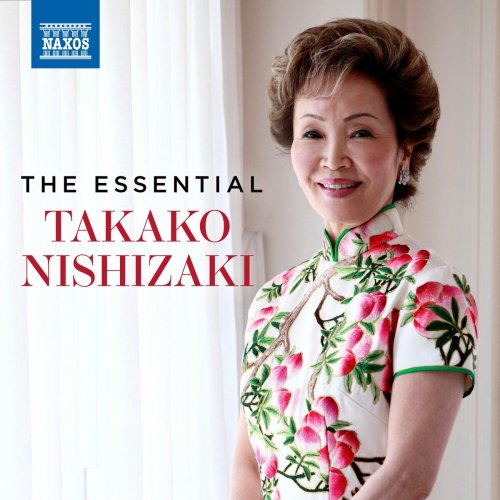
Artist: Takako Nishizaki
Title: The Essential Takako Nishizaki
Year Of Release: 2024
Label: Naxos
Genre: Classical
Quality: FLAC (tracks)
Total Time: 145:10 min
Total Size: 685 MB
WebSite: Album Preview
Tracklist:Title: The Essential Takako Nishizaki
Year Of Release: 2024
Label: Naxos
Genre: Classical
Quality: FLAC (tracks)
Total Time: 145:10 min
Total Size: 685 MB
WebSite: Album Preview
01. The Four Seasons, Violin Concerto in E Major, Op. 8 No. 1, RV 269 "Spring": I. Allegro
02. Salut d'amour, Op. 12
03. 6 Romances, Op. 6, TH 93: No. 6, None but the Lonely Heart (Arr. P. Breiner for Violin & Orchestra)
04. 5 Lieder, Op. 49: No. 4, Wiegenlied (Arr. for Violin & Piano)
05. Violin Concerto No. 9 in G Major, Op. 8: III. Rondeau
06. Sonata in D Major, No. 1: Violin Sonata in D Major, Op. 5, No. 1: III. Allegro
07. Orchestral Suite No. 3 in D Major, BWV 1068: II. Air ("On the G String")
08. Violin Sonata No. 17 in C Major, K. 296: Ii. Andante sostenuto
09. Les saisons (The Seasons), Op. 37b (arr. P. Breiner for violin and orchestra): Vi. June: Barcarolle
10. String Quintet in E Major, Op. 11 No. 5, G. 275: No. 3, Minuetto (Arr. for Violin & Piano)
11. Violin Concerto in A Minor, BWV 1041: III. Allegro assai
12. Thais: Meditation (Arr. M.P. Marsick)
13. The 4 Seasons, Violin Concerto in F Minor, Op. 8 No. 4, RV 297 "Winter": II. Largo
14. Violin Sonata No. 5 in F Major, Op. 24 "Spring": II. Adagio molto espressivo
15. Under the Silver Moon
16. Sonata for Keyboard and Violin No. 23 in D Major, K. 306: II. Andantino cantabile
17. Violin Concerto in D Major, Op. 77: III. Allegro giocoso, ma non troppo vivace
18. Cello Suite No. 6 in D Major, BWV 1012: V. Gavotte I and II (Arr. For violin and piano)
19. Meadowland (Polyushko, pole)
20. Orfeo ed Euridice: Dance of the Blessed Spirits (Arr. F. Kreisler for Violin & Piano)
21. Violin Sonata No. 9 in A Major, Op. 47 "Kreutzer": III. Finale. Presto
22. The 4 Seasons, Violin Concerto in G Minor, RV 315 "Summer": III. Presto
23. Rhapsody on a Theme of Paganini (Arr. F. Kreisler for violin and piano)
24. 8 Humoresques, Op. 101, B. 187, No. 7. Poco lento e grazioso in G-Flat Major: 8 Humoresques, Op. 101, B. 187: No. 7, Poco lento e
25. Violin Concerto No. 3 in G Major, K. 216: I. Allegro
26. Scheherazade, Op. 35: Oriental Dance (Arr. For violin and piano)
27. The Butterfly Lovers Violin Concerto
Violinist Takako Nishizaki is perhaps the most frequently recorded concert violinist of the digital era. She was also the first violinist to learn by way of the Suzuki method; her father, Shinji Nishizaki, worked with Shinichi Suzuki in developing the method, and Takako Nishizaki took instruction from both teachers. She made her debut at the age of 9, and further studied with Broadus Erle, starting in Japan and later at Yale University. Nishizaki finished her violin studies at Juilliard under Joseph Fuchs and in 1967 won second prize in the Leventritt International competition behind Pinchas Zukerman.
One would surmise that with her talent and beauty that American record companies would be getting in each other's way to obtain Nishizaki's recording contract. But they weren't, and by 1974 Nishizaki settled in Hong Kong, where she established a career as the pre-eminent violin virtuoso on the Chinese concert circuit. This was no small feat, as in China they take the violin seriously and its literature is central to the entire establishment of Chinese classical music. Along the way Nishizaki met and married German businessman Klaus Heymann, founder of HNH International, the corporate parent to the popular classical label Naxos. Heymann sponsored Nishizaki in an extensive series of recordings of Chinese classical music on his Marco Polo label. Some of these recordings sold into the millions of copies in China, providing the nest egg that launched the Naxos label in the late 1980s.
With Naxos, Nishizaki has recorded much of the standard Western violin literature, as well, but has made a special mission of recording key violin literature that is known in concert and in the classroom, but seldom represented on records. The most celebrated example of this tendency is her recordings of the concertos of Chevalier de St-Georges, but it also includes her interpretations of Charles August de Bériot, Louis Spohr, and Joseph Joachim. All of Nishizaki's recordings are notable for her generous, singing tone; flexible rhythmic sensibility; her sense of architectural symmetry in regard to whole movements; her ability to excite; and the sheer beauty of Nishizaki's sound.
One would surmise that with her talent and beauty that American record companies would be getting in each other's way to obtain Nishizaki's recording contract. But they weren't, and by 1974 Nishizaki settled in Hong Kong, where she established a career as the pre-eminent violin virtuoso on the Chinese concert circuit. This was no small feat, as in China they take the violin seriously and its literature is central to the entire establishment of Chinese classical music. Along the way Nishizaki met and married German businessman Klaus Heymann, founder of HNH International, the corporate parent to the popular classical label Naxos. Heymann sponsored Nishizaki in an extensive series of recordings of Chinese classical music on his Marco Polo label. Some of these recordings sold into the millions of copies in China, providing the nest egg that launched the Naxos label in the late 1980s.
With Naxos, Nishizaki has recorded much of the standard Western violin literature, as well, but has made a special mission of recording key violin literature that is known in concert and in the classroom, but seldom represented on records. The most celebrated example of this tendency is her recordings of the concertos of Chevalier de St-Georges, but it also includes her interpretations of Charles August de Bériot, Louis Spohr, and Joseph Joachim. All of Nishizaki's recordings are notable for her generous, singing tone; flexible rhythmic sensibility; her sense of architectural symmetry in regard to whole movements; her ability to excite; and the sheer beauty of Nishizaki's sound.




![corto.alto - SOME SMALL FORTUNE (2026) [Hi-Res]](https://www.dibpic.com/uploads/posts/2026-09/1788505151_cover.jpg "corto.alto - SOME SMALL FORTUNE (2026) [Hi-Res]")