Mark Masters - Sam Rivers 100 (2025) [Hi-Res]
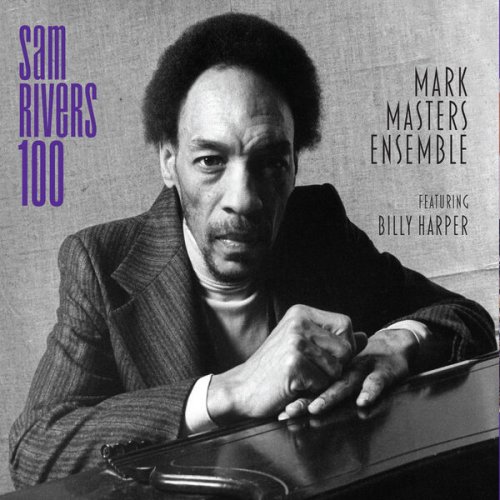
Artist: Mark Masters, Mark Masters Ensemble, Billy Harper
Title: Sam Rivers 100
Year Of Release: 2025
Label: Capri Records
Genre: Jazz
Quality: FLAC (tracks) [96kHz/24bit]
Total Time: 1:07:45
Total Size: 1.43 GB / 444 MB
WebSite: Album Preview
Tracklist:Title: Sam Rivers 100
Year Of Release: 2025
Label: Capri Records
Genre: Jazz
Quality: FLAC (tracks) [96kHz/24bit]
Total Time: 1:07:45
Total Size: 1.43 GB / 444 MB
WebSite: Album Preview
1. Fuchsia Swing Song (07:43)
2. Cyclic Episode (04:59)
3. Helix (06:40)
4. Parts Of Speech (02:33)
5. Point Of Many Returns (09:13)
6. Beatrice (09:40)
7. Downstairs Blues Upstairs (04:11)
8. Calls Of The Wild (03:01)
9. Paean (07:20)
10. Ellipsis (04:25)
11. Luminous Monolith (07:54)
Before diving into the heart of these recordings, it is important to recognize that these two albums serve first and foremost as historical documents. They offer no claims of reinvention, nor do they chase innovation for its own sake. Instead, they shine a spotlight on some of the most intellectually rigorous and emotionally charged saxophone compositions of the 20th century, works that continue to resonate and instruct.
This first album in the pair offers a precise and respectful traversal of Sam Rivers’ intricate compositional universe. Rivers’ music, known for its rhythmic complexity and abstract thematic development, demands not only technical excellence but near-mechanical synchronicity from its interpreters. In Sam Rivers 100, Mark Masters’ ensemble rises to the challenge with rigor and finesse.
The project was born out of a series of concerts held in late 2023 to honor what would have been Sam Rivers’ 100th birthday, he was born September 25, 1923. Masters chose to focus on Rivers’ mid-1960s period, drawing primarily from the seminal album Fuchsia Swing Song (1964), reimagining all six of its tracks with newly crafted arrangements for this tribute.
“I’ve admired Sam Rivers for a long time,” Masters explains. The genesis of this album actually dates back nearly two decades when Rivers and his trio were invited to perform at Claremont McKenna College, as part of a concert series produced by the American Jazz Institute, which Masters heads. “I was fascinated by how Sam evolved his music. I knew I had to do something with that energy.”
To honor Rivers properly, Masters turned to saxophonist Billy Harper, a logical choice whose musical sensibilities and historical path align closely with Rivers, despite being a generation younger.
“Sam represented the foundations of jazz,” Harper once told Orlando Weekly. “He’s a stepping stone to new horizons.”
The result is a recording that operates on multiple levels: it educates, it challenges, and it delights. Listeners are reminded, or introduced, to a body of work whose structural DNA is unlike anything being composed today. It’s a celebration, yes, but also a study, inviting both newcomers and seasoned jazz scholars into its dense and rewarding world. It is, simply put, a remarkable achievement in preserving a critical chapter of jazz history.
This first album in the pair offers a precise and respectful traversal of Sam Rivers’ intricate compositional universe. Rivers’ music, known for its rhythmic complexity and abstract thematic development, demands not only technical excellence but near-mechanical synchronicity from its interpreters. In Sam Rivers 100, Mark Masters’ ensemble rises to the challenge with rigor and finesse.
The project was born out of a series of concerts held in late 2023 to honor what would have been Sam Rivers’ 100th birthday, he was born September 25, 1923. Masters chose to focus on Rivers’ mid-1960s period, drawing primarily from the seminal album Fuchsia Swing Song (1964), reimagining all six of its tracks with newly crafted arrangements for this tribute.
“I’ve admired Sam Rivers for a long time,” Masters explains. The genesis of this album actually dates back nearly two decades when Rivers and his trio were invited to perform at Claremont McKenna College, as part of a concert series produced by the American Jazz Institute, which Masters heads. “I was fascinated by how Sam evolved his music. I knew I had to do something with that energy.”
To honor Rivers properly, Masters turned to saxophonist Billy Harper, a logical choice whose musical sensibilities and historical path align closely with Rivers, despite being a generation younger.
“Sam represented the foundations of jazz,” Harper once told Orlando Weekly. “He’s a stepping stone to new horizons.”
The result is a recording that operates on multiple levels: it educates, it challenges, and it delights. Listeners are reminded, or introduced, to a body of work whose structural DNA is unlike anything being composed today. It’s a celebration, yes, but also a study, inviting both newcomers and seasoned jazz scholars into its dense and rewarding world. It is, simply put, a remarkable achievement in preserving a critical chapter of jazz history.
![Daisy DeVell - UNDERWORLD (2026) [Hi-Res]](https://www.dibpic.com/uploads/posts/2026-10/1791891459_folder.jpg "Daisy DeVell - UNDERWORLD (2026) [Hi-Res]")
![VA - SPIRITUAL JAZZ 19 - West Coast USA Part 1 (2026) [Hi-Res]](https://www.dibpic.com/uploads/posts/2026-10/1791805569_cover.jpg "VA - SPIRITUAL JAZZ 19 - West Coast USA Part 1 (2026) [Hi-Res]")