Nadah El Shazly - Laini Tani (2025) Hi-Res
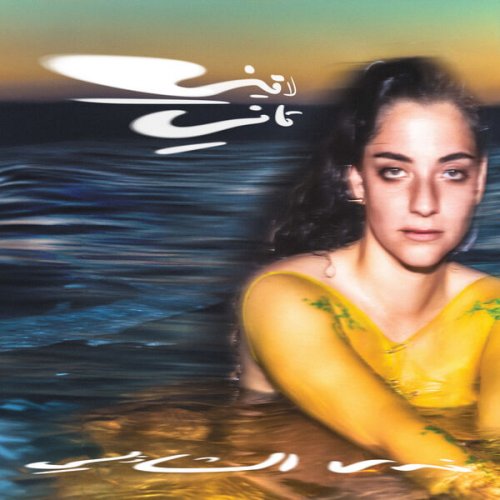
Artist: Nadah El Shazly
Title: Laini Tani
Year Of Release: 2025
Label: One Little Independent Records
Genre: Electronic, Pop, Experimental
Quality: 320 / FLAC (tracks) / FLAC (tracks) 24bit-96kHz
Total Time: 40:00
Total Size: 94 / 240 / 799 Mb
WebSite: Album Preview
Tracklist: Title: Laini Tani
Year Of Release: 2025
Label: One Little Independent Records
Genre: Electronic, Pop, Experimental
Quality: 320 / FLAC (tracks) / FLAC (tracks) 24bit-96kHz
Total Time: 40:00
Total Size: 94 / 240 / 799 Mb
WebSite: Album Preview
01. Elnadaha (4:31)
02. Kaabi Aali (4:35)
03. Banit (4:31)
04. Eid (4:01)
05. Enti Fi Neama (3:47)
06. Dafaa Robaai (3:45)
07. Labkha (5:23)
08. Laini Tani (5:06)
09. Ghorzetein (4:21)
Egyptian-born, Montreal-based Nadah El Shazly began her career in Cairo's underground scene—in a Misfits cover band, no less!—and gained recognition with her 2017 debut album Ahwar, which was praised for its fusion of Egyptian music, jazz, and electronica and earned plenty of comparisons to artists as varied as Björk and Kamilya Jubran. Laini Tani follows up the radically intense Pollution Opera collaboration with Elvin Brandhi, but it is notably more diverse in its approach than Pollution's unabashed experimentalism. Appropriately, Laini Tani starts in a very different place than it ends. The opening number ("Elnadaha") is a swirling, beautiful piece, with a largely electronic approach that evokes vistas both celestial and pastoral, while El Shazly's voice takes on a breathy, angelic tonality. Meanwhile, "Ghorzetein" closes out the album with a disorienting and sonically dense approach that leans as much on industrial-style electronics as it does trance-inducing Egyptian percussion. In between, El Shazly explores a wide range of textures and traditions, seamlessly fusing her Egyptian heritage, her global travels, and an experimental—and genre-unbound—approach to electronics. On"Enti Fi Neama"—a piece even more relentlessly intense than "Ghorzetein"—she evokes an Arabic musical motif played on a pipe organ then shoved through a glitching ProTools loop; it is neither modern nor classical, neither Eastern nor Western, and it is as deeply unsettling as it is dazzlingly unique. "Labkha" is atmospheric and very nearly gentle, combining spare acoustic instrumentation with subtle electronic effects; the spotlight is ceded here to El Shazly's voice, which conveys a fraught intensity. Similarly, on the album's title track, the musical arrangement is nearly invisible at the beginning, with intently plucked harp by Sarah Pagé providing an improvisational counterpoint to El Shazly's rich singing. As the song develops over just five minutes, the two are joined by rumbling percussion that, rather than simply moving the track forward into a predictable crescendo, explodes it into something far more dynamic, dramatic, and illusory.
![Warren Vache - First Time Out (2021) [DSD128]](https://www.dibpic.com/uploads/posts/2022-11/1668805955_wwwa68.jpg "Warren Vache - First Time Out (2021) [DSD128]")
![Seigen Tokuzawa & Masaki Hayashi - B (2026) [Hi-Res]](https://www.dibpic.com/uploads/posts/2026-08/1787714230_jionhssbrm07c_600.jpg "Seigen Tokuzawa & Masaki Hayashi - B (2026) [Hi-Res]")