VA - Steven Ricks: Mythological Fragments (2025) [Hi-Res]
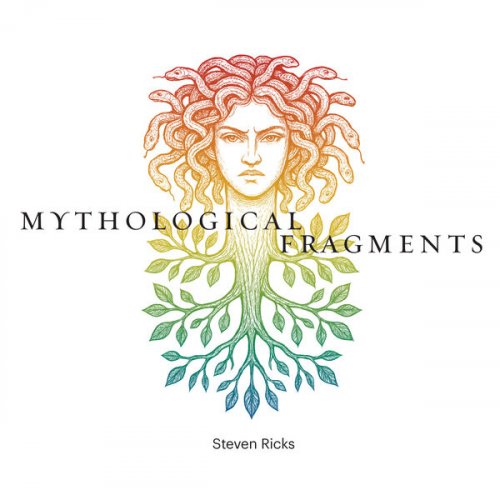
Artist: Various Artists, Keith Kirchoff, Jennifer Welch-Babidge, Steven Ricks, Madison Leonard, Shea Owens, Jillian Townsend, Anamae Anderson, Marilyn Dodson, Matt Coleman, Michelle Kesler, Barta Heiner, Kevin P. Anthony, Erdem Helvacioglu
Title: Steven Ricks: Mythological Fragments
Year Of Release: 2025
Label: New Focus Recordings
Genre: Classical
Quality: FLAC (tracks + booklet) [96kHz/24bit]
Total Time: 1:06:09
Total Size: 1.14 GB / 335 MB
WebSite: Album Preview
Tracklist:Title: Steven Ricks: Mythological Fragments
Year Of Release: 2025
Label: New Focus Recordings
Genre: Classical
Quality: FLAC (tracks + booklet) [96kHz/24bit]
Total Time: 1:06:09
Total Size: 1.14 GB / 335 MB
WebSite: Album Preview
1. Jennifer Welch-Babidge & Keith Kirchoff – Medusa in Fragments (20:14)
2. Michelle Kesler & Steven Ricks – Baucis & Philemon: Introduction. The Gods Came as Peasants (06:23)
3. Madison Leonard, Shea Owens, Matt Coleman & Michelle Kesler – Baucis & Philemon: A Home for Birds "Spring" (04:05)
4. Steven Ricks – Baucis & Philemon: Interlude No. 1. Passerina amoena (01:35)
5. Shea Owens, Matt Coleman & Michelle Kesler – Baucis & Philemon: I Once Complained (Philemon) (02:59)
6. Matt Coleman & Michelle Kesler – Baucis & Philemon: Interlude No. 2. Rainfall, Runoff, River (04:03)
7. Madison Leonard, Shea Owens, Matt Coleman & Michelle Kesler – Baucis & Philemon: The Arrow of Time "Summer" (05:09)
8. Michelle Kesler & Steven Ricks – Baucis & Philemon: Interlude No. 3. Cloud (to) Figure (to) Ground (03:23)
9. Madison Leonard, Matt Coleman & Michelle Kesler – Baucis & Philemon: There Is More to You and Me (Baucis) (02:58)
10. Matt Coleman & Steven Ricks – Baucis & Philemon: Interlude No. 4. Change in the Air (02:39)
11. Madison Leonard, Shea Owens, Matt Coleman & Michelle Kesler – Baucis & Philemon: Marcescence "Fall" (04:20)
12. Matt Coleman & Michelle Kesler – Baucis & Philemon: The Hidden Lives of Trees "Winter" (04:24)
13. Michelle Kesler & Steven Ricks – Baucis & Philemon: Afterlife (03:51)
Composer Steven Ricks looks to two tales from Greek literature as a source of inspiration for the two works on Mythological Fragments. Ricks intuitively understands the composer’s role in setting this iconic material, letting the stories speak for themselves but capturing something of the internal reactions they provoke, as felt and extrapolated through his perspective. The result is an album of great contrasts between the gripping Medusa in Fragments and the relatively pacific Baucis and Philemon, presented with a grounded sensibility that pervades both pieces. Ricks keenly understands the work that both tales have already done for him; Medusa brings Dionysian catharsis and Baucis brings Apollonian wonder. He is able to harness these energies and find appropriate musical vehicles to highlight them, and explore their intricacies and implications.
Medusa in Fragments is a striking monodrama for piano, surround-sound electronics, and pre-recorded, video projected soprano (Jennifer Welch-Babidge). The work opens with ominous, alienated electronics, thrusting us into a disturbing sound world before Keith Kirchoff’s solo piano enters dramatically with powerful chords and trilled figures. The keyboard figuration is imitated by glitchy, halting fragments in the electronics, reinforcing and then doubling down on Ricks’ modular approach to motivic manipulation. The ferocious tenor of this introductory section diffuses into an ascending electronics gesture before the piano brings in the soprano entrance with glistening rolled chords after the 2:54 mark (ushering in the section titled I. “Concerning Athena”). The vocal part lays out Medusa’s case for herself with a spoken text, echoed with unsettling delays in the electronics. “Am I to blame for another’s desire,” she asks, as the intensity of the passage grows. The soprano’s first sung lines enter at 4:45, (II. “To Perseus (Concerning Andromeda)”), joining a haunting chorus of echoing virtual doppelgängers while the piano is mixed with microtonally inflected keyboard samples in the electronics. Ricks skillfully mines the high register of the keyboard for its unique timbral properties, using repeated pitches to mimic the cadence of the spoken voice parts and create a context for brittle processed sounds. As the piece unfolds, Ricks’ use of electronics begins to transform the voice timbre more dramatically, modulating its color and obscuring it with more immersive delays. Concurrently, the vocal writing itself opens up, culminating in powerful high register passages such as the peak at the 11:30 mark. A subsequent passage adds a pre-recorded male voice as a sparring partner for Medusa’s ruminations, as an accumulating fever propels the psychological drama of the piece forward. Ricks’ fragmentary impression of the Medusa myth focuses not on a linear retelling of the tale, but instead on a portrait of internal turmoil that the story embodies unrelentingly from beginning to end. By placing the soprano inside a virtual hall-of-mirrors electronic environment instead of scoring it for live singer, Ricks further enhances the work’s sense of disconnection and isolation.
Ricks employs some similar techniques in Baucis and Philemon as in Medusa in Fragments, despite the works overall gentler tone and the use of a larger onstage ensemble. In the “Introduction: The Gods Came as Peasants,” a female narrator sets the scene, echoed subtly by electronic delays that occasionally alter the speed of the recitation. The electronics undulate behind the spoken voice in a blooming halo, before the cello intones a meditative alternation between an open string and harmonics accompanied by samples of bird songs and the lapping of water. “A Home for Birds” opens with a wordless vocalise duet between soprano and baritone over watery harp arpeggios, and the ensemble joins to accompany the text entrance with colorful word painting. Baucis and Philemon includes four Interludes featuring instruments with electronics — the first is for piccolo with bird sound samples, a joyful dialogue of complementary sonic imitation. “I Once Complained” is a solo aria for Philemon’s character (baritone Shea Owens), supported by pointed ensemble unison attacks, interstitial cello utterances, oscillations in the marimba, bell-like percussion, and rich harp chords. “Interlude 2: Rainfall, Runoff, River” is similarly environmental to #1, this time opening with harp before inviting flute, cello, and percussion in for a percolating, modular texture that suggests the activity of creatures over a recording of water sounds. “The Arrow of Time” returns to the vocal duo format, with a moto perpetuo toggling figure in the harp anchoring the energized texture before it is briefly passed to the marimba, flute, and cello. “Interlude 3: Cloud (to) Figure (to) Ground” features solo cello, again within a bed of bird calls, along with sounds of a thunderstorm. For Baucis’ (soprano Madison Leonard) solo, “There is More to You and Me,” a rising soprano line is shadowed and commented upon by the flute and supported by delicate harp harmonics and trills. The final Interlude, “Change in the Air,” is improvisatory and brings the thunderstorm to the fore, as cymbal swells and extended techniques in the ensemble mimic the power of a deluge. A splash of harmonic color opens “Marcescence,” with shimmering crotale attacks and brilliant piccolo lines brightening the ensemble texture. “The Hidden Lives of Trees” is austere, featuring scraped and hit metal percussion, reveling in their resonance before erratic non-pitched electronic sounds enter brusquely, breaking the introspective character. The narrator returns for the final movement, “Afterlife,” closing the piece with a texture reminiscent of the opening movement; a calming monologue is heard over bird song, gentle electronics word-paint phrases of the text, and luminous cello harmonics swell in and out of earshot. The final words heard, “made way for something new,” encapsulate the magic and mystery of these timeless myths — tales from antiquity that always renew themselves in contemporary times, refreshing the mind in preparation for new horizons.
- Dan Lippel
Medusa in Fragments is a striking monodrama for piano, surround-sound electronics, and pre-recorded, video projected soprano (Jennifer Welch-Babidge). The work opens with ominous, alienated electronics, thrusting us into a disturbing sound world before Keith Kirchoff’s solo piano enters dramatically with powerful chords and trilled figures. The keyboard figuration is imitated by glitchy, halting fragments in the electronics, reinforcing and then doubling down on Ricks’ modular approach to motivic manipulation. The ferocious tenor of this introductory section diffuses into an ascending electronics gesture before the piano brings in the soprano entrance with glistening rolled chords after the 2:54 mark (ushering in the section titled I. “Concerning Athena”). The vocal part lays out Medusa’s case for herself with a spoken text, echoed with unsettling delays in the electronics. “Am I to blame for another’s desire,” she asks, as the intensity of the passage grows. The soprano’s first sung lines enter at 4:45, (II. “To Perseus (Concerning Andromeda)”), joining a haunting chorus of echoing virtual doppelgängers while the piano is mixed with microtonally inflected keyboard samples in the electronics. Ricks skillfully mines the high register of the keyboard for its unique timbral properties, using repeated pitches to mimic the cadence of the spoken voice parts and create a context for brittle processed sounds. As the piece unfolds, Ricks’ use of electronics begins to transform the voice timbre more dramatically, modulating its color and obscuring it with more immersive delays. Concurrently, the vocal writing itself opens up, culminating in powerful high register passages such as the peak at the 11:30 mark. A subsequent passage adds a pre-recorded male voice as a sparring partner for Medusa’s ruminations, as an accumulating fever propels the psychological drama of the piece forward. Ricks’ fragmentary impression of the Medusa myth focuses not on a linear retelling of the tale, but instead on a portrait of internal turmoil that the story embodies unrelentingly from beginning to end. By placing the soprano inside a virtual hall-of-mirrors electronic environment instead of scoring it for live singer, Ricks further enhances the work’s sense of disconnection and isolation.
Ricks employs some similar techniques in Baucis and Philemon as in Medusa in Fragments, despite the works overall gentler tone and the use of a larger onstage ensemble. In the “Introduction: The Gods Came as Peasants,” a female narrator sets the scene, echoed subtly by electronic delays that occasionally alter the speed of the recitation. The electronics undulate behind the spoken voice in a blooming halo, before the cello intones a meditative alternation between an open string and harmonics accompanied by samples of bird songs and the lapping of water. “A Home for Birds” opens with a wordless vocalise duet between soprano and baritone over watery harp arpeggios, and the ensemble joins to accompany the text entrance with colorful word painting. Baucis and Philemon includes four Interludes featuring instruments with electronics — the first is for piccolo with bird sound samples, a joyful dialogue of complementary sonic imitation. “I Once Complained” is a solo aria for Philemon’s character (baritone Shea Owens), supported by pointed ensemble unison attacks, interstitial cello utterances, oscillations in the marimba, bell-like percussion, and rich harp chords. “Interlude 2: Rainfall, Runoff, River” is similarly environmental to #1, this time opening with harp before inviting flute, cello, and percussion in for a percolating, modular texture that suggests the activity of creatures over a recording of water sounds. “The Arrow of Time” returns to the vocal duo format, with a moto perpetuo toggling figure in the harp anchoring the energized texture before it is briefly passed to the marimba, flute, and cello. “Interlude 3: Cloud (to) Figure (to) Ground” features solo cello, again within a bed of bird calls, along with sounds of a thunderstorm. For Baucis’ (soprano Madison Leonard) solo, “There is More to You and Me,” a rising soprano line is shadowed and commented upon by the flute and supported by delicate harp harmonics and trills. The final Interlude, “Change in the Air,” is improvisatory and brings the thunderstorm to the fore, as cymbal swells and extended techniques in the ensemble mimic the power of a deluge. A splash of harmonic color opens “Marcescence,” with shimmering crotale attacks and brilliant piccolo lines brightening the ensemble texture. “The Hidden Lives of Trees” is austere, featuring scraped and hit metal percussion, reveling in their resonance before erratic non-pitched electronic sounds enter brusquely, breaking the introspective character. The narrator returns for the final movement, “Afterlife,” closing the piece with a texture reminiscent of the opening movement; a calming monologue is heard over bird song, gentle electronics word-paint phrases of the text, and luminous cello harmonics swell in and out of earshot. The final words heard, “made way for something new,” encapsulate the magic and mystery of these timeless myths — tales from antiquity that always renew themselves in contemporary times, refreshing the mind in preparation for new horizons.
- Dan Lippel
![Rafa M. Guillén & The Jazz Walkers - Always Forward (2026) [Hi-Res]](https://www.dibpic.com/uploads/posts/2026-08/1786950172_cover.jpg "Rafa M. Guillén & The Jazz Walkers - Always Forward (2026) [Hi-Res]")
![John Hollenbeck & Hot Club Jazz Orchestra - Peace and Justice (2026) [Hi-Res]](https://img.israbox.com/img/2026-08/14/yjxr05zbnxz2tg8ev1eo87btr.jpg "John Hollenbeck & Hot Club Jazz Orchestra - Peace and Justice (2026) [Hi-Res]")

![Too Noisy Fish - Tolstoy (2026) [Hi-Res]](https://www.dibpic.com/uploads/posts/2026-08/1786680316_m5fydcsu3awy6_600.jpg "Too Noisy Fish - Tolstoy (2026) [Hi-Res]")
![Ronnie Aldrich - Where The Sun Is (1966) [Vinyl Rip]](https://www.dibpic.com/uploads/posts/2026-08/1786943795_5.jpg "Ronnie Aldrich - Where The Sun Is (1966) [Vinyl Rip]")