Angela Kraft Cross - Passages on the Journey (2022)
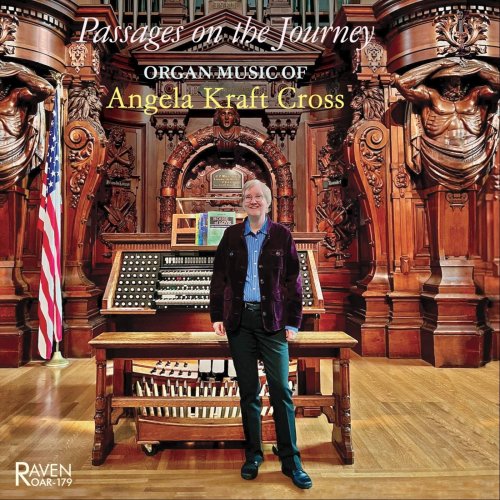
Artist: Angela Kraft Cross
Title: Passages on the Journey
Year Of Release: 2022
Label: Raven
Genre: Classical
Quality: FLAC (tracks)
Total Time: 1:18:32
Total Size: 304 MB
WebSite: Album Preview
Tracklist:Title: Passages on the Journey
Year Of Release: 2022
Label: Raven
Genre: Classical
Quality: FLAC (tracks)
Total Time: 1:18:32
Total Size: 304 MB
WebSite: Album Preview
1. Angela Kraft Cross – Variations on "Ode to Joy" (06:05)
2. Angela Kraft Cross – Tree of Life (05:56)
3. Angela Kraft Cross – Healing Waters (06:05)
4. Angela Kraft Cross – Grand Lothbury Voluntary (05:55)
5. Angela Kraft Cross – Petite Messe d’Orgue: Kyrie eleison (03:48)
6. Angela Kraft Cross – Petite Messe d’Orgue: Gloria (03:23)
7. Angela Kraft Cross – Petite Messe d’Orgue: Sanctus (04:33)
8. Angela Kraft Cross – Petite Messe d’Orgue: Agnus Dei (05:08)
9. Angela Kraft Cross – St. Bede’s Voluntary (04:08)
10. Angela Kraft Cross – Fantasie on "Ubi Caritas" (04:14)
11. Angela Kraft Cross – Archangel Fantasie (07:31)
12. Angela Kraft Cross – La Pietà (04:44)
13. Angela Kraft Cross – Fantasie on "Arirang" (05:21)
14. Angela Kraft Cross – Journey to Wholeness “To Make Man Whole”: I. In Health and Sickness (04:21)
15. Angela Kraft Cross – Journey to Wholeness “To Make Man Whole”: II. Empathy (03:15)
16. Angela Kraft Cross – Journey to Wholeness “To Make Man Whole”: Healing (03:59)
For this recording of some of her compositions, Angela Kraft Cross chose to play them on an organ rich in tonal distinction and variety, rich in American music history, and especially rich in its appearance and architectural pedigree.
The Great Organ is located in Methuen, Massachusetts, in a building designed by architect Henry Vaughan (1845-1917) to house it. It was relocated there second-hand in 1909 by its new owner Edward F. Searles (1841-1920). Named Serlo Hall, now Methuen Memorial Music Hall, the elaborate building was designed and constructed over nearly a decade for Searles’ private use and was not opened for public performances until after its acquistion in 1931 by organbuilder Ernest M. Skinner (1866-1960). Skinner’s son, Richmond, operated the Methuen Organ Co. in the organ workshop attached to Serlo Hall until he and his father reorganized in 1936 as Ernest M. Skinner & Son Company (after Skinner had departed the famous Aeolian-Skinner Co.), where they built in 1937-38 the large organ for the National Cathedral in Washington, DC (a Henry Vaughan building).
Searles, heir of $21 million and real estate in San Francisco, New York, and Massachusetts at the death in 1891 of his wealthy wife, financed Methuen organbuilder James E. Treat (1837-1915). Treat renamed his firm the Methuen Organ Company in 1898. The firm built several beautifully crafted pipe organs, but is primarily known for rebuilding and installing the huge, 64-ton organ in Searles’ Serlo Hall.
Searles acquired the organ for $1,500 at auction in 1897 from the estate of sewing-machine inventor William O. Grover, who had purchased it from the Boston Music Hall for $5,000 in 1884. Grover’s unrealized intention for the New England Conservatory to have the organ led to its storage for 13 years. The organ had cost about $60,000 when it was installed in the Boston Music Hall in 1863 and inaugurated November 2, 1863, as the largest in the United States, with 5,474 pipes and 84 registers. The organ was illuminated by a greatly novel (in 1863) electric lamp and played by several, including an introduction played by the builder, Mr. Walcker, followed by John Knowles Paine playing Bach’s Toccata in F, BWV 540.
The Boston Music Hall had been constructed in 1852 by the Boston Music Hall Association via a gift of $100,000 conferred by the Harvard Musical Association. The hall became the third home of the Handel & Haydn Society of Boston as well as the first home of the Boston Symphony Orchestra, founded in 1881. Physician and organ aficianado Jabez Baxter Upham was president of the BMHA in 1852, and was authorized in 1854 to acquire “an organ of the first rank.” After four months of visiting organs and their builders in Europe, including a consultation with Franz Liszt who recommended organbuilder Friedrich Ladegast (1818-1905), he signed a contract with E. F. Walcker & Cie. of Ludwigsburg in the Kingdom of Württemberg (now Baden-Württemberg, Germany).
The huge case of the organ, housing the tallest facade pipes of burnished English tin and about 30 feet in length, was not designed or built in Europe, but in New York City by the revered cabinetmakers and interior designers, Gustave (1830–1898) and Christian (1839–1883) Herter, immigrants who operated the Herter Brothers Co. They built it of solid American black walnut, adapting an initial design by Boston artist Hammatt Billings (1818–1874). After 21 years in its original home, the organ was removed in 1884 (despite significant protest) to render its space on stage to the orchestra and other events.
Upon its arrival and rebuilding in Methuen beginning ca. 1897, most of the Walcker mechanism (particularly the cone-valve, ventil windchests widely adopted in Germany after their introduction by Walcker ca. 1840) and tracker-pneumatic action was discarded. The Methuen workshop built exceptionally well made pallet-and-slider windchests, still working in the organ today. It received a new console, still in use though with some newer parts, with electropneumatic action to pneumatic pull-down devices at the chests. Completed in Serlo Hall, the organ was heard on December 9, 1909, in a rededication concert played by Boston organist Everett E. Truette (1861-1933).
In 1946, the non-profit Methuen Memorial Music Hall, Inc., was founded by seven Methuen area residents, and Alfred C. Gaunt, textile mill operator, acquired the building and gave it to the new corporation. The Aeolian-Skinner Organ Co. of Boston and its owner and president, G. Donald Harrison (1889-1956), were commissioned to rebuild the organ with revised principal choruses and other stops revised, relocated, or replaced, and some added stops. Much of the original pipework remained relatively unaltered, yet satisfied consultants Arthur Howes, Carl Weinrich, and Ernest White, all leaders of a movement to return to what were believed to be Baroque characteristics of organs. The three consultants delivered the dedication concert on the rebuilt organ on June 24 and 25, 1947.
Since its founding in 1948, the Andover Organ Co. of Methuen has maintained and updated the organ as determined by the Methuen Memorial Music Hall Association. Some of the work has involved re-establishing the character of original Walcker stops.
The Great Organ is located in Methuen, Massachusetts, in a building designed by architect Henry Vaughan (1845-1917) to house it. It was relocated there second-hand in 1909 by its new owner Edward F. Searles (1841-1920). Named Serlo Hall, now Methuen Memorial Music Hall, the elaborate building was designed and constructed over nearly a decade for Searles’ private use and was not opened for public performances until after its acquistion in 1931 by organbuilder Ernest M. Skinner (1866-1960). Skinner’s son, Richmond, operated the Methuen Organ Co. in the organ workshop attached to Serlo Hall until he and his father reorganized in 1936 as Ernest M. Skinner & Son Company (after Skinner had departed the famous Aeolian-Skinner Co.), where they built in 1937-38 the large organ for the National Cathedral in Washington, DC (a Henry Vaughan building).
Searles, heir of $21 million and real estate in San Francisco, New York, and Massachusetts at the death in 1891 of his wealthy wife, financed Methuen organbuilder James E. Treat (1837-1915). Treat renamed his firm the Methuen Organ Company in 1898. The firm built several beautifully crafted pipe organs, but is primarily known for rebuilding and installing the huge, 64-ton organ in Searles’ Serlo Hall.
Searles acquired the organ for $1,500 at auction in 1897 from the estate of sewing-machine inventor William O. Grover, who had purchased it from the Boston Music Hall for $5,000 in 1884. Grover’s unrealized intention for the New England Conservatory to have the organ led to its storage for 13 years. The organ had cost about $60,000 when it was installed in the Boston Music Hall in 1863 and inaugurated November 2, 1863, as the largest in the United States, with 5,474 pipes and 84 registers. The organ was illuminated by a greatly novel (in 1863) electric lamp and played by several, including an introduction played by the builder, Mr. Walcker, followed by John Knowles Paine playing Bach’s Toccata in F, BWV 540.
The Boston Music Hall had been constructed in 1852 by the Boston Music Hall Association via a gift of $100,000 conferred by the Harvard Musical Association. The hall became the third home of the Handel & Haydn Society of Boston as well as the first home of the Boston Symphony Orchestra, founded in 1881. Physician and organ aficianado Jabez Baxter Upham was president of the BMHA in 1852, and was authorized in 1854 to acquire “an organ of the first rank.” After four months of visiting organs and their builders in Europe, including a consultation with Franz Liszt who recommended organbuilder Friedrich Ladegast (1818-1905), he signed a contract with E. F. Walcker & Cie. of Ludwigsburg in the Kingdom of Württemberg (now Baden-Württemberg, Germany).
The huge case of the organ, housing the tallest facade pipes of burnished English tin and about 30 feet in length, was not designed or built in Europe, but in New York City by the revered cabinetmakers and interior designers, Gustave (1830–1898) and Christian (1839–1883) Herter, immigrants who operated the Herter Brothers Co. They built it of solid American black walnut, adapting an initial design by Boston artist Hammatt Billings (1818–1874). After 21 years in its original home, the organ was removed in 1884 (despite significant protest) to render its space on stage to the orchestra and other events.
Upon its arrival and rebuilding in Methuen beginning ca. 1897, most of the Walcker mechanism (particularly the cone-valve, ventil windchests widely adopted in Germany after their introduction by Walcker ca. 1840) and tracker-pneumatic action was discarded. The Methuen workshop built exceptionally well made pallet-and-slider windchests, still working in the organ today. It received a new console, still in use though with some newer parts, with electropneumatic action to pneumatic pull-down devices at the chests. Completed in Serlo Hall, the organ was heard on December 9, 1909, in a rededication concert played by Boston organist Everett E. Truette (1861-1933).
In 1946, the non-profit Methuen Memorial Music Hall, Inc., was founded by seven Methuen area residents, and Alfred C. Gaunt, textile mill operator, acquired the building and gave it to the new corporation. The Aeolian-Skinner Organ Co. of Boston and its owner and president, G. Donald Harrison (1889-1956), were commissioned to rebuild the organ with revised principal choruses and other stops revised, relocated, or replaced, and some added stops. Much of the original pipework remained relatively unaltered, yet satisfied consultants Arthur Howes, Carl Weinrich, and Ernest White, all leaders of a movement to return to what were believed to be Baroque characteristics of organs. The three consultants delivered the dedication concert on the rebuilt organ on June 24 and 25, 1947.
Since its founding in 1948, the Andover Organ Co. of Methuen has maintained and updated the organ as determined by the Methuen Memorial Music Hall Association. Some of the work has involved re-establishing the character of original Walcker stops.
![Dean Kalaitzidis - Bright Tree (2026) [Hi-Res]](https://img.israbox.com/img/2026-10/18/obltgczcjevcnwjxn6aeyfq09.jpg "Dean Kalaitzidis - Bright Tree (2026) [Hi-Res]")
![Isao Suzuki Sextet - Ako's Dream (1976) [2025]](https://www.dibpic.com/uploads/posts/2026-10/1792560892_ff.jpg "Isao Suzuki Sextet - Ako's Dream (1976) [2025]")
![CrisCrawl - Effervescences (2026) [Hi-Res]](https://www.dibpic.com/uploads/posts/2026-10/1792565242_cover.jpg "CrisCrawl - Effervescences (2026) [Hi-Res]")

![Fourplay - Between The Sheets (30th Anniversary 2023 Remastered) (2023) [Hi-Res]](https://www.dibpic.com/uploads/posts/2023-12/1702000394_cover.jpg "Fourplay - Between The Sheets (30th Anniversary 2023 Remastered) (2023) [Hi-Res]")