Jean-Nicolas Diatkine - Schubert: 6 Moments musicaux, Op. 94, D. 780, 4 Impromptus, Op. 90, D. 899 & Ungarische Melodie, D. 817 (2025) [Hi-Res]
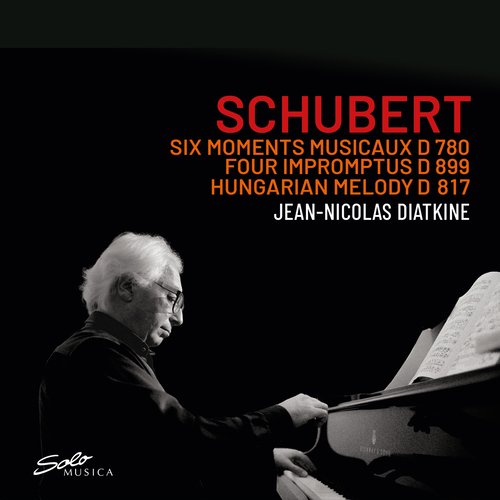
Artist: Jean-Nicolas Diatkine
Title: Schubert: 6 Moments musicaux, Op. 94, D. 780, 4 Impromptus, Op. 90, D. 899 & Ungarische Melodie, D. 817
Year Of Release: 2025
Label: Solo Musica
Genre: Classical
Quality: FLAC (tracks) / 24bit-96kHz FLAC (tracks)
Total Time: 01:04:31
Total Size: 185 MB / 0.99 GB
WebSite: Album Preview
Tracklist:Title: Schubert: 6 Moments musicaux, Op. 94, D. 780, 4 Impromptus, Op. 90, D. 899 & Ungarische Melodie, D. 817
Year Of Release: 2025
Label: Solo Musica
Genre: Classical
Quality: FLAC (tracks) / 24bit-96kHz FLAC (tracks)
Total Time: 01:04:31
Total Size: 185 MB / 0.99 GB
WebSite: Album Preview
1. 6 Moments musicaux, Op. 94, D. 780: No. 1 in C Major. Moderato (5:46)
2. 6 Moments musicaux, Op. 94, D. 780: No. 2 in A-Flat Major. Andantino (9:48)
3. 6 Moments musicaux, Op. 94, D. 780: No. 3 in F Minor. Allegro moderato (1:47)
4. 6 Moments musicaux, Op. 94, D. 780: No. 4 in C-Sharp Minor. Moderato (4:52)
5. 6 Moments musicaux, Op. 94, D. 780: No. 5 in F Minor. Allegro vivace (2:36)
6. 6 Moments musicaux, Op. 94, D. 780: No. 6 in A-Flat Major. Allegretto (9:54)
7. 4 Impromptus, Op. 90, D. 899: No. 1 in C Minor. Allegro molto moderato (8:41)
8. 4 Impromptus, Op. 90, D. 899: No. 2 in E-Flat Major. Allegro (4:38)
9. 4 Impromptus, Op. 90, D. 899: No. 3 in G-Flat Major. Andante (5:47)
10. 4 Impromptus, Op. 90, D. 899: No. 4 in A-Flat Major. Allegretto (7:08)
11. Ungarische Melodie, D. 817 (3:37)
Hungarian Melody – Moments Musicaux – 4 Impromptus
Just as a solitary walker sometimes likes to discover unknown paths, Schubert often liked to lose himself in digressions far removed from his starting point, which did not prevent him from maintaining a high degree of rigor in form. Although the composition of a lied imposes the structure of the poem he sets to music as a framework, it is precisely through the audacity of his modulations that he often finds a space of freedom that makes his expression particularly striking in its accuracy. Naturally, we find the same sense of dramatic contraction in his short compositions for piano. Everything rests on each note.
The four Impromptus op.90 are so expressive that they stand on their own and require no explanation, with the possible exception of the first. My initial approach to the first impromptu in C minor was influenced by the character of the lied “Der Wanderer, the homeless traveler” who constantly asks himself: where to go? (“Wo, immer wo?”). The pianissimo beginning evoked an energy on the verge of dying out, but which gradually comes back to life. At the end of the piece, the triple piano suggested to me that melancholy would ultimately prevail. Everything changed when I realized that, right up to the final chord, Schubert did not allow the performer any slowing down. The long diminuendo on the last page is reminiscent of a march receding into the distance, but without faltering in its rhythm. My conception of the piece was completely overturned. Another scenario imposed itself, that of a song without words evoking the same atmosphere of tragic heroism as Heine’s The Two Grenadiers: an imaginary encounter with a small detachment of an army that we hear approaching. Among the members of the troop is a poet who sings a march, alternating with the chorus of the rest of the troop. Without transition, the melody escapes the sordid reality of war, with a very characteristic Schubertian cheerfulness. Then there is a sudden silence before an episode in which the violence of the fighting and the fear of death resurface. The return of the initial march, this time in a major key, conveys the tragic joy of these men’s sacrifice:
“With the joyful trumpet
May my Emperor then pass over my bones:
Drums, make yourselves heard!
Armed, I rise and leave the earth,
I have my Emperor to defend!”
Heine, The Two Grenadier
The singing fades into the distance and only the call of the trumpets remains audible, repeated four times, before leaving the narrator to conclude the piece alone, with a heavy heart.
Just as a solitary walker sometimes likes to discover unknown paths, Schubert often liked to lose himself in digressions far removed from his starting point, which did not prevent him from maintaining a high degree of rigor in form. Although the composition of a lied imposes the structure of the poem he sets to music as a framework, it is precisely through the audacity of his modulations that he often finds a space of freedom that makes his expression particularly striking in its accuracy. Naturally, we find the same sense of dramatic contraction in his short compositions for piano. Everything rests on each note.
The four Impromptus op.90 are so expressive that they stand on their own and require no explanation, with the possible exception of the first. My initial approach to the first impromptu in C minor was influenced by the character of the lied “Der Wanderer, the homeless traveler” who constantly asks himself: where to go? (“Wo, immer wo?”). The pianissimo beginning evoked an energy on the verge of dying out, but which gradually comes back to life. At the end of the piece, the triple piano suggested to me that melancholy would ultimately prevail. Everything changed when I realized that, right up to the final chord, Schubert did not allow the performer any slowing down. The long diminuendo on the last page is reminiscent of a march receding into the distance, but without faltering in its rhythm. My conception of the piece was completely overturned. Another scenario imposed itself, that of a song without words evoking the same atmosphere of tragic heroism as Heine’s The Two Grenadiers: an imaginary encounter with a small detachment of an army that we hear approaching. Among the members of the troop is a poet who sings a march, alternating with the chorus of the rest of the troop. Without transition, the melody escapes the sordid reality of war, with a very characteristic Schubertian cheerfulness. Then there is a sudden silence before an episode in which the violence of the fighting and the fear of death resurface. The return of the initial march, this time in a major key, conveys the tragic joy of these men’s sacrifice:
“With the joyful trumpet
May my Emperor then pass over my bones:
Drums, make yourselves heard!
Armed, I rise and leave the earth,
I have my Emperor to defend!”
Heine, The Two Grenadier
The singing fades into the distance and only the call of the trumpets remains audible, repeated four times, before leaving the narrator to conclude the piece alone, with a heavy heart.
Download Link Isra.Cloud
Jean-Nicolas Diatkine - Schubert 6 Moments musicaux, Op. 94, D. 780, 4 Impromptus, Op. 90, D. 899 & Ungarische Melodie, D. 817 FLAC.rar - 185.7 MB
Jean-Nicolas Diatkine - Schubert_ 6 Moments musicaux, Op. 94, D. 780, 4 Impromptus, Op. 90, D. 899 & Ungarische Melodie, D. 817 Hi-Res.rar - 1023.0 MB
Jean-Nicolas Diatkine - Schubert 6 Moments musicaux, Op. 94, D. 780, 4 Impromptus, Op. 90, D. 899 & Ungarische Melodie, D. 817 FLAC.rar - 185.7 MB
Jean-Nicolas Diatkine - Schubert_ 6 Moments musicaux, Op. 94, D. 780, 4 Impromptus, Op. 90, D. 899 & Ungarische Melodie, D. 817 Hi-Res.rar - 1023.0 MB
![Marlena Shaw - From the Depths of My Soul (1973) [Vinyl]](https://www.dibpic.com/uploads/posts/2026-07/1784186205_0060254701193_600.jpg "Marlena Shaw - From the Depths of My Soul (1973) [Vinyl]")


![Nat King Cole - Greatest Love Songs (1982) [2008]](https://www.dibpic.com/uploads/posts/2026-07/1784404942_front.jpg "Nat King Cole - Greatest Love Songs (1982) [2008]")
![Cal Tjader, Charlie Byrd - Tambu (1973) [1998]](https://www.dibpic.com/uploads/posts/2026-07/1784530840_ctt500.jpg "Cal Tjader, Charlie Byrd - Tambu (1973) [1998]")
![Albert Nichols - Inner Vision (2026) [Hi-Res]](https://www.dibpic.com/uploads/posts/2026-07/1784524688_b3exakce3tn7r_600.jpg "Albert Nichols - Inner Vision (2026) [Hi-Res]")