VA - 20th Century Classics: Hartmann Volume 2 (2012)
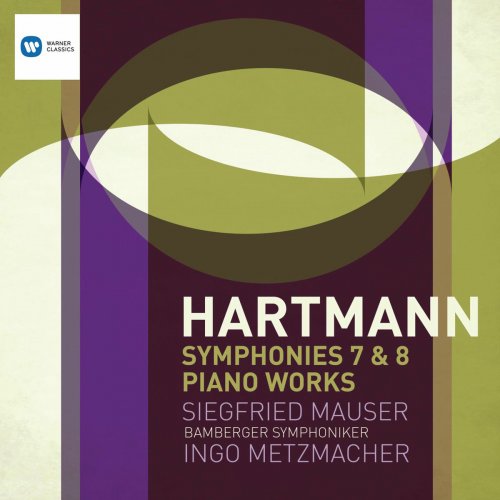
Artist: Bamberger Symphoniker, Ingo Metzmacher, Siegfried Mauser
Title: 20th Century Classics: Hartmann Volume 2
Year Of Release: 2012
Label: Warner Classics
Genre: Classical
Quality: FLAC (tracks)
Total Time: 02:02:05
Total Size: 395 MB
WebSite: Album Preview
Tracklist:Title: 20th Century Classics: Hartmann Volume 2
Year Of Release: 2012
Label: Warner Classics
Genre: Classical
Quality: FLAC (tracks)
Total Time: 02:02:05
Total Size: 395 MB
WebSite: Album Preview
CD1
1. Sinfonien Nr.7 & 8, Sinfonie Nr.7 für großes Orchester (1957/58): I. Introduktion Und Ricercare (10:33)
2. Sinfonien Nr.7 & 8, Sinfonie Nr.7 für großes Orchester (1957/58): II. Adagio Mesto Cantanto E Tranquillo (12:29)
3. Sinfonien Nr.7 & 8, Sinfonie Nr.7 für großes Orchester (1957/58): Finale. Scherzoso Virtuoso (7:17)
4. Sinfonien Nr.7 & 8, Sinfonie Nr.8 für großes Orchester (1960-62): I. Cantilène. Lento Assai, Con Passione (15:45)
5. Sinfonien Nr.7 & 8, Sinfonie Nr.8 für großes Orchester (1960-62): II. Dithyrambe. Scherzo, Lebhaft (10:13)
CD2
1. Piano Sonata '27 April 1945' (1947): I. Bewegt (4:05)
2. Piano Sonata '27 April 1945' (1947): II. Presto assai (scherzo) (4:09)
3. Piano Sonata '27 April 1945' (1947): III. Marcia funebre (lento) (11:37)
4. Piano Sonata '27 April 1945' (1947): IV. Erste Fassung: Allegro risoluto (7:57)
5. Piano Sonata '27 April 1945' (1947): V. Zweite Fassung: Allegro furioso (stürmisch, leidenschaftlich) (5:49)
6. Jazz-Toccata und Fuge für Klavier: Toccata (5:21)
7. Jazz-Toccata und Fuge für Klavier: Fuge (3:44)
8. Sonatine für Klavier: Äußerst lebhaft (sehr rhythmisch), anstürmend (8:02)
9. Kleine Suite für Klavier: I. Sehr langsam (2:14)
10. Kleine Suite für Klavier: II. Sehr lebhaft (sehr roh) (0:49)
11. Kleine Suite für Klavier: III. Fließend (1:20)
12. Kleine Suite für Klavier: IV. Breit und zart (1:30)
13. Kleine Suite für Klavier: V. Äußerst lebhaft (0:39)
14. Kleine Suite für Klavier (Suite No.2): I. Lebhaft (1:01)
15. Kleine Suite für Klavier (Suite No.2): II. Sehr langsam; zart (3:46)
16. Kleine Suite für Klavier (Suite No.2): III. Fließend (2:06)
17. Kleine Suite für Klavier (Suite No.2): IV. Jazz (1:39)
Unlike many of his contemporaries, Karl Amadeus Hartmann (1905-1963) subscribed to no school or circle of fellow-composers; he was never a teacher and so developed no followers. Thus he was an individual artist whose influences came from Bruckner, Mahler and Reger. He also had an affinity with Stravinsky and Bartók. Although Webern was one of his teachers (it was from Webern that Hartmann developed his love of detail) it was more to the romantic music of Berg that Hartmann looked for inspiration.
Whilst the Nazi party were in power in Germany, although remaining there, Hartmann withdrew himself from German musical life and refused to let his works be performed there. After the defeat of Hitler Hartmann became active again and soon became a prominent musician and administrator in Germany, winning many awards. He was instrumental in reintroducing the German public to 20th-century music, especially that that had been banned by the Nazis, and he created opportunities for younger composers to come to the fore.
Towards the end of his life adminstration took up more and more of Hartmann's time and, with no conductor to champion his music, it soon largely vanished from attention. Only recently has it begun to re-emerge, mainly through the help of conductors like Mariss Janssons and Ingo Metzmacher, whose important complete cycle of Hartmann's symphonies here makes a welcome return to the catalogues.
Whilst the Nazi party were in power in Germany, although remaining there, Hartmann withdrew himself from German musical life and refused to let his works be performed there. After the defeat of Hitler Hartmann became active again and soon became a prominent musician and administrator in Germany, winning many awards. He was instrumental in reintroducing the German public to 20th-century music, especially that that had been banned by the Nazis, and he created opportunities for younger composers to come to the fore.
Towards the end of his life adminstration took up more and more of Hartmann's time and, with no conductor to champion his music, it soon largely vanished from attention. Only recently has it begun to re-emerge, mainly through the help of conductors like Mariss Janssons and Ingo Metzmacher, whose important complete cycle of Hartmann's symphonies here makes a welcome return to the catalogues.
Download Link Isra.Cloud
Various Artists - 20th Century Classics_ Hartmann (Volume 2) Hi-Res.rar - 395.1 MB
Various Artists - 20th Century Classics_ Hartmann (Volume 2) Hi-Res.rar - 395.1 MB
![Luxury Skin - I'll Get You Out of Here, Baby (2026) [Hi-Res]](https://img.israbox.com/img/2026-08/02/5j75xigx7s2swa1pv141hefoz.jpg "Luxury Skin - I'll Get You Out of Here, Baby (2026) [Hi-Res]")