Joe Lutcher - Jumpin' at the Mardi Gras (2009)
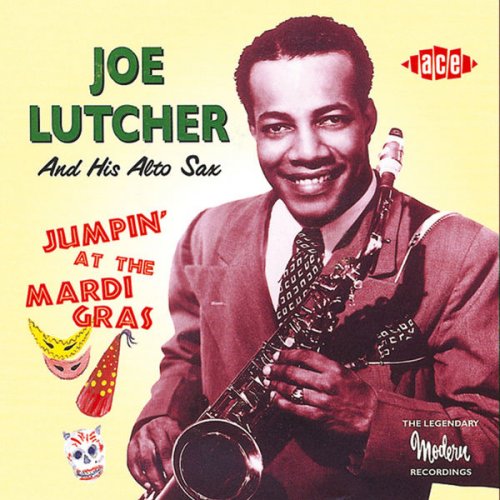
Artist: Joe Lutcher
Title: Jumpin' at the Mardi Gras
Year Of Release: 2009
Label: Ace Records
Genre: Blues
Quality: flac lossless (tracks)
Total Time: 01:17:09
Total Size: 188 mb
WebSite: Album Preview
TracklistTitle: Jumpin' at the Mardi Gras
Year Of Release: 2009
Label: Ace Records
Genre: Blues
Quality: flac lossless (tracks)
Total Time: 01:17:09
Total Size: 188 mb
WebSite: Album Preview
01. Rockola
02. Pasadena Rhumboogie
03. Mardi Gras
04. Please Be My Honey
05. This Is 49
06. Night Cap
07. Let It Rain
08. Ojai
09. Take a Ride
10. Joe's Lament
11. Foothill Drive
12. Rag Mop
13. Beige Room
14. Cryin' & Singing the Blues
15. Carnival Parade
16. La Bohemie
17. Pasadena Rhumboogie (Previously Unissued)
18. Joe's Mood
19. Take a Ride (Previously Unissued)
20. Ojai (Previously Unissued)
21. Let's Be Friends
22. I Want a Little Girl
23. Foothill Drive (Previously Unissued)
24. I Can't Give You Anything but Love
25. Bumps and Lumps
This is quite a comprehensive collection (25 tracks) for a relatively minor early R&B performer. However, it shouldn't be considered a best-of as it only covers his stint with Modern in the late '40s and early '50s, not including any of his Capitol and Specialty material, and thus omitting the R&B hits "Shuffle Woogie" and "The Rockin' Boogie" (although "Mardi Gras" is here). In fact, only nine of the numbers (both sides of four 1949-1950 singles, plus a song that didn't come out until a 1983 Ace compilation) were previously released; the remaining two-thirds are previously unissued outtakes and alternates. Like many of the musicians recording in L.A. in the late '40s (including many of the ones doing Modern sessions), Lutcher was at the pivot in the transition between jazz, jump blues, and R&B that was vital to the birth of rock'n'roll. As such pioneering saxophonists go, Lutcher was a little more traditional than most, at times sounding like a link between older New Orleans jazz and R&B. On other sides, such as the 1949 single "Ojai," he's closer to the big band mood of Dizzy Gillespie or even Benny Goodman than he is to R&B and pre-rock'n'roll. What history will most remember his Modern stint for, however, are the cuts with a Mardi Gras influence (particularly in the rhythms), which stand as some of the first tracks ever recorded to bear an identifiably New Orleans R&B stamp. "Mardi Gras" itself, which was done before Professor Longhair's more famous version, is certainly the most galvanizing of those. Otherwise the disc is an energetic but somewhat samey-sounding hybrid of jump R&B, jazz, and the occasional New Orleans flavor, encompassing vocals (including two songs with an unidentified female vocalist) and instrumentals.
![Ancient Infinity Orchestra - It's Always About Liberation (2026) [Hi-Res]](https://www.dibpic.com/uploads/posts/2026-07/1784644511_folder.jpg "Ancient Infinity Orchestra - It's Always About Liberation (2026) [Hi-Res]")
![Meshell Ndegeocello - Doing Life (Soundtrack from the Netflix Film) (2026) [Hi-Res]](https://img.israbox.com/img/2026-10/02/5h3zsjv7b7a3bq9zx2u80vc61.jpg "Meshell Ndegeocello - Doing Life (Soundtrack from the Netflix Film) (2026) [Hi-Res]")
![Benoit Birlouet - Awakening (2026) [Hi-Res]](https://www.dibpic.com/uploads/posts/2026-10/1790822176_kln2zuxxcy2a1_600.jpg "Benoit Birlouet - Awakening (2026) [Hi-Res]")