Sonora Ponceña & Celia Cruz - La Ceiba (1979)
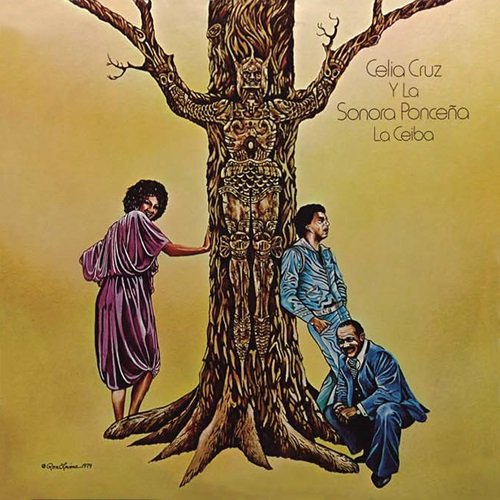
Artist: Sonora Ponceña, Celia Cruz
Title: La Ceiba
Year Of Release: 1979
Label: Fania
Genre: Latin Jazz, Salsa, Merengue, Bolero
Quality: Flac (tracks)
Total Time: 39:03
Total Size: 240 Mb
WebSite: Album Preview
Tracklist:Title: La Ceiba
Year Of Release: 1979
Label: Fania
Genre: Latin Jazz, Salsa, Merengue, Bolero
Quality: Flac (tracks)
Total Time: 39:03
Total Size: 240 Mb
WebSite: Album Preview
01. Soy Antillana 6:16
02. Sonaremos El Tambó 4:31
03. Ábreme La Puerta 5:07
04. Y Volveré 4:00
05. A La Buena Si 5:20
06. Fina Estampa 2:45
07. Raíces 4:35
08. La Ceiba Y La Siguaraya 6:31
Puerto Rican La Sonora Ponceña, one of the most popular tropical acts ever, was formed in 1954 by local musicians Enrique Lucca Caraballo and Antonio Santaella, who were previously playing in a band formed in 1944, called El Conjunto Internacional. In 1958, La Sonora Ponceña's first single was released, featuring "No Puede Ser" and "Tan Linda Que Era," making its first performance in the U.S. in September 1960, in New York City. By 1968, after they were joined by Caraballo's son, pianist Enrique Lucca Quiñonez, Jr., also known as Papo, La Sonora Ponceña made its first album, called Hacheros Pa' un Palo, featuring the Latin classic "Amor Verdadero."~Drago Bonacich
-----------
Celia Cruz was not only the “Queen of Salsa”; she was its heartbeat, its joy, its roar, and its radiant banner. Born in Havana in 1925, Celia Caridad Cruz Alfonso transcended borders with a voice overflowing with rhythm, passion, and power. From her early days with La Sonora Matancera to her worldwide fame with the Fania All-Stars, her unmistakable timbre and her legendary cry —“¡Azúcar!”— became emblems of identity and resistance.
Over more than five decades, Cruz revolutionized Afro-Latin music with uncontainable energy and magnetic stage presence. Her art wove together Yoruba heritage, Caribbean cadence, and the sophistication of jazz and pop, forging a universal musical language. In every performance, her laughter was percussion, her voice a trumpet, her charisma pure fire.
A multiple Grammy winner and one of the most influential Latin artists of the 20th century, Celia Cruz left an indelible mark on global culture. Beyond the legend, her legacy continues to resonate — a timeless celebration of life, memory, and freedom.~Juan Barrios
-----------
Celia Cruz was not only the “Queen of Salsa”; she was its heartbeat, its joy, its roar, and its radiant banner. Born in Havana in 1925, Celia Caridad Cruz Alfonso transcended borders with a voice overflowing with rhythm, passion, and power. From her early days with La Sonora Matancera to her worldwide fame with the Fania All-Stars, her unmistakable timbre and her legendary cry —“¡Azúcar!”— became emblems of identity and resistance.
Over more than five decades, Cruz revolutionized Afro-Latin music with uncontainable energy and magnetic stage presence. Her art wove together Yoruba heritage, Caribbean cadence, and the sophistication of jazz and pop, forging a universal musical language. In every performance, her laughter was percussion, her voice a trumpet, her charisma pure fire.
A multiple Grammy winner and one of the most influential Latin artists of the 20th century, Celia Cruz left an indelible mark on global culture. Beyond the legend, her legacy continues to resonate — a timeless celebration of life, memory, and freedom.~Juan Barrios
![Stefano Cocco Cantini, Alexander Robotnick - Marina Vibes (2025) [Hi-Res]](https://www.dibpic.com/uploads/posts/2026-10/1791134864_264cbaae8803f866a04028ff9f03c9ef.jpg "Stefano Cocco Cantini, Alexander Robotnick - Marina Vibes (2025) [Hi-Res]")
![Tamar Osborn - VARIER: BERLIN (2026) [Hi-Res]](https://img.israbox.com/img/2026-10/03/fai4k813tw1f1mi2zfxu74f2l.jpg "Tamar Osborn - VARIER: BERLIN (2026) [Hi-Res]")

![Alex Conde - Paco de Lucía, Music for Big Band (Live) (2026) [Hi-Res]](https://www.dibpic.com/uploads/posts/2026-10/1791287307_folder.jpg "Alex Conde - Paco de Lucía, Music for Big Band (Live) (2026) [Hi-Res]")