Bob Reynolds - Eddie Told Me So (2026) Hi Res
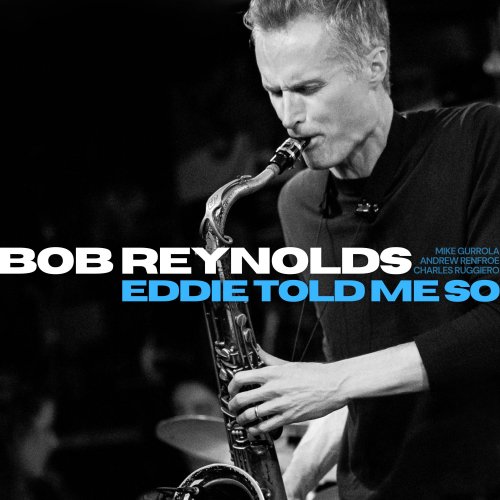
Artist: Bob Reynolds
Title: Eddie Told Me So
Year Of Release: 2026
Label: Nosahu Records
Genre: Jazz
Quality: 320 kbps | FLAC (tracks) | 24Bit/96 kHz FLAC
Total Time: 00:38:59
Total Size: 90 mb | 248 mb | 791 mb
WebSite: Album Preview
Tracklist:Title: Eddie Told Me So
Year Of Release: 2026
Label: Nosahu Records
Genre: Jazz
Quality: 320 kbps | FLAC (tracks) | 24Bit/96 kHz FLAC
Total Time: 00:38:59
Total Size: 90 mb | 248 mb | 791 mb
WebSite: Album Preview
01 - BOB REYNOLDS - Harrisburg
02 - BOB REYNOLDS - When Your Lover Has Gone
03 - BOB REYNOLDS - Change Partners
04 - BOB REYNOLDS - Just Friends
05 - BOB REYNOLDS - Eddie Told Me So
06 - BOB REYNOLDS - Charade
07 - BOB REYNOLDS - You Don't Know What Love Is
Personnel:
Bob Reynolds, tenor saxophone
Andrew Renfroe, guitar
Charles Ruggiero, drums
Mike Gurrola, bass
“Within the first two bars, I was nodding my head and tapping my foot. I’d never heard an acoustic jazz trio groove like that before. Then the sax came in this killer phrasing of a melody and I’m going, who is this? Is that a tenor or an alto?”
That was my first impression of Eddie Harris. I never got to hear him live, but in my senior year at Berklee College of Music I performed at the Monterey Jazz Festival, and I got to see Joshua Redman do an in-person blindfold listening test with DownBeat magazine. They played Eddie’s rendition of “When a Man Loves a Woman,” the classic R&B ballad, and I was just floored.
When I got back to Boston I went to Tower Records and picked up four Eddie Harris albums that I devoured over the next few months. I’ve been inspired by his music ever since. He had a blues-infused, funky approach to playing jazz that’s always in the pocket without ever losing a high level of harmonic sophistication. He treated rhythm sections as a conversation partner, not accompaniment, and he developed a complete vocabulary in the altissimo register of the saxophone, not just using it like a gimmick or effect.
The seed for this album was planted after a show Charles [Ruggiero] and I played together. He’d been listening to some of Eddie Harris’s albums and heard things in my playing that reminded him of Eddie. He asked if I’d listened much to Harris’s records. I shared the Monterey story, which set us off talking about how fun it would be to take some classic Eddie grooves and put them on new songs. That gave me the idea for the title and got us plotting to make this album.
Harrisburg is a song I wrote in the style of Eddie’s “Listen Here,” “Cold Duck Time,” and his performance of “Compared to What” with Les McCann from the 1969 live album Swiss Movement. It’s a straight-eighth, cross-stick, driving feel in 7/4 meter with a blues personality. Listen closely and you’ll hear me quote “Listen Here” in my solo.
When Your Lover Has Gone is an old standard covered countless times—Ben Webster, Sonny Rollins, Ella, Billie, Sinatra, even Carly Simon—but it doesn’t get played much anymore. We chose it as the vehicle to adapt two of my favorite Eddie Harris grooves: “When a Man Loves a Woman” and “The Shadow of Your Smile,” (theme song from a movie called The Sandpiper). Eddie recorded several movie themes. Listen to his version of “When a Man Loves a Woman” and you’ll hear our template. His “Shadow of Your Smile” groove lives in a similar space, so this track tips its hat to both.
Change Partners is an Irving Berlin song that combines the feel from Eddie’s version of “On a Clear Day” with a rendition from the 1967 Francis Albert Sinatra & Antônio Carlos Jobim album. I’ve always loved that album, and we even snagged the ending from Claus Ogerman’s orchestral arrangement. I’ll go on record as saying this is the closest I’ve ever come to emulating a singer’s vocal performance. Listen to Eddie’s “On a Clear Day” and you’ll hear the groove we borrowed. Listen to Sinatra sing “Change Partners” and you’ll hear how closely I traced his approach.
Just Friends takes its cue from Eddie’s up-tempo swing version of “Love for Sale” from his album The In Sound. Our rendition of “Just Friends” looks in that direction, and we decided to record it trio. In a way, it’s two duos—first between myself and Charles, and then between Mike and Charles. Their duo is one of my favorite moments of the album. Mike’s walking bass solo is pure melodic momentum.
Eddie Told Me So is my wink at the tune Eddie is perhaps most remembered for: “Freedom Jazz Dance.” Another song from his album The In Sound, it became widely known when Miles Davis covered it on Miles Smiles. “Freedom Jazz Dance” explores a chromatic and intervallic way of playing post-bop against a static harmonic backdrop. I took that feel and those concepts and worked them into a modified blues framework. It’s a 12-bar song that functions like a blues without sounding exactly like one. Listen to Eddie’s version of “Freedom Jazz Dance” and then “Eddie Told Me So,” and the parallels should appear.
Charade is Henry Mancini’s theme from the movie of the same name starring Audrey Hepburn and Cary Grant. I’m a fan of the movie and Mancini, and was searching for a film theme that lent itself to a jazz arrangement something Eddie did more than once. In fact, his version of the theme from Exodus wound up becoming the first gold-certified record in jazz. We put a little bit of a John Coltrane Quartet/My Favorite Things vibe on it.
You Don’t Know What Love Is doesn’t have a specific song counterpart, but this arrangement just felt aligned with so many things I’ve absorbed from Eddie’s playing. Along the way and especially toward the end I visit the penthouse floor of the saxophone range, that altissimo register he was so proficient in.
I hope you enjoy listening to this album as much as we enjoyed recording it, and I really hope you’ll investigate the songs of Eddie’s I’ve mentioned. I guarantee they will enrich your experience.
That was my first impression of Eddie Harris. I never got to hear him live, but in my senior year at Berklee College of Music I performed at the Monterey Jazz Festival, and I got to see Joshua Redman do an in-person blindfold listening test with DownBeat magazine. They played Eddie’s rendition of “When a Man Loves a Woman,” the classic R&B ballad, and I was just floored.
When I got back to Boston I went to Tower Records and picked up four Eddie Harris albums that I devoured over the next few months. I’ve been inspired by his music ever since. He had a blues-infused, funky approach to playing jazz that’s always in the pocket without ever losing a high level of harmonic sophistication. He treated rhythm sections as a conversation partner, not accompaniment, and he developed a complete vocabulary in the altissimo register of the saxophone, not just using it like a gimmick or effect.
The seed for this album was planted after a show Charles [Ruggiero] and I played together. He’d been listening to some of Eddie Harris’s albums and heard things in my playing that reminded him of Eddie. He asked if I’d listened much to Harris’s records. I shared the Monterey story, which set us off talking about how fun it would be to take some classic Eddie grooves and put them on new songs. That gave me the idea for the title and got us plotting to make this album.
Harrisburg is a song I wrote in the style of Eddie’s “Listen Here,” “Cold Duck Time,” and his performance of “Compared to What” with Les McCann from the 1969 live album Swiss Movement. It’s a straight-eighth, cross-stick, driving feel in 7/4 meter with a blues personality. Listen closely and you’ll hear me quote “Listen Here” in my solo.
When Your Lover Has Gone is an old standard covered countless times—Ben Webster, Sonny Rollins, Ella, Billie, Sinatra, even Carly Simon—but it doesn’t get played much anymore. We chose it as the vehicle to adapt two of my favorite Eddie Harris grooves: “When a Man Loves a Woman” and “The Shadow of Your Smile,” (theme song from a movie called The Sandpiper). Eddie recorded several movie themes. Listen to his version of “When a Man Loves a Woman” and you’ll hear our template. His “Shadow of Your Smile” groove lives in a similar space, so this track tips its hat to both.
Change Partners is an Irving Berlin song that combines the feel from Eddie’s version of “On a Clear Day” with a rendition from the 1967 Francis Albert Sinatra & Antônio Carlos Jobim album. I’ve always loved that album, and we even snagged the ending from Claus Ogerman’s orchestral arrangement. I’ll go on record as saying this is the closest I’ve ever come to emulating a singer’s vocal performance. Listen to Eddie’s “On a Clear Day” and you’ll hear the groove we borrowed. Listen to Sinatra sing “Change Partners” and you’ll hear how closely I traced his approach.
Just Friends takes its cue from Eddie’s up-tempo swing version of “Love for Sale” from his album The In Sound. Our rendition of “Just Friends” looks in that direction, and we decided to record it trio. In a way, it’s two duos—first between myself and Charles, and then between Mike and Charles. Their duo is one of my favorite moments of the album. Mike’s walking bass solo is pure melodic momentum.
Eddie Told Me So is my wink at the tune Eddie is perhaps most remembered for: “Freedom Jazz Dance.” Another song from his album The In Sound, it became widely known when Miles Davis covered it on Miles Smiles. “Freedom Jazz Dance” explores a chromatic and intervallic way of playing post-bop against a static harmonic backdrop. I took that feel and those concepts and worked them into a modified blues framework. It’s a 12-bar song that functions like a blues without sounding exactly like one. Listen to Eddie’s version of “Freedom Jazz Dance” and then “Eddie Told Me So,” and the parallels should appear.
Charade is Henry Mancini’s theme from the movie of the same name starring Audrey Hepburn and Cary Grant. I’m a fan of the movie and Mancini, and was searching for a film theme that lent itself to a jazz arrangement something Eddie did more than once. In fact, his version of the theme from Exodus wound up becoming the first gold-certified record in jazz. We put a little bit of a John Coltrane Quartet/My Favorite Things vibe on it.
You Don’t Know What Love Is doesn’t have a specific song counterpart, but this arrangement just felt aligned with so many things I’ve absorbed from Eddie’s playing. Along the way and especially toward the end I visit the penthouse floor of the saxophone range, that altissimo register he was so proficient in.
I hope you enjoy listening to this album as much as we enjoyed recording it, and I really hope you’ll investigate the songs of Eddie’s I’ve mentioned. I guarantee they will enrich your experience.

![Papik - Yes I Know My Way, Vol. 2 (2026) [Hi-Res]](https://www.dibpic.com/uploads/posts/2026-10/1791640889_folder.jpg "Papik - Yes I Know My Way, Vol. 2 (2026) [Hi-Res]")