Alexander Malofeev - Forgotten Melodies (2026) [Hi-Res]
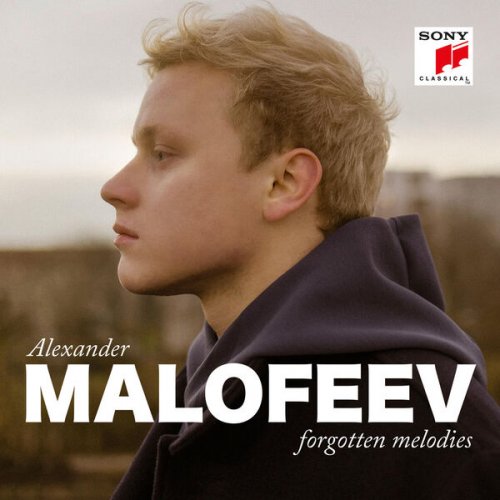
Artist: Alexander Malofeev
Title: Forgotten Melodies
Year Of Release: 2026
Label: Sony Classical
Genre: Classical Piano
Quality: flac lossless (tracks) / flac 24bits - 96.0kHz
Total Time: 02:01:55
Total Size: 435 mb / 1.93 gb
WebSite: Album Preview
TracklistTitle: Forgotten Melodies
Year Of Release: 2026
Label: Sony Classical
Genre: Classical Piano
Quality: flac lossless (tracks) / flac 24bits - 96.0kHz
Total Time: 02:01:55
Total Size: 435 mb / 1.93 gb
WebSite: Album Preview
CD1
01. A Farewell to Saint Petersburg: No. 10, The Lark (Transcr. Balakirev for Solo Piano)
02. Mazurka in C Major
03. Mazurka in C Minor
04. Polka in D Minor
05. Farewell Waltz
06. Forgotten Melodies I, Op. 38: I. Sonata reminiscenza
07. Forgotten Melodies I, Op. 38: II. Danza graziosa
08. Forgotten Melodies I, Op. 38: III. Danza festiva
09. Forgotten Melodies I, Op. 38: IV. Canzona fluviala
10. Forgotten Melodies I, Op. 38: V. Danza rustica
11. Forgotten Melodies I, Op. 38: VI. Canzona serenata
12. Forgotten Melodies I, Op. 38: VII. Danza silvestra
13. Forgotten Melodies I, Op. 38: VIII. Alla reminiscenza
14. 2 Fairy Tales, Op. 48: No. 2, Tale of the Elves
CD2
01. 5 Morceaux de fantaisie, Op. 3: No. 2, Prélude in C-Sharp Minor. Lento
02. Fragments, Op. Posth
03. Piano Sonata No. 2 in B-Flat Minor, Op. 36: I. Allegro agitato
04. Piano Sonata No. 2 in B-Flat Minor, Op. 36: II. Non allegro
05. Piano Sonata No. 2 in B-Flat Minor, Op. 36: III. Allegro molto
06. 12 Romances, Op. 21: No. 5, Lilacs (Transcr. Rachmaninoff for Solo Piano)
07. 5 Morceaux de fantaisie, Op. 3: No. 1, Élégie in E-Flat Minor
08. Études-Tableaux, Op. 33: No. 3, Grave
09. Études-Tableaux, Op. 33: No. 7, Moderato
10. Études-Tableaux, Op. 33: No. 8, Grave
11. 3 Études for Piano, Op. 31: No. 3, La nuit
12. Song of the Volga Boatmen, Op. 97
13. Idylle, Op. 103
14. 3 Miniatures for Piano, Op. 42: Valse - Allegretto
Alexander Malofeev, already one of the most acclaimed pianists of the younger generation, releases his debut on Sony Classical with Forgotten Melodies.
born in Moscow in 2001, Alexander Malofeev studied at two famous institutes in his home country: the Gnessin Special School and the Tchaikovsky Conservatory in Moscow. in 2014, he won first prize in the young talent edition of the renowned International Tchaikovsky Competition - at the age of just thirteen.
He now lives in Berlin. With his first album for Sony Classical, he wants to combine the traces of his origins with those of the present. I chose Berlin more or less by chance. Berlin used to be the home of Glinka, Glazunov and Medtner, at least temporarily.
For Forgotten Melodies, Alexander Malofeev has chosen four composers who all came from Russia but died far from their homeland: Alexander Glazunov in Paris in 1936, Mikhail Glinka in Berlin in 1857, Sergei Rachmaninoff in Beverly Hills in 1943 and Nikolai Medtner in London in 1951. However, Malofeev is moved by another thought more than the theme of exile, which had a significant impact on the lives of these four composers: They all share a similar sense of nostalgia - the longing for something indeterminate, for something that never existed in reality. Almost a dream world, and you can find it everywhere on this album.
The longest of the selected works is the second sonata by Sergei Rachmaninoff, written in Russia and reworked almost two decades later in Switzerland. I've loved Rachmaninoff for as long as I can remember, admits Malofeev, referring to both the composer and the pianist Rachmaninoff: His freedom, his spirit, his hands, his genius. Alexander Malofeev deliberately opted for the revised version of the sonata because it is shorter, more concise, more economically written and thus comes closer to Medtner.
The Sonata reminiscenza op. 38 No. 1 by Nikolai Medtner is another focal point of the double album. It is the opening piece of the first cycle of three of the Forgotten Melodies, which the composer wrote before he left the Soviet Union in 1921.
Not yet in his mid-twenties, Alexander Malofeev had already played his way into the international limelight - thanks to a fabulous technique and, above all, a special expressiveness in his playing. Conductor Riccardo Chailly sees him as more than a mere child prodigy, because for him Malofeev possesses not only technical mastery, but also musical maturity.
![Stephen Arnold & Sea Change - The Hitting Wall (2026) [Hi-Res]](https://img.israbox.com/img/2026-07/20/vhzizir8y4x6e42inwrwrmsuk.jpg "Stephen Arnold & Sea Change - The Hitting Wall (2026) [Hi-Res]")

![The Wesley Parker Quartet - Jazz at the Zoo (2026) [Hi-Res]](https://www.dibpic.com/uploads/posts/2026-07/1784525603_pfndos7a1vkbb_600.jpg "The Wesley Parker Quartet - Jazz at the Zoo (2026) [Hi-Res]")
![Tonino Miano - MOSS/electric (2026) [Hi-Res]](https://www.dibpic.com/uploads/posts/2026-07/1784701046_jvcyq3nja1ann_600.jpg "Tonino Miano - MOSS/electric (2026) [Hi-Res]")