Lars Anders Tomter, English Northern Philharmonia, Paul Daniel - Walton: Symphony No. 2, Viola Concerto (1996)
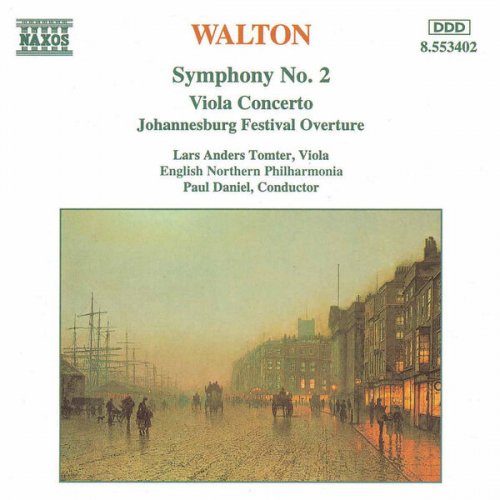
Artist: Lars Anders Tomter, English Northern Philharmonia, Paul Daniel
Title: Walton: Symphony No. 2, Viola Concerto
Year Of Release: 1996
Label: Naxos
Genre: Classical
Quality: FLAC (tracks)
Total Time: 01:01:24
Total Size: 289 Mb
WebSite: Album Preview
Tracklist:Title: Walton: Symphony No. 2, Viola Concerto
Year Of Release: 1996
Label: Naxos
Genre: Classical
Quality: FLAC (tracks)
Total Time: 01:01:24
Total Size: 289 Mb
WebSite: Album Preview
01. Johannesburg Festival Overture (00:07:46)
Viola Concerto (William Walton)
02. I. Andante comodo - Con spirito (00:08:26)
03. II. Vivo, con molto preciso (00:04:31)
04. III. Allegro moderato (00:13:00)
Symphony No. 2 (William Walton)
05. I. Allegro molto (00:09:08)
06. II. Lento assai (00:09:10)
07. III. Passacaglia. Tema - Risoluto (00:09:23)
Total length: 01:01:24
Label: Naxos
Performers:
Lars Anders Tomter (viola)
English Northern Philharmonia
Paul Daniel
This disc opens with one of the wittiest, most exuberant performances of the JohannesburgFestival Overture: Daniel encourages the orchestra's virtuoso wind and brass soloists to point the jazz rhythms idiomatically, making the music sparkle. The Viola Concerto is just as delectably pointed, the whole performance magnetic.
Tomter's tone, with its rapid flicker-vibrato, lacks the warmth of Kennedy's (reviewed below), but the vibrato is only obtrusive in that upper-middle register and his intonation is immaculate, his attack consistently clean, to match the crisp ensemble of the orchestra.
Although he adopts relatively measured speeds both for the Scherzo and the jaunty opening theme of the finale, the rhythmic lift brings out the scherzando jollity of the latter all the more.
Daniel's keen observance of dynamic markings is again brought out in the stuttering fanfare theme of the Scherzo, with muted trumpets and trombones for once played pianissimo as marked.
The close of the slow epilogue has never been recorded with such a profound hush as here, subsiding in darkness, and the recording team is to be complimented on getting such beautiful sound, clean with plenty of bloom. Paul Daniel adopts a relatively broad tempo in the Symphony's first movement, and the flowing tempo for the central slow movement makes for a lighter, less passionate result too. The finale, with its brassy first statement of the Passacaglia theme, brings fine dynamic contrasts, but again Litton and others produce a fatter, weightier sound, which on balance is preferable. Yet Daniel's view is a very valid one, to round off most convincingly an invaluable addition to the Walton discography.
Tomter's tone, with its rapid flicker-vibrato, lacks the warmth of Kennedy's (reviewed below), but the vibrato is only obtrusive in that upper-middle register and his intonation is immaculate, his attack consistently clean, to match the crisp ensemble of the orchestra.
Although he adopts relatively measured speeds both for the Scherzo and the jaunty opening theme of the finale, the rhythmic lift brings out the scherzando jollity of the latter all the more.
Daniel's keen observance of dynamic markings is again brought out in the stuttering fanfare theme of the Scherzo, with muted trumpets and trombones for once played pianissimo as marked.
The close of the slow epilogue has never been recorded with such a profound hush as here, subsiding in darkness, and the recording team is to be complimented on getting such beautiful sound, clean with plenty of bloom. Paul Daniel adopts a relatively broad tempo in the Symphony's first movement, and the flowing tempo for the central slow movement makes for a lighter, less passionate result too. The finale, with its brassy first statement of the Passacaglia theme, brings fine dynamic contrasts, but again Litton and others produce a fatter, weightier sound, which on balance is preferable. Yet Daniel's view is a very valid one, to round off most convincingly an invaluable addition to the Walton discography.
![Andrew Kim - Lineage (2026) [Hi-Res]](https://img.israbox.com/img/2026-07/23/28j8gm89d5zfmcym0tb9inxjo.jpg "Andrew Kim - Lineage (2026) [Hi-Res]")