Les Baxter & 101 Strings Orchestra - Lounge Music Deluxe: 101 Strings (2011)
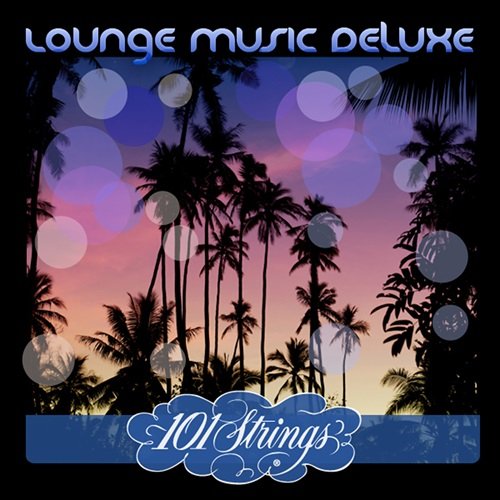
Artist: Les Baxter, 101 Strings Orchestra
Title: Lounge Music Deluxe: 101 Strings
Year Of Release: 2011
Label: Countdown Media, BMG
Genre: Jazz, Big Band, Easy Listening, Lounge
Quality: Flac (tracks)
Total Time: 54:34
Total Size: 348 Mb
WebSite: Album Preview
Tracklist:Title: Lounge Music Deluxe: 101 Strings
Year Of Release: 2011
Label: Countdown Media, BMG
Genre: Jazz, Big Band, Easy Listening, Lounge
Quality: Flac (tracks)
Total Time: 54:34
Total Size: 348 Mb
WebSite: Album Preview
01. Tropicando 2:37
02. Last Tango in Paris (From "Last Tango in Paris") 4:15
03. Soulsville 2:55
04. Touch and Go 2:46
05. A Taste Of Soul 4:58
06. Twilight on the Mall 3:13
07. Swingin' Stampede 3:01
08. Qué Mango! 2:10
09. Retrospection 2:22
10. On a Warm Night 2:32
11. Boca Chica 1:40
12. Solitaire 2:25
13. Felicia, My Love 1:54
14. Summer Serenade 2:08
15. Tomorrow for Sure 2:02
16. Southern Nights 3:07
17. Captive Dreams 2:06
18. Meandering 2:56
19. Jungle Montuno 3:00
20. Affair in Aruba 2:29
Les Baxter is a pianist who composed and arranged for the top swing bands of the '40s and '50s, but he is better known as the founder of exotica, a variation of easy listening that glorified the sounds and styles of Polynesia, Africa, and South America, even as it retained the traditional string-and-horn arrangements of instrumental pop. Exotica became a massively popular trend in the '50s, with thousands of record buyers listening to Baxter, Martin Denny, and their imitators. Baxter also pioneered the use of the electronic instrument the theremin, which has a haunting, howling sound.
Baxter studied piano at the Detroit Conservatory and Pepperdine College in Los Angeles. After he completed school, he abandoned the piano and became a vocalist. When he was 23, he joined Mel Tormé's Mel-Tones. The group sang on Artie Shaw records, including the hit "What Is This Thing Called Love."
In 1950, he became an arranger and conductor for Capitol Records, working on hits by Nat King Cole, including "Mona Lisa." Around the same time, Baxter began recording his own albums. In 1948, he released a triple-78 album called Music out of the Moon, which ushered in space-age pop with its use of the theremin. Four years later, he began recording exotica albums with Le Sacre du Sauvage.
On his early-'50s singles Baxter was relatively straightforward, performing versions of standards like the number one hits "Unchained Melody" and "The Poor People of Paris," but on his albums he experimented with all sorts of world musics, adapting them for his orchestra. As he was recording his exotica albums, Baxter was also the musical director for the radio show Halls of Ivy, plus Abbott & Costello radio shows; he also composed over 100 film scores, concentrating on horror movies and teenage musicals and comedies, though he also did dramas like Giant.
Baxter's heyday was in the '50s and '60s. Although he continued to compose and record in the '70s, his output was sporadic. Nevertheless, a cult following formed around his exotica recordings that persisted into the '90s.
Baxter studied piano at the Detroit Conservatory and Pepperdine College in Los Angeles. After he completed school, he abandoned the piano and became a vocalist. When he was 23, he joined Mel Tormé's Mel-Tones. The group sang on Artie Shaw records, including the hit "What Is This Thing Called Love."
In 1950, he became an arranger and conductor for Capitol Records, working on hits by Nat King Cole, including "Mona Lisa." Around the same time, Baxter began recording his own albums. In 1948, he released a triple-78 album called Music out of the Moon, which ushered in space-age pop with its use of the theremin. Four years later, he began recording exotica albums with Le Sacre du Sauvage.
On his early-'50s singles Baxter was relatively straightforward, performing versions of standards like the number one hits "Unchained Melody" and "The Poor People of Paris," but on his albums he experimented with all sorts of world musics, adapting them for his orchestra. As he was recording his exotica albums, Baxter was also the musical director for the radio show Halls of Ivy, plus Abbott & Costello radio shows; he also composed over 100 film scores, concentrating on horror movies and teenage musicals and comedies, though he also did dramas like Giant.
Baxter's heyday was in the '50s and '60s. Although he continued to compose and record in the '70s, his output was sporadic. Nevertheless, a cult following formed around his exotica recordings that persisted into the '90s.
![Didier Squiban - Molene (2003) [SACD]](https://www.dibpic.com/uploads/posts/2026-10/1792425261_r-24840713-1665919489-3665.jpg "Didier Squiban - Molene (2003) [SACD]")


![Isao Suzuki Quartet +1 - All Right! (1974) [2026]](https://www.dibpic.com/uploads/posts/2026-10/1792532816_ff.jpg "Isao Suzuki Quartet +1 - All Right! (1974) [2026]")