Max Devereaux - CHASM (2026)
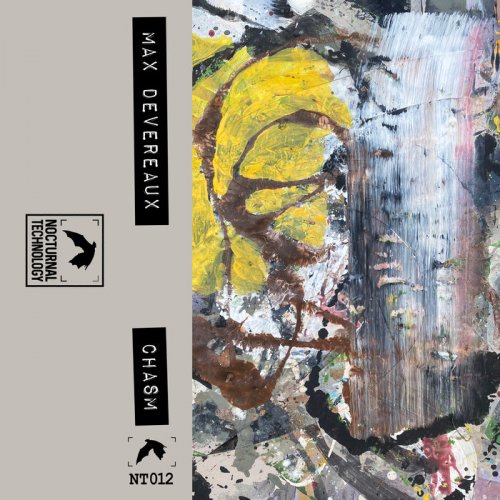
Artist: Max Devereaux
Title: CHASM
Year Of Release: 2026
Label: Nocturnal Technology
Genre: Experimental, Jazz, Ambient, Dub, Techno, Noise
Quality: 16bit-44,1kHz FLAC / 24bit-48kHz FLAC
Total Time: 36:30
Total Size: 211 mb / 429 mb
WebSite: Album Preview
TracklistTitle: CHASM
Year Of Release: 2026
Label: Nocturnal Technology
Genre: Experimental, Jazz, Ambient, Dub, Techno, Noise
Quality: 16bit-44,1kHz FLAC / 24bit-48kHz FLAC
Total Time: 36:30
Total Size: 211 mb / 429 mb
WebSite: Album Preview
1. N1
2.Lion in the Machine
3.Dark Shift
4.Procession
5.Pause Menu
6.Weird Walk
7.The Melting Hall
8.The Redondo Submarine Canyon
9.Fading Glow
Chasm is a collection of pieces built from fragments, discarded ideas, and interrupted processes. The music is shaped as much by removal as by addition. Throughout the album, he explores the space between human performance and mechanical repetition, memory and malfunction, and calm surfaces and darker undercurrents. The title refers to both a physical and psychological space—a gap between intention and result.
Side A introduces the album’s core themes through processes of reduction, reconstruction, and tension between organic and mechanical elements. “N1” reflects an early response to Nocturnal Technology’s sonic atmosphere while maintaining a distinct personal voice. “Lion in the Machine” and “Dark Shift” transform fragile or unsatisfying beginnings into dense, physical forms through stripping away and aggressive intervention.
“Procession,” built from heavily altered Japanese imperial court music, explores disruption within complex rhythmic systems, creating an unstable and ghostly movement. “Pause Menu,” derived from a larger 2021 recording, uses minimal repetition and subtle digital degradation to evoke suspended time, gradually dissolving into fragmented echoes and memory.
Side B shifts toward memory, place, and psychological landscape. “Weird Walk” reworks fragments of an unfinished synth-pop recording into an uneven, disoriented motion. “The Melting Hall,” derived from vintage Gagaku recordings, gradually dissolves its ceremonial origins into new rhythmic and tonal forms.
Inspired by a real underwater military site, “The Redondo Beach Submarine Canyon” combines free guitar improvisation with electronic and environmental sounds, suggesting descent and spatial exploration. The closing piece, “Fading Glow,” presents a simple repeating melody that slowly erodes, drifting away from stability and familiarity.
![Arve Henriksen, Karin Nakagawa - Unrehearsed dialogue (2026) [Hi-Res]](https://img.israbox.com/img/2026-10/04/pj4vsoh50gqsm6ycszjflcfub.jpg "Arve Henriksen, Karin Nakagawa - Unrehearsed dialogue (2026) [Hi-Res]")
![Ahmad Jamal - Ahmad's Blues (1958) [CDRip]](https://www.dibpic.com/uploads/posts/2026-10/1791177004_5.jpg "Ahmad Jamal - Ahmad's Blues (1958) [CDRip]")
![The Cyrkle - The Minx (Original Motion Picture Soundtrack (2026 Remastered Version)) (1970) [Hi-Res]](https://img.israbox.com/img/2026-10/01/mv9jxlb8anr1pfb4xdod4wmh0.jpg "The Cyrkle - The Minx (Original Motion Picture Soundtrack (2026 Remastered Version)) (1970) [Hi-Res]")
![Dave Holland - Freedom Call: Sextet - Unity (2026) [Hi-Res]](https://www.dibpic.com/uploads/posts/2026-09/1790792144_1.jpg "Dave Holland - Freedom Call: Sextet - Unity (2026) [Hi-Res]")
![Marilena Paradisi & Natalino Marchetti - Blue Prelude (2026) [Hi-Res]](https://img.israbox.com/img/2026-10/02/3jtywd7r1aq1n7mt9gkgpynjq.jpg "Marilena Paradisi & Natalino Marchetti - Blue Prelude (2026) [Hi-Res]")