Bruce Hungerford - The Beethoven Legacy: Piano Sonatas (2003)
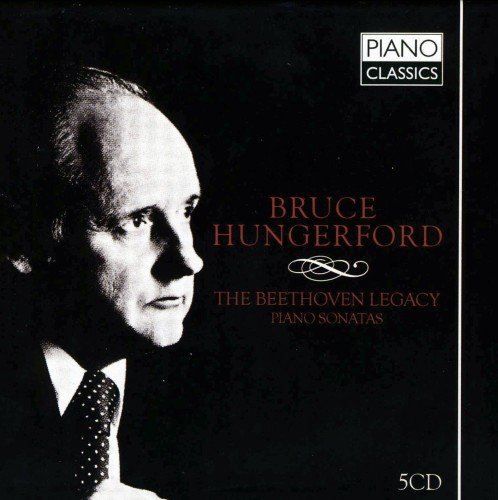
Artist: Bruce Hungerford
Title: The Beethoven Legacy: Piano Sonatas
Year Of Release: 2003
Label: PIANO CLASSICS
Genre: Classical, Piano Solo
Quality: FLAC (image+.cue,log,scans)
Total Time: 05:45:30
Total Size: 1.26 GB
WebSite: Album Preview
Tracklist:Title: The Beethoven Legacy: Piano Sonatas
Year Of Release: 2003
Label: PIANO CLASSICS
Genre: Classical, Piano Solo
Quality: FLAC (image+.cue,log,scans)
Total Time: 05:45:30
Total Size: 1.26 GB
WebSite: Album Preview
CD1
Piano Sonata No. 8 in C minor Op. 13 “Pathetique”
01. I. Grave, Allegro di molto e con brio (08:07)
02. II. Adagio cantabile (05:27)
03. III. Rondo. Allegro (04:46)
Piano Sonata No. 14 in C sharp minor Op. 27 No. 2 “Moonlight”
04. I. Adagio sostenuto (05:53)
05. II. Allegretto (02:10)
06. III. Presto agitato (06:46)
Piano Sonata No. 17 in D minor Op. 31 No. 2 “Sturm”
07. I. Largo. Allegro (08:35)
08. II. Adagio (08:23)
09. III. Allegretto (06:56)
Piano Sonata No. 21 in C major Op. 53 “Waldstein”
10. I. Allegro con brio (09:32)
11. II. Adagio molto (13:08)
CD2
Piano Sonata No. 2 in A major Op. 2
01. I. Allegro vivace (06:35)
02. II. Largo appassionato (08:02)
03. III. Scherzo, allegretto (03:29)
04. IV. Rondo graziocso (06:00)
Piano Sonata No. 4 in E flat major Op. 7
05. I. Molto allegro (07:43)
06. II. Largo (09:57)
07. III. Allegro (05:14)
08. IV. Rondo (06:30)
Piano Sonata No. 5 in C minor Op. 10 No. 1
09. I. Molto allegro (05:24)
10. II. Adagio molto (08:56)
11. III. Finale prestissimo (04:06)
CD3
01. Piano Sonata No. 6 in F major Op. 10 No. 2 (13:37)
Piano Sonata No. 7 in D major Op. 10 No. 3
02. I. Presto (06:33)
03. II. Largo e mesto (11:16)
04. III. Menuet e trio (02:28)
05. IV. Allegro (04:08)
Piano Sonata No. 13 in E flat major Op. 27 No. 1 “Quasi una Fantasia”
06. I. Andante – allegro (07:10)
07. II. Allegro vivace (08:48)
08. Andante favori, in F major WoO 57 (09:14)
CD4
Piano Sonata No. 1 in F minor Op. 2 No. 1
01. I. Allegro (03:37)
02. II. Adagio (06:29)
03. III. Menuetto (03:47)
04. IV. Prestissimo (04:43)
Piano Sonata No. 12 in A flat major Op. 26
05. I. Andante (09:33)
06. II. Scherzo (02:41)
07. III. Marcia funebre (06:10)
08. IV. Allegro (02:43)
09. Piano Sonata No. 19 in G minor Op. 49 No. 1 (08:18)
10. Piano Sonata No. 20 in G major Op. 49 No. 2 (08:04)
11. Rondo in C major Op. 51 No. 1 (05:11)
12. Menuet in E flat major (04:09)
13. Lustig-Traurig, WoO 54 (01:46)
14. Für Elise, Bagatelle in A minor (03:07)
CD5
Piano Sonata No. 24 in F sharp major Op. 78 “Für Therese”
01. I. Adagio cantabile (06:53)
02. II. Allegro vivace (02:48)
Piano Sonata No. 30 in E major Op. 109
03. I. Vivace ma non troppo (03:41)
04. II. Prestissimo (02:21)
05. III. Andante molto cantabile ed espressivo (14:32)
Piano Sonata No. 31 in A flat major Op. 110
06. I. Moderato cantabile, molto espressivo (06:31)
07. II. Allego molto (02:01)
08. III. Adagio ma non troppo (03:39)
09. IV. Fuga. adagio ma non troppo (06:18)
Piano Sonata No. 32 in C minor Op. 111
10. I. Maestoso - Allego con brio ed passionato (08:05)
11. II. Arietta. Adagio molto semplice e cantabile (17:40)
The Australian pianist Bruce Hungerford (1922-77) recorded an incomplete series of the Beethoven sonatas for Vanguard. His first recording of what was intended to be a complete edition for the company was made in 1967, and recordings followed over the next decade. Hungerford, born in Victoria, and a student of the great pianist Carl Friedberg - whose Kinderszenen private recording is the most moving I have ever heard - was not a man to be hurried. It was Myra Hess, with whom Hungerford also studied, who had recommended Friedberg.
Hungerford was a wide-ranging man and had studied palaeontology in America in the 1950s. He was also a considerable photographer, with an interest in Ancient Egypt, who wrote and recorded a multi-part series on the subject. But when it comes to his recorded legacy, the results are meagre: nine Beethoven LPs and single ones devoted to the music of Brahms, Chopin and Schubert. His early death in a car crash in 1977 largely explains the gaps.
All the Beethoven recordings are gathered together in this five CD box by Piano Classics, who are showing considerable acumen, after having re-released Sergio Fiorentino’s last (Berlin) recordings in an even bigger set.
Some live material has survived. Indeed Vanguard has released a Beethoven Fourth Piano Concerto performance with unnamed accompanists, as well as some of the sonata recordings in this Piano Classics box and examples of his performances of the three composers cited above [Vanguard Classics SVC76/9, a 4 CD set].
There are 18 of Hungerford’s sonata recordings in this box. What marks out his playing is a combination of clarity of articulation, a concern for correct dynamics, and rhythmic dynamism in fast movements. There is a certain lofty view of the slow movements, which may appear to some to be on the cool side but in compensation he explores harmonic strands that others bypass.
To take a few examples, he lays bare the motoric drama of the first movement of the Waldstein with natural exuberance but digital control. He is commensurately grave and intense in the Adagio molto section, and exhibits vitesse in the Allegro moderato. His Pathétique sonata slow movement is slightly objectified, though it does offer a cool corrective to more heated romanticist performances. There is a stoic patina to the opening of the Moonlight - no expressive rubati for Hungerford - with linear playing throughout. But in true Hungerfordian style he unleashes a torrent of fearsome drama in the sonata’s finale: seldom has it been taken this fearlessly or ‘agitato’.
Contra what I may have suggested, Hungerford is not always quite so reserved in slow movements. One that bucks the trend is the Adagio molto of Op.10 No.1 which reveals a slightly more pliant side - though, of course, one should observe that Hungerford himself is observing Beethoven’s modifying direction as to tempo.
He brings gusto and ebullience to the finale of Op.78, though some may well feel he doesn’t bring quite enough introspection to its slow opening movement. His performances of the last three sonatas of all - fortunately he managed to record opp. 109 to 111 - offer a conspectus of his most interesting and intellectually and digitally rewarding pianism. He is at his most measured for the long, slow finale of Op.109. There is great gravity, though curiously I don’t find it as incrementally impressive as, say, Wührer whose faster tempo binds things together in a way that Hungerford doesn’t quite manage. Given his general tendency toward rhythmically crisp performances, I was rather expecting Hungerford to replicate Wührer’s tempos, but he doesn’t. In any case Hungerford was much more of a colourist than the more ascetic German pianist. Hungerford’s performance of the final sonata is, if anything, finer than Op.110, fine though that is. He has the digital poise for it, and the intellectual sinew too.
These performances certainly stand the test of time. They are challenging even now, in their combination of outsize Beethovenian vehemence and disinclination to emote. Those who want to be stirred, and sometimes shaken, will enjoy the challenge they pose.
Hungerford was a wide-ranging man and had studied palaeontology in America in the 1950s. He was also a considerable photographer, with an interest in Ancient Egypt, who wrote and recorded a multi-part series on the subject. But when it comes to his recorded legacy, the results are meagre: nine Beethoven LPs and single ones devoted to the music of Brahms, Chopin and Schubert. His early death in a car crash in 1977 largely explains the gaps.
All the Beethoven recordings are gathered together in this five CD box by Piano Classics, who are showing considerable acumen, after having re-released Sergio Fiorentino’s last (Berlin) recordings in an even bigger set.
Some live material has survived. Indeed Vanguard has released a Beethoven Fourth Piano Concerto performance with unnamed accompanists, as well as some of the sonata recordings in this Piano Classics box and examples of his performances of the three composers cited above [Vanguard Classics SVC76/9, a 4 CD set].
There are 18 of Hungerford’s sonata recordings in this box. What marks out his playing is a combination of clarity of articulation, a concern for correct dynamics, and rhythmic dynamism in fast movements. There is a certain lofty view of the slow movements, which may appear to some to be on the cool side but in compensation he explores harmonic strands that others bypass.
To take a few examples, he lays bare the motoric drama of the first movement of the Waldstein with natural exuberance but digital control. He is commensurately grave and intense in the Adagio molto section, and exhibits vitesse in the Allegro moderato. His Pathétique sonata slow movement is slightly objectified, though it does offer a cool corrective to more heated romanticist performances. There is a stoic patina to the opening of the Moonlight - no expressive rubati for Hungerford - with linear playing throughout. But in true Hungerfordian style he unleashes a torrent of fearsome drama in the sonata’s finale: seldom has it been taken this fearlessly or ‘agitato’.
Contra what I may have suggested, Hungerford is not always quite so reserved in slow movements. One that bucks the trend is the Adagio molto of Op.10 No.1 which reveals a slightly more pliant side - though, of course, one should observe that Hungerford himself is observing Beethoven’s modifying direction as to tempo.
He brings gusto and ebullience to the finale of Op.78, though some may well feel he doesn’t bring quite enough introspection to its slow opening movement. His performances of the last three sonatas of all - fortunately he managed to record opp. 109 to 111 - offer a conspectus of his most interesting and intellectually and digitally rewarding pianism. He is at his most measured for the long, slow finale of Op.109. There is great gravity, though curiously I don’t find it as incrementally impressive as, say, Wührer whose faster tempo binds things together in a way that Hungerford doesn’t quite manage. Given his general tendency toward rhythmically crisp performances, I was rather expecting Hungerford to replicate Wührer’s tempos, but he doesn’t. In any case Hungerford was much more of a colourist than the more ascetic German pianist. Hungerford’s performance of the final sonata is, if anything, finer than Op.110, fine though that is. He has the digital poise for it, and the intellectual sinew too.
These performances certainly stand the test of time. They are challenging even now, in their combination of outsize Beethovenian vehemence and disinclination to emote. Those who want to be stirred, and sometimes shaken, will enjoy the challenge they pose.

![VA - The Gallery Concerts IV: Sommerfest (2026) [Hi-Res]](https://www.dibpic.com/uploads/posts/2026-09/1790082479_folder.jpg "VA - The Gallery Concerts IV: Sommerfest (2026) [Hi-Res]")
![RYMDEN - Today May Be Tomorrow (2026) [Hi-Res]](https://www.dibpic.com/uploads/posts/2026-09/1790081236_folder.jpg "RYMDEN - Today May Be Tomorrow (2026) [Hi-Res]")
![Paul Giess - The Mirage of Ceuta (2026) [Hi-Res]](https://img.israbox.com/img/2026-09/22/dyc09icg08s4m8as0rzw4c8pf.jpg "Paul Giess - The Mirage of Ceuta (2026) [Hi-Res]")
![Sergio Pangaro & Baccarat - Por el Mundo (2026) [Hi-Res]](https://img.israbox.com/img/2026-09/24/wcmrf01fxzghfj8p9uxyco8c2.jpg "Sergio Pangaro & Baccarat - Por el Mundo (2026) [Hi-Res]")
![Michael Blake - Halloween Tales (2026) [Hi-Res]](https://www.dibpic.com/uploads/posts/2026-09/1790186071_1.jpg "Michael Blake - Halloween Tales (2026) [Hi-Res]")