Bruce Murray - There's Always A Goodbye (1979) Hi Res
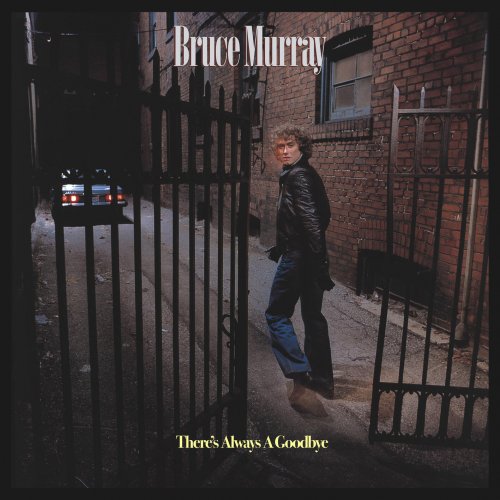
Artist: Bruce Murray
Title: There's Always A Goodbye
Year Of Release: 1979
Label: Columbia
Genre: Pop Rock, Disco, Funk
Quality: 320 kbps | FLAC (tracks) | 24Bit/44 kHz FLAC
Total Time: 00:34:28
Total Size: 80 mb | 200 mb | 370 mb
WebSite: Album Preview
Tracklist:Title: There's Always A Goodbye
Year Of Release: 1979
Label: Columbia
Genre: Pop Rock, Disco, Funk
Quality: 320 kbps | FLAC (tracks) | 24Bit/44 kHz FLAC
Total Time: 00:34:28
Total Size: 80 mb | 200 mb | 370 mb
WebSite: Album Preview
01 - Bruce Murray - I'll Never Stop Singing My Song
02 - Bruce Murray - You've Said It All
03 - Bruce Murray - Take My Hand
04 - Bruce Murray - Baby, Now That I Found You
05 - Bruce Murray - Livin' In Love
06 - Bruce Murray - There's Always A Goodbye
07 - Bruce Murray - Every Time I Sing A Love Song
08 - Bruce Murray - Foggy Night On The Road
09 - Bruce Murray - In The Still Of The Night (I Remember)
On There’s Always A Goodbye, Bruce Murray works within a late-20th-century singer-songwriter idiom but sharpens its internal mechanics: harmonic economy, text-driven phrasing, and close-miked intimacy.
The harmonic language is largely diatonic, with frequent use of secondary dominants and suspended chords to delay resolution. Rather than modulation, Murray relies on modal inflection shifts between major and mixolydian or relative minor—to create contrast across sections. Cadences are often softened through added tones (6ths, 9ths), producing a sense of continuation rather than closure, particularly in refrain structures.
Rhythmically, the material favors mid-tempo meters with subtle elasticity. Acoustic guitar patterns alternating bass with syncopated upper voices establish a steady grid, while small agogic shifts in vocal entry points introduce expressive flexibility without disrupting pulse. In several tracks, brushed percussion and restrained bass lines reinforce subdivision clarity rather than drive, keeping the rhythmic profile understated.
Murray’s vocal delivery is central to the album’s affective structure. His baritone sits forward in the mix, with minimal vibrato and a narrow dynamic range that emphasizes textual intelligibility. Phrasing is syllabic and conversational; line endings frequently taper rather than resolve emphatically, aligning with the album’s thematic focus on transition and departure. Harmony vocals, when present, are tightly voiced often in thirds or sixths and used sparingly to thicken key cadential points rather than throughout entire sections.
The arrangements are deliberately sparse. Instrumentation acoustic guitar, piano, light electric textures operates in discrete registers, avoiding overlap that could obscure the vocal line. Counter-melodies are economical, typically entering in inter-phrase spaces rather than competing with the primary vocal contour. This restraint allows harmonic color and lyric pacing to remain perceptible at all times.
Sonically, the recording prioritizes proximity and clarity. Close microphone placement captures transient detail finger noise on strings, breath intake while a controlled, short-decay reverberation creates depth without distancing the voice. Low frequencies are present but tightly managed, preventing masking in the midrange where the vocal and primary harmonic instruments reside. The stereo image is stable and centered, with limited but purposeful lateral placement for secondary elements.
The result is a structurally disciplined album: a study in how minimal harmonic variation, precise vocal phrasing, and transparent production can sustain narrative continuity without relying on density or overt dynamic contrast.
The harmonic language is largely diatonic, with frequent use of secondary dominants and suspended chords to delay resolution. Rather than modulation, Murray relies on modal inflection shifts between major and mixolydian or relative minor—to create contrast across sections. Cadences are often softened through added tones (6ths, 9ths), producing a sense of continuation rather than closure, particularly in refrain structures.
Rhythmically, the material favors mid-tempo meters with subtle elasticity. Acoustic guitar patterns alternating bass with syncopated upper voices establish a steady grid, while small agogic shifts in vocal entry points introduce expressive flexibility without disrupting pulse. In several tracks, brushed percussion and restrained bass lines reinforce subdivision clarity rather than drive, keeping the rhythmic profile understated.
Murray’s vocal delivery is central to the album’s affective structure. His baritone sits forward in the mix, with minimal vibrato and a narrow dynamic range that emphasizes textual intelligibility. Phrasing is syllabic and conversational; line endings frequently taper rather than resolve emphatically, aligning with the album’s thematic focus on transition and departure. Harmony vocals, when present, are tightly voiced often in thirds or sixths and used sparingly to thicken key cadential points rather than throughout entire sections.
The arrangements are deliberately sparse. Instrumentation acoustic guitar, piano, light electric textures operates in discrete registers, avoiding overlap that could obscure the vocal line. Counter-melodies are economical, typically entering in inter-phrase spaces rather than competing with the primary vocal contour. This restraint allows harmonic color and lyric pacing to remain perceptible at all times.
Sonically, the recording prioritizes proximity and clarity. Close microphone placement captures transient detail finger noise on strings, breath intake while a controlled, short-decay reverberation creates depth without distancing the voice. Low frequencies are present but tightly managed, preventing masking in the midrange where the vocal and primary harmonic instruments reside. The stereo image is stable and centered, with limited but purposeful lateral placement for secondary elements.
The result is a structurally disciplined album: a study in how minimal harmonic variation, precise vocal phrasing, and transparent production can sustain narrative continuity without relying on density or overt dynamic contrast.
![VA - The Art of HiFi Vol. 4: Strings (2024) [DSD256]](https://www.dibpic.com/uploads/posts/2026-08/1787845323_oct00.jpg "VA - The Art of HiFi Vol. 4: Strings (2024) [DSD256]")
![Cold Diamond & Mink & Mr. Sophisticated Fingers - Organ-ized (2026) [Hi-Res]](https://img.israbox.com/img/2026-08/28/hrxi6alpe2zivbwviostfgsro.jpg "Cold Diamond & Mink & Mr. Sophisticated Fingers - Organ-ized (2026) [Hi-Res]")
![Blossom Dearie - Saga All Stars: Plus je t'embrasse (Selected Tracks 1956-1958) (2026) [Hi-Res]](https://img.israbox.com/img/2026-08/27/esnkc9fjbzylc6gfu7ykbrijk.jpg "Blossom Dearie - Saga All Stars: Plus je t'embrasse (Selected Tracks 1956-1958) (2026) [Hi-Res]")
![matahari sons - Sol en Berlin (2026) [Hi-Res]](https://img.israbox.com/img/2026-08/27/liphdh62asdoa57stjteqmcdz.jpg "matahari sons - Sol en Berlin (2026) [Hi-Res]")

![Deep Gray Sea - The Long Glide Home (2026) [Hi-Res]](https://www.dibpic.com/uploads/posts/2026-08/1788023957_cover.jpg "Deep Gray Sea - The Long Glide Home (2026) [Hi-Res]")