Vincenzo Maltempo - Brahms (2026) [Hi-Res]
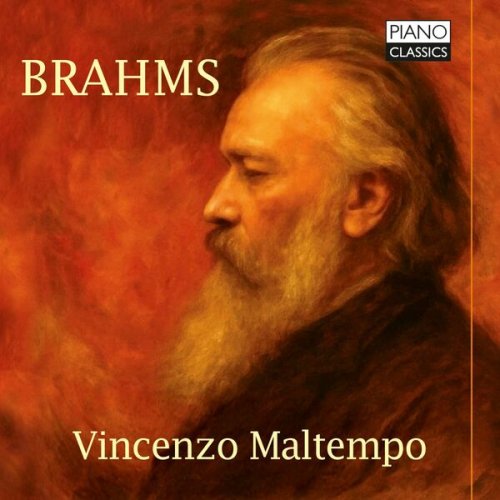
Artist: Vincenzo Maltempo
Title: Brahms
Year Of Release: 2026
Label: Piano Classics
Genre: Classical Piano
Quality: flac lossless (tracks) / flac 24bits - 96.0kHz
Total Time: 02:16:43
Total Size: 478 mb / 2.22 gb
WebSite: Album Preview
TracklistTitle: Brahms
Year Of Release: 2026
Label: Piano Classics
Genre: Classical Piano
Quality: flac lossless (tracks) / flac 24bits - 96.0kHz
Total Time: 02:16:43
Total Size: 478 mb / 2.22 gb
WebSite: Album Preview
01. 4 Ballades, Op. 10: I. Andante in D Minor (After the Scottish Ballad Edward)
02. 4 Ballades, Op. 10: II. Andante in D Major
03. 4 Ballades, Op. 10: III. Intermezzo. Allegro in B Minor
05. 8 Klavierstücke, Op. 76 (1871 No. 1, 1878 Nos. 2 to 8): I. Capriccio. Un poco agitato in F-Sharp Minor
06. 8 Klavierstücke, Op. 76 (1871 No. 1, 1878 Nos. 2 to 8): II. Capriccio. Allegretto non troppo in B Minor
07. 8 Klavierstücke, Op. 76 (1871 No. 1, 1878 Nos. 2 to 8): III. Intermezzo. Grazioso in A-Flat Major
08. 8 Klavierstücke, Op. 76 (1871 No. 1, 1878 Nos. 2 to 8): IV. Intermezzo. Allegretto grazioso in B-Flat Major
09. 8 Klavierstücke, Op. 76 (1871 No. 1, 1878 Nos. 2 to 8): V. Capriccio. Agitato, ma non troppo presto in C-Sharp Minor
10. 8 Klavierstücke, Op. 76 (1871 No. 1, 1878 Nos. 2 to 8): Vi. Intermezzo. Andante con moto in A Major
11. 8 Klavierstücke, Op. 76 (1871 No. 1, 1878 Nos. 2 to 8): VII. Intermezzo. Moderato semplice in A Minor
12. 8 Klavierstücke, Op. 76 (1871 No. 1, 1878 Nos. 2 to 8): VIII. Capriccio. Grazioso ed un poco vivace in C Major
13. 7 Fantasien, Op. 116 (1892): I. Capriccio. Presto energico in D Minor
14. 7 Fantasien, Op. 116 (1892): II. Intermezzo. Andante in A Minor
15. 7 Fantasien, Op. 116 (1892): III. Capriccio. Allegro passionato in G Minor
16. 7 Fantasien, Op. 116 (1892): IV. Intermezzo. Adagio in E Major
17. 7 Fantasien, Op. 116 (1892): V. Intermezzo. Andante con grazia ed intimissimo sentimento in E Minor
18. 7 Fantasien, Op. 116 (1892): Vi. Intermezzo. Andantino teneramente in E Major
19. 7 Fantasien, Op. 116 (1892): VII. Capriccio. Allegro agitato in D Minor
20. Variations on an Original Theme, Op. 21 No. 1
21. 3 Intermezzi, Op. 117 (1892): I. Andante moderato in E-Flat Major
22. 3 Intermezzi, Op. 117 (1892): II. Andante non troppo e con molto espressione in B-Flat Minor
23. 3 Intermezzi, Op. 117 (1892): III. Andante con moto in C-Sharp Minor
24. 6 Klavierstücke, Op. 118 (1893): I. Intermezzo. Allegro non assai, ma molto appassionato in A Minor
25. 6 Klavierstücke, Op. 118 (1893): II. Intermezzo. Andante teneramente in A Major
26. 6 Klavierstücke, Op. 118 (1893): III. Ballade. Allegro energico in G Minor
27. 6 Klavierstücke, Op. 118 (1893): IV. Intermezzo. Allegretto un poco agitato in F Minor
28. 6 Klavierstücke, Op. 118 (1893): V. Romance. Andante—Allegretto grazioso in F Major
29. 6 Klavierstücke, Op. 118 (1893): Vi. Intermezzo. Andante, largo e mesto E-Flat Minor
30. 4 Klavierstücke, Op. 119 (1893): I. Intermezzo. Adagio in B Minor
31. 4 Klavierstücke, Op. 119 (1893): II. Intermezzo. Andantino un poco agitato in E Minor
32. 4 Klavierstücke, Op. 119 (1893): III. Intermezzo. Grazioso e giocoso in C Major
33. 4 Klavierstücke, Op. 119 (1893): IV. Rhapsody. Allegro risoluto in E-Flat Major
Vincenzo Maltempo’s considerable catalogue of recordings for Piano Classics includes a much-admired set of the two concertos by Brahms. According to Fanfare, ‘Maltempo… plays with commanding technique, grand gestural sweep throughout, and real tonal bloom.’
For this second volume of the composer’s solo output for the piano, Maltempo has devised a compelling journey for the listener, from the noble and often heroic profile of the Ballades Op.10 to the late and distilled collections Opp. 116-119, taking in en route the Variations on an Original Theme Op.21 No.1 and the eight Klavierstücke Op.76.
In his performances, Maltempo brings out this stylistic evolution of both piano-writing and harmony, enabling us to appreciate for ourselves the degree to which Brahms continually challenged himself to enrich and experiment with his style as well as ruthlessly exercising on himself the red pen and the sharp ear which made him so shrewd a critic of fellow composers.
The scholar Denis Matthews identified three phases, or styles, in Brahms, not necessarily equating to the conventional division of early, middle and late: the architectural, contrapuntal and lyrical. On the surface, beyond a more intense chromaticism and openness to dissonance, there is relatively little to separate the Balllades from the late works.
Much the least-often heard piece in this collection is the Variations Op.21, and the teasing ingenuity of Brahms’s treatment of his theme – initially quiet and introspective – is based on a rigorous exploration of contrapuntal possibilities. The Variations date from a period immediately after his fateful meeting with Robert and Clara Schumann in Dusseldorf, when he found himself stretched to live up to the Schumanns’ extravagant praise of him as the pre-eminent successor to Beethoven. They and others were captivated by the composer’s own mastery of his instrument as a performer, too, and The Op.21 Variations show Brahms moving on from the extrovert keyboard lionism of works such as the First Concerto while still using the variation principle to celebrate virtuosity as both a composer and a pianist.
![Juan Carlos Quintero - The Story of Love (2026) [Hi-Res]](https://www.dibpic.com/uploads/posts/2026-04/1777576399_cover.jpg "Juan Carlos Quintero - The Story of Love (2026) [Hi-Res]")
![Keiko Lee - Wonder of Love (2001) [SACD]](https://www.dibpic.com/uploads/posts/2026-05/1777871129_folder.jpg "Keiko Lee - Wonder of Love (2001) [SACD]")