Michael Tsalka - La Escondia (The First Waltzes and Last Piano Sonata of Franz Schubert) (2026) Hi-Res
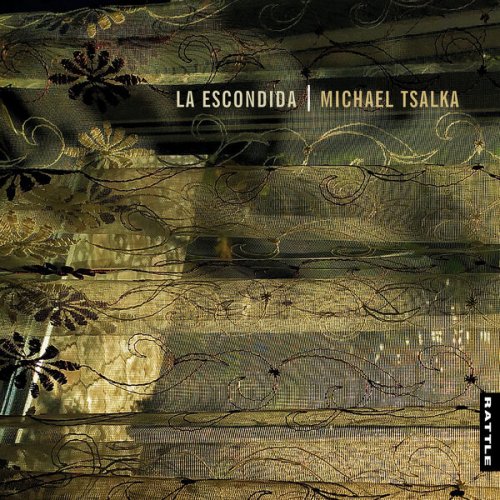
Artist: Michael Tsalka
Title: La Escondia (The First Waltzes and Last Piano Sonata of Franz Schubert)
Year Of Release: 2026
Label: Rattle Records
Genre: Classical
Quality: FLAC (tracks) / FLAC 24 Bit (44,1 KHz / tracks)
Total Time: 81:07 min
Total Size: 267 / 673 MB
WebSite: Album Preview
Tracklist:Title: La Escondia (The First Waltzes and Last Piano Sonata of Franz Schubert)
Year Of Release: 2026
Label: Rattle Records
Genre: Classical
Quality: FLAC (tracks) / FLAC 24 Bit (44,1 KHz / tracks)
Total Time: 81:07 min
Total Size: 267 / 673 MB
WebSite: Album Preview
01. First Waltzes, Original-Tänze für das Piano-Forte, Op. 9, D. 365
02. Piano Sonata in B-Flat Major, D. 960 I. Molto moderato
03. Piano Sonata in B-Flat Major, D. 960 II. Andante sostenuto
04. Piano Sonata in B-Flat Major, D. 960 III. Scherzo – Allegro vivace con delicatezza – Trio
05. Piano Sonata in B-Flat Major, D. 960 IV. Allegro ma non troppo – Presto sostenuto
06. Hungarian Melody in B Minor D. 817 (BONUS TRACK)
La Escondida, pianist Michael Tsalka’s first release on Rattle, is a beautifully recorded and exquisitely performed celebration of the music of Franz Schubert.
“In 1821, Schubert, hoping surely to make a fine profit, gathered three dozen of these waltzes for publication in two volumes by Cappi & Diabelli. In a hurry, he established a somewhat arbitrary order through a loose tonal sequence, which he reinforced (perhaps subconsciously) with a few motivic connections and expressive contrasts. The waltzes seem bound together as if they were shining baroque pearls in a fine necklace that has no beginning or end. The dream of eternal movement and dance is almost impossible to stop.
Recording the collection, naturally, required another mindset. For my part, it was an opportunity to showcase the composer’s incredible gift for melodic improvisation, characterisation, and transformation within a serviceable but limited harmonic/formal framework. The process of recreating, on a modern Steinway, the vibrancy and naïve grace of the Biedermeier salon and invoking the separate registers and prismatic, yet muted colors of the Romantic square piano was complex, but the experience revived the delight that youth takes in nature, movement, and friendship, in those evenings when all sorts of experiences and characters cross your way in a seemingly endless stream of ventures, and in the mirage of immortality, which is the sacred endowment of the Spring of life. The circular dance only breaks when, for the first time, fate alters the repetitive movement of the couples. But what did young Schubert know of the wounds of time in 1820?”
Dr. Michael Tsalka
“In 1821, Schubert, hoping surely to make a fine profit, gathered three dozen of these waltzes for publication in two volumes by Cappi & Diabelli. In a hurry, he established a somewhat arbitrary order through a loose tonal sequence, which he reinforced (perhaps subconsciously) with a few motivic connections and expressive contrasts. The waltzes seem bound together as if they were shining baroque pearls in a fine necklace that has no beginning or end. The dream of eternal movement and dance is almost impossible to stop.
Recording the collection, naturally, required another mindset. For my part, it was an opportunity to showcase the composer’s incredible gift for melodic improvisation, characterisation, and transformation within a serviceable but limited harmonic/formal framework. The process of recreating, on a modern Steinway, the vibrancy and naïve grace of the Biedermeier salon and invoking the separate registers and prismatic, yet muted colors of the Romantic square piano was complex, but the experience revived the delight that youth takes in nature, movement, and friendship, in those evenings when all sorts of experiences and characters cross your way in a seemingly endless stream of ventures, and in the mirage of immortality, which is the sacred endowment of the Spring of life. The circular dance only breaks when, for the first time, fate alters the repetitive movement of the couples. But what did young Schubert know of the wounds of time in 1820?”
Dr. Michael Tsalka
![Secret Voices - Caravan (2025) [Hi-Res]](https://www.dibpic.com/uploads/posts/2026-09/1788265062_gwdf1yndlz1nd_600.jpg "Secret Voices - Caravan (2025) [Hi-Res]")

![Tommy Jamz - Live (2026) [Hi-Res]](https://www.dibpic.com/uploads/posts/2026-09/1788252388_cover.jpg "Tommy Jamz - Live (2026) [Hi-Res]")
![Tone Åse & Ståle Storløkken - Snu Jorda (2026) [Hi-Res]](https://www.dibpic.com/uploads/posts/2026-09/1788235204_uzsq4ovsk1e5p_600.jpg "Tone Åse & Ståle Storløkken - Snu Jorda (2026) [Hi-Res]")
![Alicia Witt - Between Heaven and Earth (2026) [Hi-Res]](https://img.israbox.com/img/2026-08/29/vdfub0as4sebuz9ep06t3j7q4.jpg "Alicia Witt - Between Heaven and Earth (2026) [Hi-Res]")