Cream - Fresh Cream (1967)
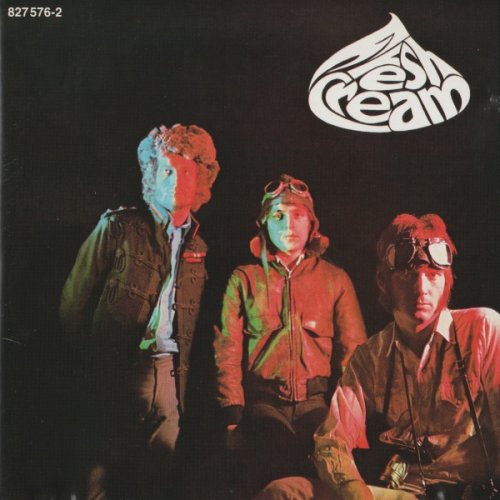
Artist: Cream
Title: Fresh Cream
Year Of Release: 1967
Label: Polydor - 827 576-2
Genre: Rock, Psychedelic Rock, Blues Rock
Quality: FLAC (tracks.+.сue,log artwork)
Total Time: 33:05
Total Size: 328 Mb
WebSite: Album Preview
Tracklist: Title: Fresh Cream
Year Of Release: 1967
Label: Polydor - 827 576-2
Genre: Rock, Psychedelic Rock, Blues Rock
Quality: FLAC (tracks.+.сue,log artwork)
Total Time: 33:05
Total Size: 328 Mb
WebSite: Album Preview
01. I Feel Free 2:55
02. N.S.U 2:47
03. Sleepy Time Time 4:22
04. Dreaming 2:01
05. Sweet Wine 3:20
06. Spoonful 6:31
07. Cat's Squirrel 3:07
08. Four Until Late 2:10
09. Rollin' and Tumblin' 4:43
10. I'm So Glad 3:59
11. Toad 5:11
12. The Coffee Song 2:47
13. Wrapping Paper 2:22
Cream's debut album, Fresh Cream, was released in the UK in December 1966 and in the US in January 1967. There was a slight difference between the two releases: the UK release did not include "I Feel Free", but did include "Spoonful"; the US release did; the reverse. The album reached number 6 in the UK and number 39 in the US. Their first single, "Wrapping Paper", was not a success, while their second, "I Feel Free", was slightly more popular. The album features excellent interpretations of old blues classics as well as their own compositions. It was the least successful of Cream's albums, but many of its songs became a regular fixture in their concerts. The album combined the ideas of the band and their ambitious Australian manager, Robert Stigwood (who prioritized financial success). Baker wanted to record his own songs, because he thought it would be more appreciated, and they would get the royalties. Bruce did not want to be a sideman, so he started writing songs with Pete Brown (who, for other reasons, was able to contribute less to this album than to the following ones). To the surprise of many, Bruce became the singer, and in addition to Baker's two original songs, he also added four of his own compositions. Clapton selected the blues to be covered.
All three contributed equally to the arrangement: Clapton was the lead guitarist (there was no other guitarist besides him), Bruce contributed on harmonica, piano and, last but not least, bass guitar, and the songs were often led by Baker's drum solo; he can also be heard on the song "Toad". Perhaps only the doubling of Clapton's guitar parts leaves something to be desired, although they were not needed often (although they were done much better on the Bluesbreakers album with John Mayall on the song "All Your Love"). The people behind the band tried to put Clapton in the center, which later caused more and more problems.
The quality of the album is excellent, the drum parts were recorded especially well. The few doublings used on the recordings gave the album a kind of rawness. Stigwood's production work could have been better, the three musicians took control of the recording. There were further problems with the amazing volume, but they were eventually successfully resolved.
The more recently released CD versions also include "I Feel Free" and "Spoonful", as well as "Wrapping Paper" and a previously unreleased song, "The Coffee Song".
In 2003, Fresh Cream was ranked 101st on Rolling Stone magazine's "500 Greatest Albums of All Time".
Fresh Cream represents so many different firsts, it's difficult to keep count. Cream, of course, was the first supergroup, but their first album not only gave birth to the power trio, it also was instrumental in the birth of heavy metal and the birth of jam rock. That's a lot of weight for one record and, like a lot of pioneering records, Fresh Cream doesn't seem quite as mighty as what would come later, both from the group and its acolytes. In retrospect, the moments on the LP that are a bit unformed -- in particular, the halting waltz of "Dreaming" never achieves the sweet ethereal atmosphere it aspires to -- stand out more than the innovations, which have been so thoroughly assimilated into the vocabulary of rock & roll, but Fresh Cream was a remarkable shift forward in rock upon its 1966 release and it remains quite potent. Certainly at this early stage the trio was still grounded heavily in blues, only fitting given guitarist Eric Clapton's stint in John Mayall's Bluesbreakers, which is where he first played with bassist Jack Bruce, but Cream never had the purist bent of Mayall, and not just because they dabbled heavily in psychedelia. The rhythm section of Bruce and Ginger Baker had a distinct jazzy bent to their beat; this isn't hard and pure, it's spongy and elastic, giving the musicians plenty of room to roam. This fluidity is most apparent on the blues covers that take up nearly half the record, especially on "Spoonful," where the swirling instrumental interplay, echo, fuzz tones, and overwhelming volume constitute true psychedelic music, and also points strongly toward the guitar worship of heavy metal. Almost all the second side of Fresh Cream is devoted to this, closing with Baker's showcase "Toad," but for as hard and restless as this half of the album is, there is some lightness on the first portion of the record where Bruce reveals himself as an inventive psychedelic pop songwriter with the tense, colorful "N.S.U." and the hook- and harmony-laden "I Feel Free." Cream shows as much force and mastery on these tighter, poppier tunes as they do on the free-flowing jams, yet they show a clear bias toward the long-form blues numbers, which makes sense: they formed to be able to pursue this freedom, which they do so without restraint. If at times that does make the album indulgent or lopsided, this is nevertheless where Cream was feeling their way forward, creating their heavy psychedelic jazz-blues and, in the process, opening the door to all kinds of serious rock music that may have happened without Fresh Cream, but it just would not have happened in the same fashion as it did with this record as precedent.
All three contributed equally to the arrangement: Clapton was the lead guitarist (there was no other guitarist besides him), Bruce contributed on harmonica, piano and, last but not least, bass guitar, and the songs were often led by Baker's drum solo; he can also be heard on the song "Toad". Perhaps only the doubling of Clapton's guitar parts leaves something to be desired, although they were not needed often (although they were done much better on the Bluesbreakers album with John Mayall on the song "All Your Love"). The people behind the band tried to put Clapton in the center, which later caused more and more problems.
The quality of the album is excellent, the drum parts were recorded especially well. The few doublings used on the recordings gave the album a kind of rawness. Stigwood's production work could have been better, the three musicians took control of the recording. There were further problems with the amazing volume, but they were eventually successfully resolved.
The more recently released CD versions also include "I Feel Free" and "Spoonful", as well as "Wrapping Paper" and a previously unreleased song, "The Coffee Song".
In 2003, Fresh Cream was ranked 101st on Rolling Stone magazine's "500 Greatest Albums of All Time".
Fresh Cream represents so many different firsts, it's difficult to keep count. Cream, of course, was the first supergroup, but their first album not only gave birth to the power trio, it also was instrumental in the birth of heavy metal and the birth of jam rock. That's a lot of weight for one record and, like a lot of pioneering records, Fresh Cream doesn't seem quite as mighty as what would come later, both from the group and its acolytes. In retrospect, the moments on the LP that are a bit unformed -- in particular, the halting waltz of "Dreaming" never achieves the sweet ethereal atmosphere it aspires to -- stand out more than the innovations, which have been so thoroughly assimilated into the vocabulary of rock & roll, but Fresh Cream was a remarkable shift forward in rock upon its 1966 release and it remains quite potent. Certainly at this early stage the trio was still grounded heavily in blues, only fitting given guitarist Eric Clapton's stint in John Mayall's Bluesbreakers, which is where he first played with bassist Jack Bruce, but Cream never had the purist bent of Mayall, and not just because they dabbled heavily in psychedelia. The rhythm section of Bruce and Ginger Baker had a distinct jazzy bent to their beat; this isn't hard and pure, it's spongy and elastic, giving the musicians plenty of room to roam. This fluidity is most apparent on the blues covers that take up nearly half the record, especially on "Spoonful," where the swirling instrumental interplay, echo, fuzz tones, and overwhelming volume constitute true psychedelic music, and also points strongly toward the guitar worship of heavy metal. Almost all the second side of Fresh Cream is devoted to this, closing with Baker's showcase "Toad," but for as hard and restless as this half of the album is, there is some lightness on the first portion of the record where Bruce reveals himself as an inventive psychedelic pop songwriter with the tense, colorful "N.S.U." and the hook- and harmony-laden "I Feel Free." Cream shows as much force and mastery on these tighter, poppier tunes as they do on the free-flowing jams, yet they show a clear bias toward the long-form blues numbers, which makes sense: they formed to be able to pursue this freedom, which they do so without restraint. If at times that does make the album indulgent or lopsided, this is nevertheless where Cream was feeling their way forward, creating their heavy psychedelic jazz-blues and, in the process, opening the door to all kinds of serious rock music that may have happened without Fresh Cream, but it just would not have happened in the same fashion as it did with this record as precedent.
![Ben Wilcock, John Rae - March Of The Octopus (2025) [Hi-Res]](https://www.dibpic.com/uploads/posts/2026-08/1787738284_ben-wilcock-john-rae-march-of-the-octopus-2025.jpg "Ben Wilcock, John Rae - March Of The Octopus (2025) [Hi-Res]")
![Houston Person - Houston Person From The Heart (2026) [Hi-Res]](https://www.dibpic.com/uploads/posts/2026-08/1787755300_1.jpg "Houston Person - Houston Person From The Heart (2026) [Hi-Res]")

![John Carroll Kirby - Piano Works 2016-2026 (2026) [Hi-Res]](https://www.dibpic.com/uploads/posts/2026-08/1787758589_a3659061091_10.jpg "John Carroll Kirby - Piano Works 2016-2026 (2026) [Hi-Res]")
![Alicia Witt - Between Heaven and Earth (2026) [Hi-Res]](https://img.israbox.com/img/2026-08/29/vdfub0as4sebuz9ep06t3j7q4.jpg "Alicia Witt - Between Heaven and Earth (2026) [Hi-Res]")
![Cold Diamond & Mink & Mr. Sophisticated Fingers - Organ-ized (2026) [Hi-Res]](https://img.israbox.com/img/2026-08/28/hrxi6alpe2zivbwviostfgsro.jpg "Cold Diamond & Mink & Mr. Sophisticated Fingers - Organ-ized (2026) [Hi-Res]")
![Nicolas Meier World Group - Elysian Drift (2026) [Hi-Res]](https://www.dibpic.com/uploads/posts/2026-08/1787976441_fan7zzap9qfge_600.jpg "Nicolas Meier World Group - Elysian Drift (2026) [Hi-Res]")