Roland Keijser Kvartett - Öppet Tre (2025) [Hi-Res]
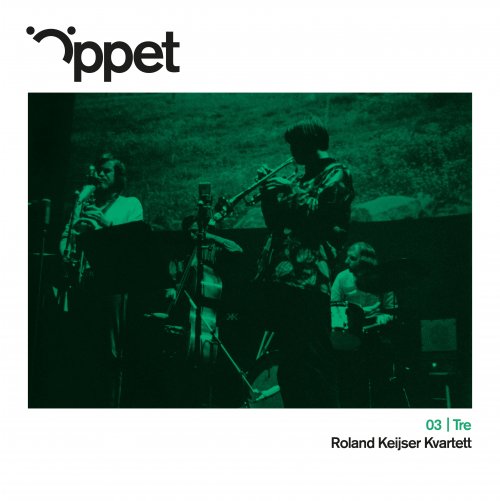
Artist: Roland Keijser Kvartett, Roland Keijser
Title: Öppet Tre
Year Of Release: 2025
Label: Caprice
Genre: Jazz
Quality: FLAC (tracks) 24/44, FLAC (tracks)
Total Time: 44:27
Total Size: 971 / 273 mb
WebSite: Album Preview
Tracklist:Title: Öppet Tre
Year Of Release: 2025
Label: Caprice
Genre: Jazz
Quality: FLAC (tracks) 24/44, FLAC (tracks)
Total Time: 44:27
Total Size: 971 / 273 mb
WebSite: Album Preview
01. Roland Keijser Kvartett - Big Bad Bag of Baba-Louie / Kvarteret Sniken / Slutning (19:02)
02. Roland Keijser Kvartett - Sommarromans (3:11)
03. Roland Keijser Kvartett - Kvarteret Sniken (10:11)
04. Roland Keijser Kvartett - Tusch / Untitled (12:04)
In Sweden's late '60s creative explosion, when free jazz collided with folk traditions and experimental impulses ran wild, Roland Keijser and his quartet were creating something unprecedented. These lost recordings from Öppet Tre capture a pivotal moment when Swedish musicians were building bridges between American free jazz, minimal composition, and their own folk heritage—creating music that had never been heard before, anywhere. The Roland Keijser Kvartett existed in that magical space where jazz hadn't yet been institutionalized. Roland Keijser on tenor sax and clarinet, Torsten Eckerman splitting time between trumpet and piano, Staffan Sjöholm making his bass sing folk melodies and abstract poetry, Bosse Skoglund behind the kit—this was collective music-making at its most pure and revolutionary.
Under the Öppet series, Caprice Music is excavating these buried treasures with archaeological precision and true believers' passion. Working with Mats Gustafsson and archivist Roger Bergner, they're pulling these 1968-69 Stockholm sessions from Swedish vaults like musical archaeologists discovering lost civilizations. What made Keijser dangerous was his refusal to choose sides. While American free jazz was declaring war on melody and European improvisers got lost in intellectualism, this Swedish visionary wove folk melodies into abstract soundscapes like a musical shaman. You can hear Don Cherry's pocket trumpet bleeding into ancient Nordic scales, Albert Ayler's holy ghost saxophone speaking in tongues while traditional Swedish fiddle tunes dance around the edges.
Under the Öppet series, Caprice Music is excavating these buried treasures with archaeological precision and true believers' passion. Working with Mats Gustafsson and archivist Roger Bergner, they're pulling these 1968-69 Stockholm sessions from Swedish vaults like musical archaeologists discovering lost civilizations. What made Keijser dangerous was his refusal to choose sides. While American free jazz was declaring war on melody and European improvisers got lost in intellectualism, this Swedish visionary wove folk melodies into abstract soundscapes like a musical shaman. You can hear Don Cherry's pocket trumpet bleeding into ancient Nordic scales, Albert Ayler's holy ghost saxophone speaking in tongues while traditional Swedish fiddle tunes dance around the edges.
Download Link Isra.Cloud
Roland Keijser Kvartett - Öppet Tre (2025) [Hi-Res]
Roland Keijser Kvartett - Öppet Tre (2025)
My blog
Roland Keijser Kvartett - Öppet Tre (2025) [Hi-Res]
Roland Keijser Kvartett - Öppet Tre (2025)
My blog


![Patrones - Patrones (2026) [Hi-Res]](https://img.israbox.com/img/2026-10/10/yagqh782ulmz3fc3wrcpx6mpz.jpg "Patrones - Patrones (2026) [Hi-Res]")

![Sagor & Swing - Rymdsonden (2026) [Hi-Res]](https://img.israbox.com/img/2026-10/09/91bw51zc5bu7o6s29gbmx2ij2.jpg "Sagor & Swing - Rymdsonden (2026) [Hi-Res]")