Miles Davis - Nefertiti (1969) [Vinyl]
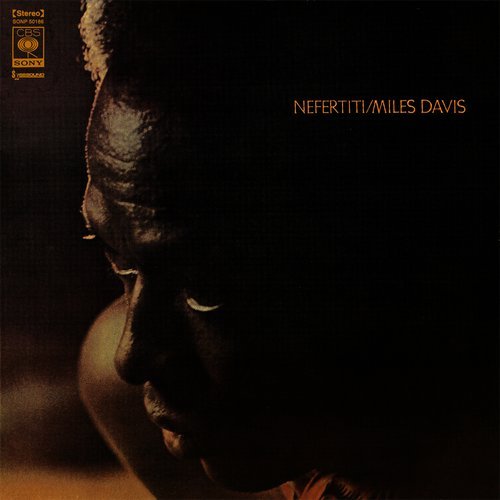
Artist: Miles Davis, Wayne Shorter, Herbie Hancock, Ron Carter, Tony Williams
Title: Nefertiti
Year Of Release: 1969
Label: CBS/Sony – SONP 50186
Genre: Jazz, Post Bop
Quality: FLAC (tracks) [192kHz/24bit]
Total Time: 39:11
Total Size: 1.40 GB
WebSite: Album Preview
Tracklist:Title: Nefertiti
Year Of Release: 1969
Label: CBS/Sony – SONP 50186
Genre: Jazz, Post Bop
Quality: FLAC (tracks) [192kHz/24bit]
Total Time: 39:11
Total Size: 1.40 GB
WebSite: Album Preview
A1 – Nefertiti (07:52)
A2 – Fall (06:39)
A3 – Hand Jive (08:54)
B1 – Madness (07:31)
B2 – Riot (03:04)
B3 – Pinocchio (05:08)
Personnel:
Trumpet – Miles Davis
Tenor Saxophone – Wayne Shorter
Piano – Herbie Hancock
Bass – Ron Carter
Drums – Tony Williams
Nefertiti, the fourth album by Miles Davis' second classic quintet, continues the forward motion of Sorcerer, as the group settles into a low-key, exploratory groove, offering music with recognizable themes -- but themes that were deliberately dissonant, slightly unsettling even as they burrowed their way into the consciousness. In a sense, this is mood music, since, like on much of Sorcerer, the individual parts mesh in unpredictable ways, creating evocative, floating soundscapes. This music anticipates the free-fall, impressionistic work of In a Silent Way, yet it remains rooted in hard bop, particularly when the tempo is a bit sprightly, as on "Hand Jive." Yet even when the instrumentalists and soloists are placed in the foreground -- such as Miles' extended opening solo on "Madness" or Hancock's long solo toward the end of the piece -- this never feels like showcases for virtuosity, the way some showboating hard bop can, though each player shines. What's impressive, like on all of this quintet's sessions, is the interplay, how the musicians follow an unpredictable path as a unit, turning in music that is always searching, always provocative, and never boring. Perhaps Nefertiti's charms are a little more subtle than those of its predecessors, but that makes it intriguing. Besides, this album so clearly points the way to fusion, while remaining acoustic, that it may force listeners on either side of the fence into another direction. © Stephen Thomas Erlewine


![Mats Erlandsson & Gus Loxbo - Minnets Långa Kedjor (2026) [Hi-Res]](https://img.israbox.com/img/2026-10/10/vnmve4bgquxgtsvslzwiwmwc4.jpg "Mats Erlandsson & Gus Loxbo - Minnets Långa Kedjor (2026) [Hi-Res]")



![Papik - Yes I Know My Way, Vol. 2 (2026) [Hi-Res]](https://www.dibpic.com/uploads/posts/2026-10/1791640889_folder.jpg "Papik - Yes I Know My Way, Vol. 2 (2026) [Hi-Res]")