Ekmeles - Nonsongs (2026) Hi Res
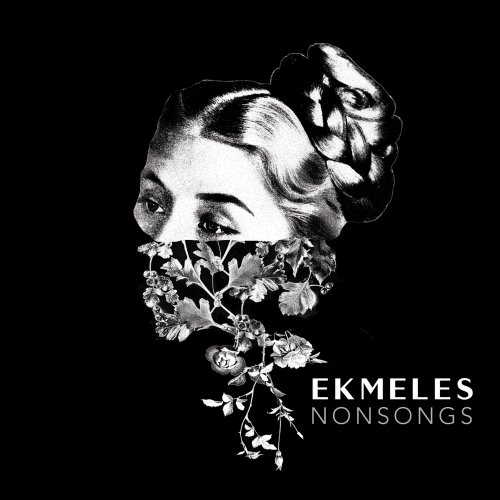
Artist: Ekmeles
Title: Nonsongs
Year Of Release: 2026
Label: New Focus Recordings
Genre: Contemporary Classical, Choral
Quality: 320 kbps | FLAC (tracks) | 24Bit/96 kHz FLAC (tracks+digital booklet)
Total Time: 00:49:56
Total Size: 134 mb | 249 mb | 919 mb
WebSite: Album Preview
Tracklist:Title: Nonsongs
Year Of Release: 2026
Label: New Focus Recordings
Genre: Contemporary Classical, Choral
Quality: 320 kbps | FLAC (tracks) | 24Bit/96 kHz FLAC (tracks+digital booklet)
Total Time: 00:49:56
Total Size: 134 mb | 249 mb | 919 mb
WebSite: Album Preview
01 - Ekmeles - Plainsound Motet for Ekmeles: "DADA NONO & REJOICE"
02 - Ekmeles - forgetting
03 - Ekmeles & Iwo Jedynecki - Lone Coast
Ekmeles has distinguished itself as one of the elite contemporary vocal music ensembles active today. They have cultivated a specialization in microtonal singing that is truly pushing the boundaries of what is capable in the genre, as evidenced by their performance of Wolfgang von Schweinetz’ music on this album, and the music of James Weeks on their previous release (We Live the Opposite Daring FCR394). The ensemble is no less pioneering in their exploration of extended vocal techniques and alternative timbres, and both Katherine Balch’s forgetting and George Lewis’ Lone Coast are excellent vehicles for their formidable facility in this direction. Moreover, Ekmeles is playing a major role by curating significant, ambitious compositions for contemporary vocal ensemble, and their indomitable collaborative spirit inspires composers to write at the peak of their capacities. Nonsongs is yet another fruit of this labor, a treasure trove of fantastic singing and ensemble musicianship in the service of deep artistry. and invention.
Wolfgang von Schweinetz has spent the last three decades cultivated a compositional vocabulary and intonation techniques that facilitate performing complex just intonation intervals. He initially developed this "plainsound music” with works for solo strings, instrumental ensembles, symphony orchestras, and in electronic music contexts, and turned to a capella vocal music at the invitation of Ekmeles’ musical director, Jeffrey Gavett. von Schweinetz’ affinity for Renaissance vocal music is apparent throughout, as the music flows through cadential phrases and imitation that evokes that rich repertoire, while navigating the intricate subtleties of pitch that are the core focus of his work. The text is his own, consisting of a sequence of syllables taken from Hebrew, Latin, Spanish, Russian, French, English, and German. The impact of the piece is profound, the ear recognizes characteristic harmonic and melodic motion, but the coloristic inflections that result from the finely tuned just intervals reveals a magical resonance that feels like one is hearing into the future while tethered by echoes of the past, all glued together by elemental acoustic pillars.
Coming after the microscopic focus on pitch in Plainsound Motet, the timbral range in Katherine Balch’s forgetting is striking in its diversity. Scored for vocal ensemble playing ratchets, the percussive clacking is woven into the fabric of the composition, modulating from sporadic interjections to immersive, gentle waterfalls of wooden attacks. The voices interwine with a rich palette of techniques, both pitched and non-pitched, texted and worldless, to create a sonic environment that oscillates between dry tactilility and luminous resonance.
George Lewis’ Lone Coast is based on a poem by Nathaniel Mackey, Lone Coast Anacrusis, and explores the phenomenon of nomadism as an artistic and intellectual state of being. Lewis’ language brings a theatricality to this collection, along with an underlying urgency that challenges musical complacency at every turn. Grainy extended vocal techniques merge with liquid glissandi and dense low register voicings to create a unmoored character. Accordionist Iwo Jedynecki joins as the only instrumental guest on the album, with trembling tremolandi, mournful contrapuntal passages, pointilistic interjections, and dark voicings that inhale and exhale in symbiosis with the vocal ensemble. As in the Balch, the members of Ekmeles are given double duty on auxiliary percussion, this time with tolling gongs that contribute to the work’s ritualistic hue. Lone Coast finishes with an instrumental coda, as the accordionist plays embellished figures in dialogue between their two hands and utters gruff, perfunctory accented chords.
Wolfgang von Schweinetz has spent the last three decades cultivated a compositional vocabulary and intonation techniques that facilitate performing complex just intonation intervals. He initially developed this "plainsound music” with works for solo strings, instrumental ensembles, symphony orchestras, and in electronic music contexts, and turned to a capella vocal music at the invitation of Ekmeles’ musical director, Jeffrey Gavett. von Schweinetz’ affinity for Renaissance vocal music is apparent throughout, as the music flows through cadential phrases and imitation that evokes that rich repertoire, while navigating the intricate subtleties of pitch that are the core focus of his work. The text is his own, consisting of a sequence of syllables taken from Hebrew, Latin, Spanish, Russian, French, English, and German. The impact of the piece is profound, the ear recognizes characteristic harmonic and melodic motion, but the coloristic inflections that result from the finely tuned just intervals reveals a magical resonance that feels like one is hearing into the future while tethered by echoes of the past, all glued together by elemental acoustic pillars.
Coming after the microscopic focus on pitch in Plainsound Motet, the timbral range in Katherine Balch’s forgetting is striking in its diversity. Scored for vocal ensemble playing ratchets, the percussive clacking is woven into the fabric of the composition, modulating from sporadic interjections to immersive, gentle waterfalls of wooden attacks. The voices interwine with a rich palette of techniques, both pitched and non-pitched, texted and worldless, to create a sonic environment that oscillates between dry tactilility and luminous resonance.
George Lewis’ Lone Coast is based on a poem by Nathaniel Mackey, Lone Coast Anacrusis, and explores the phenomenon of nomadism as an artistic and intellectual state of being. Lewis’ language brings a theatricality to this collection, along with an underlying urgency that challenges musical complacency at every turn. Grainy extended vocal techniques merge with liquid glissandi and dense low register voicings to create a unmoored character. Accordionist Iwo Jedynecki joins as the only instrumental guest on the album, with trembling tremolandi, mournful contrapuntal passages, pointilistic interjections, and dark voicings that inhale and exhale in symbiosis with the vocal ensemble. As in the Balch, the members of Ekmeles are given double duty on auxiliary percussion, this time with tolling gongs that contribute to the work’s ritualistic hue. Lone Coast finishes with an instrumental coda, as the accordionist plays embellished figures in dialogue between their two hands and utters gruff, perfunctory accented chords.
![Inperplex - kū (2026) [Hi-Res]](https://www.dibpic.com/uploads/posts/2026-08/1786942222_b1cb2cc86b5e0e4b668e7390348da98c.jpg "Inperplex - kū (2026) [Hi-Res]")
![Reuben Hoch - Of Recent Time (2011) [Hi-Res]](https://www.dibpic.com/uploads/posts/2026-08/1786813524_cover.jpg "Reuben Hoch - Of Recent Time (2011) [Hi-Res]")
![Ronnie Aldrich - Where The Sun Is (1966) [Vinyl Rip]](https://www.dibpic.com/uploads/posts/2026-08/1786943795_5.jpg "Ronnie Aldrich - Where The Sun Is (1966) [Vinyl Rip]")


![Intercity Sound Association - Phillysound (1975) [2012]](https://www.dibpic.com/uploads/posts/2026-08/1786700011_phillysound-a1.jpg "Intercity Sound Association - Phillysound (1975) [2012]")
![Tisziji Muñoz - Heart in Collision (2026) [Hi-Res]](https://www.dibpic.com/uploads/posts/2026-08/1786709345_cover.jpg "Tisziji Muñoz - Heart in Collision (2026) [Hi-Res]")
![Count Basie & His Orchestra - Basie, One More Time (Remastered Edition) (2025) [Hi-Res]](https://www.dibpic.com/uploads/posts/2026-08/1786619342_cbom500.jpg "Count Basie & His Orchestra - Basie, One More Time (Remastered Edition) (2025) [Hi-Res]")