Olivier Alary - Vestiges (2026)
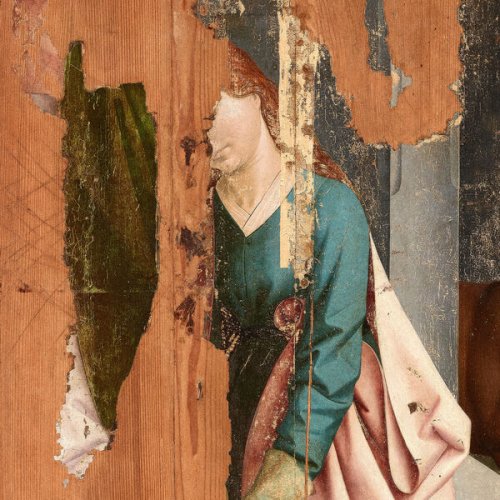
Artist: Olivier Alary
Title: Vestiges
Year Of Release: 2026
Label: LINE
Genre: Ambient, Experimental
Quality: 16bit-44,1kHz FLAC / 24bit-44,1kHz FLAC
Total Time: 41:31
Total Size: 122 mb / 340 mb
WebSite: Album Preview
TracklistTitle: Vestiges
Year Of Release: 2026
Label: LINE
Genre: Ambient, Experimental
Quality: 16bit-44,1kHz FLAC / 24bit-44,1kHz FLAC
Total Time: 41:31
Total Size: 122 mb / 340 mb
WebSite: Album Preview
1. Movement I (08:45)
2. Movement II (10:03)
3. Movement III (06:57)
4. Movement IV (08:54)
5. Movement V (06:52)
LINE_176
French composer Olivier Alary returns to LINE with his stunning elegant new album 'Vestiges,' a 43-minute composition for twelve amplified lap steel guitars and electronics, conceived as an instrumental choir. 'Vestiges' emerges from an exploration of memory, disappearance, and the persistence of sonic traces over time.
—
The approach for this work is rooted in my interest in the spectrality of memory. Rather than evoking memory as a fixed image, 'Vestiges' treats it as a dynamic process that appears, dissolves, and reconfigures itself. In dialogue with hauntological music, the piece reflects on how the past continues to inhabit the present in fragmented and altered forms.
More broadly, the work responds to a contemporary condition marked by the loss of stable structures and reference points. Rather than addressing this directly, 'Vestiges' embodies it through its form. A continuous, evolving field in which nothing remains fixed, and meaning emerges through instability.
At its core lies a simple, sustained gesture. Through continuous, oscillatory slide movements on the strings, the performers set the instruments into resonance, activating a field of subtle interferences and harmonic fluctuations. From this unstable material, voice-like textures emerge, as if each guitar were channeling the ghost of a sung presence. The ensemble functions as a single, shifting body of sound, where timbral proximity allows psychoacoustic phenomena to unfold at the threshold of perception.
The sonic language is shaped by techniques that introduce material instability. Noise, saturation, micro-variations in pitch, and the friction of the slide contribute to a sense of erosion and transformation. These elements evoke artifacts of recording technologies such as hiss, wear, and distortion, not as references, but as intrinsic qualities of the sound, which is never entirely pure and carries the marks of its own alteration.
Drawing on gestures found in contemporary art, such as 'Partially Buried Woodshed' by Robert Smithson or 'Le Déjeuner sous l’herbe' by Daniel Spoerri, where structures or events are buried and later revealed through excavation, 'Vestiges' can be heard as a sonic equivalent. A recording imagined as having been buried underground for years, then exhumed and brought back into circulation, carrying the marks of time, erosion, and transformation.
These sounds are conceived as unearthed objects. Their imperfections, opacity, and fragility become expressive forces. Residue and “grime” inscribe time into the material, allowing beauty to emerge through deterioration.
'Vestiges' can be understood as a form of sonic séance. Through the collective gesture of the performers, the instruments become conduits for absent voices. The piece unfolds as a space where presence and absence coexist, and where sound hovers between emergence and disappearance.
![Henry Threadgill - Cut You Where You Was (2026) [Hi-Res]](https://www.dibpic.com/uploads/posts/2026-08/1787757260_a2094249576_10.jpg "Henry Threadgill - Cut You Where You Was (2026) [Hi-Res]")



![Candice Hoyes - Expecting (2026) [Hi-Res]](https://www.dibpic.com/uploads/posts/2026-08/1787889790_cover.jpg "Candice Hoyes - Expecting (2026) [Hi-Res]")
![Kelly Green - Eat Your Greens (2026) [Hi-Res]](https://img.israbox.com/img/2026-08/27/2chtyjfvrpd2bmocqig5xvjnx.jpg "Kelly Green - Eat Your Greens (2026) [Hi-Res]")
![Jacopo Ferrazza, Sebastian Marino - Apeiron (2026) [Hi-Res]](https://www.dibpic.com/uploads/posts/2026-08/1787747264_bajclticiigao_600.jpg "Jacopo Ferrazza, Sebastian Marino - Apeiron (2026) [Hi-Res]")