Paul Silbergleit Trio - the stillness of july (2026)
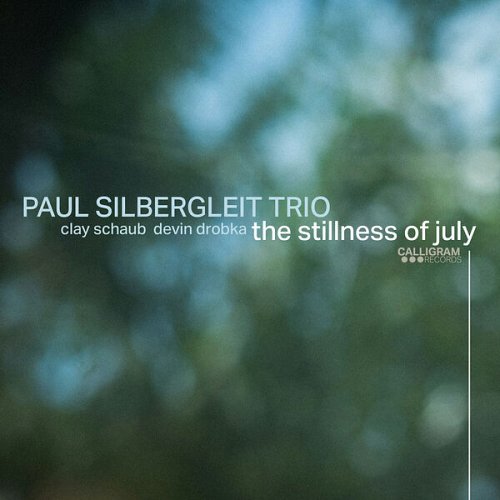
Artist: Paul Silbergleit Trio
Title: the stillness of july
Year Of Release: 2026
Label: Calligram Records
Genre: Jazz
Quality: mp3 320 kbps / flac lossless (tracks)
Total Time: 00:55:19
Total Size: 127 / 322 mb
WebSite: Album Preview
TracklistTitle: the stillness of july
Year Of Release: 2026
Label: Calligram Records
Genre: Jazz
Quality: mp3 320 kbps / flac lossless (tracks)
Total Time: 00:55:19
Total Size: 127 / 322 mb
WebSite: Album Preview
02. Ribbons Down My Back
03. Summer Soft
04. Getting to Know You
05. Poinciana
06. Bongo Beep
07. Riversong
08. With You
09. Enter the Fall
Paul Silbergleit’s debut album does not announce itself with bravado. Instead, The Stillness of July unfolds with a quiet, deliberate sense of purpose, one that positions the Milwaukee-born guitarist less as an innovator chasing novelty than as a careful steward of jazz’s enduring language. Yet to describe Silbergleit simply as a traditionalist would be to miss the subtlety of his approach. His work inhabits a more nuanced space: that of a musician deeply committed to the canon, but intent on finding within its room for personal expression.
The album opens with Silbergleit’s sole original composition, “How Shallow the Duck Pond,” a lightly ironic title that gestures toward its harmonic lineage, loosely derived from “How Deep Is the Ocean.” Written during the pandemic, the piece sets the tone for what follows: a buoyant, swinging introduction that reveals both reverence and playfulness. It also establishes the album’s central tension, between preservation and reinterpretation, suggesting that Silbergleit’s project is not merely to replicate tradition, but to inhabit it fully, from the inside out.
That philosophy extends to the album’s carefully curated repertoire. Drawing from a wide-ranging songbook that includes overlooked works by Charlie Parker, selections from Broadway, and compositions by Stevie Wonder, Silbergleit constructs a program that feels at once eclectic and cohesive. The transitions between old-school swing, lyrical balladry, and more contemporary rhythmic textures are seamless, unified by a consistent tonal sensibility and an emphasis on clarity, restraint, and melodic integrity.
The trio format, acoustic, exposed, and unforgiving, places significant demands on its players. There is no excess here, no room to hide behind arrangement or production. Every note carries weight, every silence matters. Silbergleit leans into that challenge. “This group gives me a unique freedom,” he has said, describing a dynamic in which space itself becomes expressive. That freedom, however, is grounded in discipline, a balance that the trio achieves with remarkable consistency.
The interplay between the musicians is one of the album’s defining strengths. Silbergleit’s guitar work is fluid and articulate, often favoring understated phrasing over technical display. Beneath him, the bassist provides a steady, grounding presence, shaping the harmonic landscape with subtle authority. The drummer, meanwhile, proves to be both responsive and inventive, capable of shifting from delicate brushwork to moments of striking intensity. Their collective experience, dating back to their first performance together at a Milwaukee jazz showcase in 2014—manifests in a cohesion that feels lived-in rather than constructed.
Individual tracks offer further insight into Silbergleit’s sensibility. “Ribbons Down My Back,” drawn from Hello, Dolly!, is rendered with a quiet, almost wistful elegance, its melody allowed to breathe within a sparse, luminous arrangement. “Getting to Know You,” from The King and I, adopts a relaxed, mid-tempo groove, subtly inflected with a conga-like rhythmic feel that adds warmth without disrupting its composure.
Perhaps the album’s most striking reinterpretation comes with “Summer Soft.” Long overshadowed by more prominent tracks from Songs in the Key of Life, the piece is here reimagined in an asymmetrical 7/8 meter. The choice introduces a sense of gentle instability, yet Silbergleit preserves the song’s expansive arc, from its tender opening to a dramatic, almost cinematic crescendo. The performance culminates in a drum solo of notable intensity, one that briefly shifts the album’s center of gravity and underscores the trio’s capacity for dynamic contrast.
“Poinciana,” the Ahmad Jamal classic, receives a similarly thoughtful treatment. Adapted for guitar and enhanced with a subtle chorus effect, the piece retains its hypnotic quality while taking on a new textural dimension. It stands as one of the album’s most fully realized moments, an example of how reinterpretation, when approached with sensitivity, can deepen rather than dilute a composition’s essence.
If there is a limitation to The Stillness of July, it lies in its very commitment to refinement. Silbergleit’s restraint, while admirable, occasionally borders on caution. Listeners seeking sharper departures or more overt experimentation may find the album’s adherence to form somewhat limiting. And yet, it is precisely this discipline that defines its character. Rather than pushing against the boundaries of jazz, Silbergleit explores their interior with patience and care, uncovering nuances that might otherwise go unnoticed.
In that sense, the album feels almost archival in spirit, not as a relic, but as an act of preservation infused with contemporary awareness. It reminds us that innovation in jazz does not always require rupture; it can emerge through attention, through detail, through a willingness to listen closely to what already exists.
Ultimately, The Stillness of July is a work of quiet conviction. It reflects musicians who are not only technically accomplished but deeply attuned to one another, and to the tradition they inhabit. By revisiting familiar and overlooked material alike, Silbergleit and his trio offer something increasingly rare: a listening experience rooted in patience, subtlety, and respect for the art form’s enduring vocabulary.
In a musical landscape often driven by immediacy and reinvention, Silbergleit’s debut stands as a reminder that there is still profound value in simply playing, thoughtfully, attentively, and with genuine devotion.


![Glotze, Pei Ann Yeoh, Elisabeth Coudoux - IIc (2026) [Hi-Res]](https://img.israbox.com/img/2026-10/09/owpwo61q4rodakf8d0zeh1ba4.jpg "Glotze, Pei Ann Yeoh, Elisabeth Coudoux - IIc (2026) [Hi-Res]")




![Sagor & Swing - Rymdsonden (2026) [Hi-Res]](https://img.israbox.com/img/2026-10/09/91bw51zc5bu7o6s29gbmx2ij2.jpg "Sagor & Swing - Rymdsonden (2026) [Hi-Res]")