Flux Quartet, String Noise, Sara Paar, Pauline Kim Harris, Max Mandel, Stephen Gosling - Ramin Heydarbeygi: Echoes of Gusan (2026) [Hi-Res]
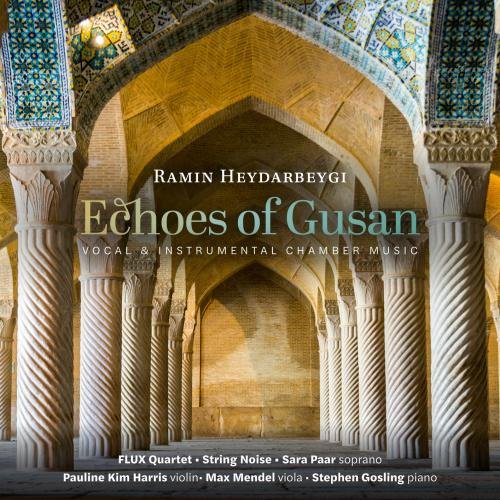
Artist: Flux Quartet, String Noise, Sara Paar, Pauline Kim Harris, Max Mandel, Stephen Gosling
Title: Ramin Heydarbeygi: Echoes of Gusan
Year Of Release: 2026
Label: New Focus Recordings
Genre: Classical
Quality: flac lossless (tracks) / flac 24bits - 96.0kHz +Booklet
Total Time: 01:11:40
Total Size: 320 mb / 1.13 gb
WebSite: Album Preview
TracklistTitle: Ramin Heydarbeygi: Echoes of Gusan
Year Of Release: 2026
Label: New Focus Recordings
Genre: Classical
Quality: flac lossless (tracks) / flac 24bits - 96.0kHz +Booklet
Total Time: 01:11:40
Total Size: 320 mb / 1.13 gb
WebSite: Album Preview
01. Rok-ku no Haiku: I. Poco adagio
02. Rok-ku no Haiku: II. Allegro ritmico
03. Rok-ku no Haiku: III. Calmo
04. Rok-ku no Haiku: IV. Adagio e con devozione
05. Rok-ku no Haiku: V. Sostenuto
06. Rok-ku no Haiku: VI. Allegro giocoso
07. Negah: I. Con grazia; Gisu / The Lover’s Hair
08. Negah: II. Allegro giocoso; Mastam / I’m Drunk
09. Negah: III. Adagio; Negah / Gaze
10. Negah: IV. ♩ = 88; Eshghbazi / Making Love
11. Negah: V. Largo; Bazaar-e-Eshgh / Love Market
12. Negah: VI. Allegretto serioso; Arezu / My Wish
13. Setayesh az Anahid: I. Presto
14. Setayesh az Anahid: II. Lento
15. Setayesh az Anahid: III. Largo e delicato
16. Setayesh az Anahid: IV. Moderato
17. Setayesh az Anahid: V. Appassionata e espressivo
18. Setayesh az Anahid: VI. Alla persiano; con motto
19. Setayesh az Anahid: VII. Alla breve
20. Setayesh az Anahid: VIII. Adagio e lontano
21. Muye baraye Farzin: I. Con intensità
22. Muye baraye Farzin: II. Adagio
23. Muye baraye Farzin: III. Elegia, con anima
24. Muye baraye Farzin: IV. Con motto
25. Muye baraye Farzin: V. Furioso
26. Muye baraye Farzin: VI. Lento doloroso
27. String Quartet No. 2: I. Prestissimo
28. String Quartet No. 2: II. Lento
29. String Quartet No. 2: III. Allegro molto
30. String Quartet No. 2: IV. Adagio e molto cantabile
31. String Quartet No. 2: V. Allegro
32. String Quartet No. 2: VI. Quasi alla marcia
33. String Quartet No. 2: VII. Larghetto
34. Gefangene, Musik hörend (after Käthe Kollwitz): 0. Quotation from JS Bach
35. Gefangene, Musik hörend (after Käthe Kollwitz): I. Feroce
36. Gefangene, Musik hörend (after Käthe Kollwitz): II. Adagio
37. Gusan: I. Allegro giocoso; Zamin-e-Xandan / The Laughing Earth
38. Gusan: II. Largo; Piri / Old Age
39. Gusan: III. ♩ = 84; Balay Eshgh / Calamity of love
40. Gusan: IV. Scherzo; Sereshk-e-Mey / A Drop of Wine
41. Gusan: V. Sostenuto; Marg-e-Mehratan / Death of the Nobles
42. Gusan: VI. ♩ = 88; Qam-e-Asheghi / Sorrow of Love
43. Gusan: VII. Andante, non troppo, lamentoso; Pashimani / Regret
The primary source of inspiration for composer Ramin Heydarbeygi is the intricacy of Persian poetry and miniature paintings. The subtleties, interrelated elements, and delicate details found in these disciplines animates the seven works of chamber music with strings heard here on Echoes of Gusan, featuring performances by many of New York City’s most prominent contemporary music interpreters, including including violinist Pauline Kim Harris, pianist Stephen Gosling, String Noise, soprano Sara Paar, violist Max Mendel, and FLUX Quartet.. Heydarbeygi’s penchant for multi movement works of short duration further reinforces his extramusical models; he paints with substantial musical color on a small canvas.
Violinist Pauline Kim Harris and pianist Stephen Gosling begin the collection with the six movement Rok-ku no Haiku, each a short poetic gem. Heydarbeygi’s style in these compressed pieces is expressive, elegiac, and at time a touch mysterious and coy. Moments of rhapsody are offset by playfulness, as in the contrast between the rhapsodic vibrato laden opening gesture in “Poco Adagio,” and the subsequent pointillistic spiccato, or the tip toeing gesture in “Allegro Ritmico” offset by sighing chords. Heydarbeygi turns his focus to specific instrumental techniques to frame individual movements, such as the double stop trills in the violin in “Calmo,” or the ominous inside the piano plucking in Sostenuto that creates a brief halo of resonance.
Negah for soprano Sarah Parr and the FLUX String Quartet sets texts by primarily women poets from Iran, spanning from Rabe’eh in the 10th century to the contemporary poet Parvin Salajegheh. Heydarbeygi compiled these sources into a monodrama, exploring the complex continuum between love, lust, and eroticism. The performers play harmonicas at moments in the piece, and the soprano soloist also plays a hand percussion instrument called a daf. The pizzicato texture in “I’m Drunk” is tempered by the reedy exhale of harmonica sustains and a final relieved sigh in the voice part. “Making Love” opens viscerally, with a wall of overpressure glissandi in the quartet before we hear flushed, sensual gestures in the voice part. “Love Market” begins with arresting accents on the daf, followed by a hushed, somber chorale in the strings and a mournful low register melody in the voice. The work closes with “My Wish,” the longest setting of the work, a freely unfolding movement whose energy is shaped by the ebbs and flows of the text and the drama contained within.
Setayesh az Anahid for string trio is Heydarbeygi’s musical homage to the Zoroastrian yazatā and Iranian divinity Nahid, the mother of all knowledge and the one who possesses waters. Setayesh az Anahid is arranged into eight short movements that capture the gravitas and power of their source of inspiration. Heydarbeygi exploits the timbral range and interactive potential of the string trio in these brief movements. “Alla persiano; con motto” features a microtonally ascending cello line and an obscured approach to pitch in all three instruments, lending the gestures a gripping, human quality. “Alla Breve” is just that, a a short, brusque three part phrase lasting all of eight seconds. “Adagio e lontano” closes the work in an ethereal haze, ascending into the ether as the texture diffuses into a dewy mist.
Muye baraye Farzin refers to an ancient Iranian tradition of cutting one’s hair as an expression of grief. This six movement virtuoso viola solo is also in six short movements, and excavates a wonderful range of expressive territory on the viola through various techniques, from forceful double stops, to agile pizzicati, to reverent sustains, and limber passagework.
Heydarbeygi’s String Quartet No. 2 is the only non-programmatic music on this recording, though it shared his penchant for constructing large forms from small movements. There is an affinity with the motive centered approach of the Second Viennese School in this piece, an investment in the germination of musical ideas from a seed, and Heydarbeygi returns to those elemental materials in the close of the final movement, paring the texture down to a single unison note.
Gefangene, Musik hörend (after Käthe Kollwitz) for two violins reflects Heydarbeygi’s interest in visual art and the music of Bach. The work opens with a direct quote from the opening of Bach’s C Major Violin Sonata that trails off after forty five seconds. The second movement “Feroce” follows, inverting the dotted rhythm figure from the Bach, drastically increasing its speed, and scrambling the pitches, using the gesture as a jumping off point for variation and extrapolation. The symmetry of Bach’s phrase structure never seems far away, but we are hearing fragments of Bachian impressions filtered through Heydarbeygi’s inner relationship to the music. The final “Adagio” opens with weightless obscurity before we hear dense, fraught harmonies over a pedal point, and closing with rarefied, high register sustains that grind against each other in close proximity before resolving outwards.
The album closes with a companion piece to Negah, Susan for soprano Sarah Parr with the FLUX Quartet plus violinist Conrad Harris and cellist Felix Fan. Gusan refers to poet-musicians of Iran in the Sassanid era, and Rudaki, whose texts are set here, was a blind harpist and poet of the 9th century who worked in this tradition. As with the other works on the recording, Gusan is divided into short movements, with its longest and most somber, “Death of the Nobles,” anchoring the center of its structure. Ramin Heydarbeygi's capacity for packing signficant emotional impact into economical forms echoes throughout this collection, a poetic musical homage to Persian creative traditions that are built on elegant, artful detail and a romantic, idealistic worldview long before Romanticism as it became known in Europe was a glimmer on the landscape.

![The Music Man 2022 Company & Orchestra & Patrick Vaccariello - Meredith Willson: The Music Man (The 2022 Broadway Cast Recording) (2022) [Hi-Res]](https://www.dibpic.com/uploads/posts/2026-08/1787894723_cover.jpg "The Music Man 2022 Company & Orchestra & Patrick Vaccariello - Meredith Willson: The Music Man (The 2022 Broadway Cast Recording) (2022) [Hi-Res]")

![Poor Isa - dissolution of the other (2024) [Hi-Res]](https://img.israbox.com/img/2026-08/26/tulek5703sa48v38o1lzod5ia.jpg "Poor Isa - dissolution of the other (2024) [Hi-Res]")
![matahari sons - Sol en Berlin (2026) [Hi-Res]](https://img.israbox.com/img/2026-08/27/liphdh62asdoa57stjteqmcdz.jpg "matahari sons - Sol en Berlin (2026) [Hi-Res]")