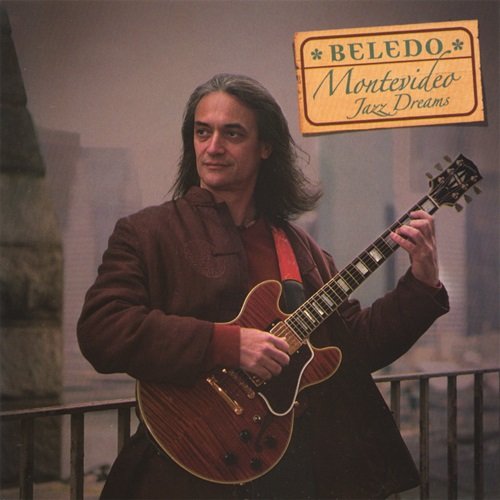
George Lewis And The Barry Martyn Band - For Dancers Only (1993)
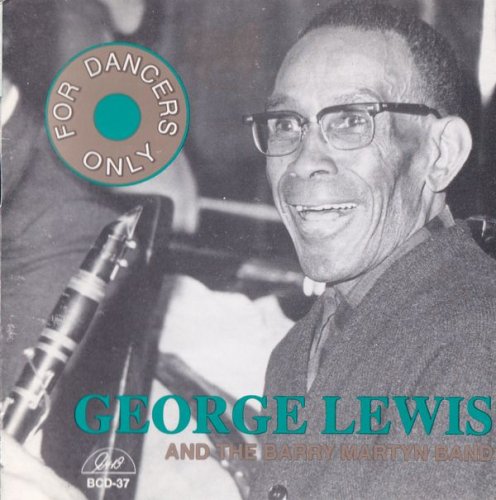
Artist: George Lewis, The Barry Martyn Band
Title: For Dancers Only
Year Of Release: 1969
Label: G.H.B. – BCD-37
Genre: Jazz
Quality: FLAC (tracks+.cue,log,scans)
Total Time: 73:43
Total Size: 258 MB
WebSite: Album Preview
Tracklist:Title: For Dancers Only
Year Of Release: 1969
Label: G.H.B. – BCD-37
Genre: Jazz
Quality: FLAC (tracks+.cue,log,scans)
Total Time: 73:43
Total Size: 258 MB
WebSite: Album Preview
1. On The Bayou
2. In The Evening (Vcl Billett)
3. South Of The Border (Vcl Billett)
4. Breeze
5. Mahogany Hall Stomp
6. Chiribibin
7. Yellow Dog Blues
8. Glory Of Love **
9. Little Coquette
10. Smile, Darn You, Smile
11. Sometimes My Burden Is So Hard To Bear **
12. Tishomingo Blues **
13. Burgundy Street Blues **
14. Old Rugged Cross **
15. Closer Walk With Thee **
16. Caledonia (Vcl Billett) **
17. Bugle Boys March **
18. On The Bayou **
** Previously Unissued
George Lewis — clarinet;
Cuff Billett — trumpet;
Pete Dyer — trombone;
Graham Paterson — piano;
John Coles — banjo;
Terry Knight — double bass;
Barry Martyn — drums.
By that time, Lewis had long been considered the chief custodian of the classic New Orleans style, whose revival had begun in the 1940s thanks to traditional jazz enthusiasts. By the mid-1960s, Lewis was a true legend, regularly touring Europe, where interest in early jazz was perhaps as strong as in the United States. For these sessions, a British band was assembled, led by drummer Barry Martyn, one of the most respected scholars and performers of New Orleans jazz, who strove to accurately reproduce the live sound of New Orleans ensembles.
The name "For Dancers Only" is no coincidence. George Lewis always maintained that early New Orleans jazz was primarily intended for dancing. Unlike concert bebop or modern avant-garde, this music was born in the streets, in dance halls, and at parades. The track listing features classic New Orleans tunes like "Mahogany Hall Stomp," "Yellow Dog Blues," "Burgundy Street Blues," and "On The Bayou," alongside popular American songs like "The Glory of Love," "Little Coquette," "Smile," "Darn You, Smile," and the unexpected "South of the Border," as well as traditional gospel songs like "Old Rugged Cross" and "Closer Walk With Thee."
George Lewis, despite his age, plays with surprising ease. His signature rough and warm sound is recognizable from the first notes. He doesn't overwhelm with virtuosity; melody, intonation, and a sense of teamwork are more important to him.
Critics were mixed. Many noted Lewis's superb form and strong set, but some American reviewers considered the British rhythm section too heavy and "mechanical" compared to the freer style of the New Orleans musicians. However, virtually everyone agreed that Lewis himself is in excellent form. The original vinyl version contained only ten tracks, but when preparing the GHB CD in the early 1990s, the archives were revisited and nine previously unreleased recordings were added from session tapes, increasing the album's running time to nearly 74 minutes. Therefore, the modern CD release is significantly more interesting than the original and allows you to hear almost the entire surviving recording from those sessions.
We are witnessing a meeting of two generations of New Orleans jazz fans. On one side, the last great representative of the old school, who still played music as it sounded in the early 20th century. On the other, young British musicians dedicated to preserving this tradition. The result is one of the warmest and most natural recordings of Lewis's late period: without pretentious nostalgia, without academicism, but with the genuine pleasure of playing music together.
The name "For Dancers Only" is no coincidence. George Lewis always maintained that early New Orleans jazz was primarily intended for dancing. Unlike concert bebop or modern avant-garde, this music was born in the streets, in dance halls, and at parades. The track listing features classic New Orleans tunes like "Mahogany Hall Stomp," "Yellow Dog Blues," "Burgundy Street Blues," and "On The Bayou," alongside popular American songs like "The Glory of Love," "Little Coquette," "Smile," "Darn You, Smile," and the unexpected "South of the Border," as well as traditional gospel songs like "Old Rugged Cross" and "Closer Walk With Thee."
George Lewis, despite his age, plays with surprising ease. His signature rough and warm sound is recognizable from the first notes. He doesn't overwhelm with virtuosity; melody, intonation, and a sense of teamwork are more important to him.
Critics were mixed. Many noted Lewis's superb form and strong set, but some American reviewers considered the British rhythm section too heavy and "mechanical" compared to the freer style of the New Orleans musicians. However, virtually everyone agreed that Lewis himself is in excellent form. The original vinyl version contained only ten tracks, but when preparing the GHB CD in the early 1990s, the archives were revisited and nine previously unreleased recordings were added from session tapes, increasing the album's running time to nearly 74 minutes. Therefore, the modern CD release is significantly more interesting than the original and allows you to hear almost the entire surviving recording from those sessions.
We are witnessing a meeting of two generations of New Orleans jazz fans. On one side, the last great representative of the old school, who still played music as it sounded in the early 20th century. On the other, young British musicians dedicated to preserving this tradition. The result is one of the warmest and most natural recordings of Lewis's late period: without pretentious nostalgia, without academicism, but with the genuine pleasure of playing music together.
![Dom Salvador - The Dom Salvador Samba Jazz Big Band (2026) [Hi-Res]](https://img.israbox.com/img/2026-10/22/983kebl585utbxvo8cdkesqhm.jpg "Dom Salvador - The Dom Salvador Samba Jazz Big Band (2026) [Hi-Res]")
![Clarence Hines Jazz Orchestra - Along the Way (2026) [Hi-Res]](https://img.israbox.com/img/2026-10/22/5xshe7ybty9b80wyvdgrzsjhw.jpg "Clarence Hines Jazz Orchestra - Along the Way (2026) [Hi-Res]")
![Cecil Taylor Unit - Live at the KiMo Theater Albuquerque 1979 (2026) [Hi-Res]](https://www.dibpic.com/uploads/posts/2026-10/1792562215_cover.jpg "Cecil Taylor Unit - Live at the KiMo Theater Albuquerque 1979 (2026) [Hi-Res]")
![Didier Squiban - Molene (2003) [SACD]](https://www.dibpic.com/uploads/posts/2026-10/1792425261_r-24840713-1665919489-3665.jpg "Didier Squiban - Molene (2003) [SACD]")
![Charles Tolliver - Mosaic Select 20 (2005) [Box Set 3CD]](https://www.dibpic.com/uploads/posts/2021-01/1610661758_folder.jpeg "Charles Tolliver - Mosaic Select 20 (2005) [Box Set 3CD]")