Brian Molley Quartet - Tùs / Origin (2026)
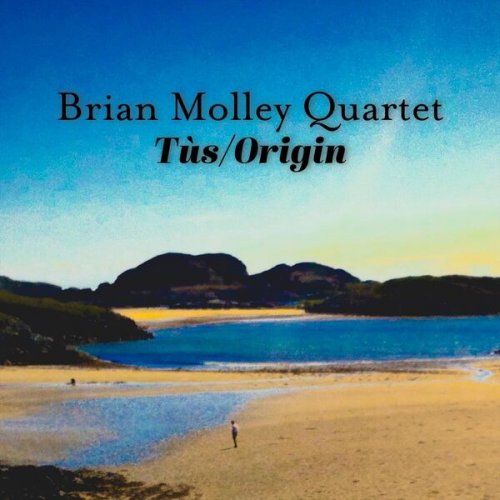
Artist: Brian Molley Quartet
Title: Tùs / Origin
Year Of Release: 2026
Label: BGMM
Genre: Jazz
Quality: mp3 320 kbps / flac lossless (tracks)
Total Time: 00:35:37
Total Size: 82 / 204 mb
WebSite: Album Preview
TracklistTitle: Tùs / Origin
Year Of Release: 2026
Label: BGMM
Genre: Jazz
Quality: mp3 320 kbps / flac lossless (tracks)
Total Time: 00:35:37
Total Size: 82 / 204 mb
WebSite: Album Preview
01. Ode to Frederick Douglass, Pts. 1 & 2
02. Ritornello Ceilidh
03. Cianalas
04. Ode to Frederick Douglass (Reprise)
05. Dance of the Waves
06. The Man and the Lion
07. The Trail of Tears March
08. Frederick's Lament
09. Storm, Whirlwind and Earthquake
Brian Molley (saxophones); Tom Gibbs (piano); David Bowden (double bass); Stephen Henderson (drums)
The Brian Molley Quartet’s latest album is rich in concept and delivery, exploring early Scottish influences on the development of jazz through the sharing of songs and musical traditions by Scottish immigrants to North America. “Tùs” is the Scots Gaelic word for “origin”, signposting the way for us to reflect on an absorbing narrative on the cultural evolution of the music form.
Structured as a nine-piece suite, the album traces a journey from the Outer Hebrides to the East Coast of the US and then south to Louisiana, taking in a vivid range of styles and formats along the way. And it is all lovingly mapped and detailed through Molley’s tight compositions and arrangements and rendered skilfully by the excellent musicians at play here. Joining Brian Molley (heard on tenor and soprano sax) are long-standing playing partner Tom Gibbs on piano, David Bowden on double bass and Stephen Henderson on drums.
There are no sung or spoken words to guide us, rather this thesis is presented through Molley’s cleverly nuanced writing that leaves you listening for every turning phrase. The Scottish folk flavours start strong and become progressively more subtle as the horizon widens and the work develops, like whispers of lingering mist, but are never forgotten, recalled through recurring structures and stylings.
It is a most persuasive approach that works well as a suite. The passages all have purpose and there is not a note wasted in the stories they tell. We have moments of haunting melody which are repeated to help bind the suite; elements of dance from both sides of the Atlantic and en route; hymn-like structures that convey tradition and form; and an emotional longing that transcends distance. And it does all feel like a musical journey with only momentary pauses between movements, as if the band was briefly catching its collective breath and adjusting the compass before moving on again.
The first piece, ‘Ode to Frederick Douglass, Parts One and Two’ sets to music the words of the former slave and abolitionist, who was a frequent visitor to Scotland, within a charming folk-infused piano melody, repeated back on saxophone, and accompanied by synth washes, clearly marking the journey’s start point.
The same melody is recalled throughout the suite. On ‘Ode to Frederick Douglass Reprise’, Molley plays with more poignancy through gently blown tenor notes and then on soprano. ‘The Man and the Lion’ references one of Douglass’ speeches and reintroduces the theme; and also on ‘Frederick’s Lament’, which builds a welling momentum before switching in Bowden’s extended bass solo. Douglass was clearly one of the inspirations for the album, providing an entwined historical pathway to help coalesce the work.
The dance pieces also provide key reference points as cultural melting pots drawing in a range of influences. ‘Ritornello Ceilidh’ is the soundtrack to a metaphorical Scottish leaving party, complete with Henderson’s bodhrán rhythms and Molley playing a fast-fingered penny whistle part on sax, working up a lively jig.
‘Dance of the Waves’ moves the focus to 18th Century cross-Atlantic journeys when passengers were thrown together and made their own entertainment through music and dance. Here a range of styles come to play, from Gibbs’ Bach-like fugue intro, through to hornpipe rhythms and elements of Afro-Caribbean dance, with Molley’s blues sax surging through, building a full sound. Just one of the album’s highlights.
On the contrasting ‘Cianalas (longing for home)’ a sense of rippling melancholy is developed, first through Gibbs’ piano intro, accompanied by Henderson’s cymbal washes and Bowden’s drawn bass, then through Molley’s nostalgic tones, before Gibbs’ more optimistic blues theme cuts through, leading to Bowden’s extended bass solo and Molley’s smiling sax taking things on.
‘Storm, Whirlwind and Earthquake’ closes things out on a high; a lively hoedown with subtle Scottish stylings. This is a fine workout, exuding a rising energy and joy before slowing to a lilting final note. Delightful.
This is a fully-formed, imaginative suite of music that for the full effect should be listened to in one. Recommended.
![The Seven Ups - Flight (2026) [Hi-Res]](https://img.israbox.com/img/2026-10/02/7ko9pswclriypfdynqw42dbs7.jpg "The Seven Ups - Flight (2026) [Hi-Res]")

![Tommy Muellner - Solitary Moon (2026) [Hi-Res]](https://www.dibpic.com/uploads/posts/2026-10/1790908946_lewv6o94sj39d_600.jpg "Tommy Muellner - Solitary Moon (2026) [Hi-Res]")

![Barry Guy and London Jazz Composers Orchestra featuring Marilyn Crispell and Angelica Sanchez - Double Trouble III (2026) [Hi-Res]](https://img.israbox.com/img/2026-10/02/7ux7pbfj59tdj59wua68olcrn.jpg "Barry Guy and London Jazz Composers Orchestra featuring Marilyn Crispell and Angelica Sanchez - Double Trouble III (2026) [Hi-Res]")