Alex Puddu - Francia Meccanica (2026) [Hi-Res]
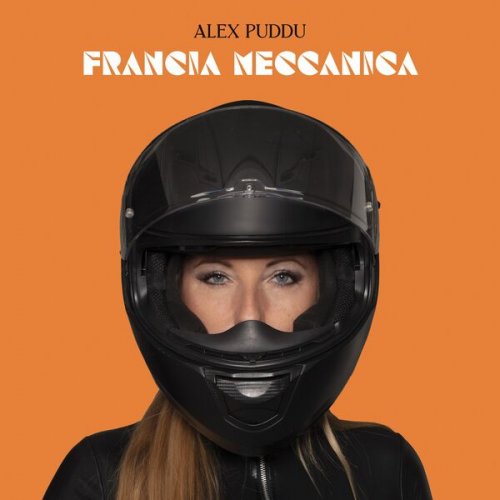
Artist: Alex Puddu
Title: Francia Meccanica
Year Of Release: 2026
Label: Al Dente Music
Genre: Jazz, R&B, Soul, Funk, Electronic
Quality: mp3 320 kbps / flac lossless (tracks) / flac 24bits - 44.1kHz
Total Time: 00:35:26
Total Size: 81 / 229 / 404 mb
WebSite: Album Preview
TracklistTitle: Francia Meccanica
Year Of Release: 2026
Label: Al Dente Music
Genre: Jazz, R&B, Soul, Funk, Electronic
Quality: mp3 320 kbps / flac lossless (tracks) / flac 24bits - 44.1kHz
Total Time: 00:35:26
Total Size: 81 / 229 / 404 mb
WebSite: Album Preview
01. Notte in Riviera
02. L'Amour Dangereux
03. Dolce e Violenta
04. Trasgressiva
05. St.Tropez
06. Il Piacere dei Vampiri
07. Parigi Perversa
08. Midnight Blue
09. Cafe’ Mozambique
If Alex Puddu’s name registers at all on this side of the Channel, the most likely route in is “Don’t Hold Back”, the Gene Robinson Jr.-fronted opener from 2020’s Discotheque that picked up genuine UK radio airplay and became, by some distance, his most visible British moment. It’s a telling one. Robinson Jr., lead vocalist of Philly outfit Breakwater, brought the kind of credentialed American soul voice that the UK has always made room for, and the track itself — sleek, late-seventies-indebted jazz-funk with a boogie undercarriage — slotted neatly into a lineage that runs from Northern Soul through rare groove and acid jazz into the boogie revival of labels like Z Records. Britain has a deep and well-tended soul scene, and “Don’t Hold Back” fits it perfectly. The broader disco and nu-disco strand Puddu has worked throughout his career has similarly touched the UK, even if it remains, at heart, a more identifiably European sound.
That aside, Puddu has remained a relatively niche figure here. The Rome-born, Copenhagen-based multi-instrumentalist has now stretched past eighteen albums, and his catalogue moves through enough territory — seventies library music, giallo-soundtrack pastiche, Italo disco, neo-soul, synth pop — that any given British listener might know one corner of it without realising the rest exists. His most celebrated work was made for Schema Records: the Golden Age of Danish Pornography trilogy, and the cinematic jazz-library run of Registrazioni Al Buio, In The Eye Of The Cat and The Mark Of The Devil, all featuring Edda Dell’Orso, the voice behind so much of Ennio Morricone’s catalogue. Registrazioni Al Buio in particular is the record I’d point anyone to first — its opening side moves through “Il Canto delle Orchidee” into the smouldering “Alta Tensione 3am”, a track that captures everything Puddu does best: vintage instrumentation, lean rhythms, and a noir atmosphere recreated rather than sampled. Schema, more than any other label, gave Puddu the freedom to make records that were genuinely interesting and a little edgy. It suited him.
Even so, I’ve never felt his output on Al Dente Music has quite reached the level of that earlier Schema run. Some of that may be down to volume. Since setting up his own imprint, Puddu has been prolific to a fault — Love After Dark, Night People, Private, Blue Ecstasy, Deliria, Professione Reporter and now Francia Meccanica in the space of a few years. The Schema records had the benefit of an external editorial ear and a label with a defined aesthetic to push against; the Al Dente catalogue, by contrast, has the freedom and the unevenness of a self-released body of work. When you’re putting out a record or two a year on your own terms, not every one can be the one.
Francia Meccanica is firmly European in register, channelling the refined sexiness of late-eighties and early-nineties disco-electronica across nine tracks of shimmering synths, tight drum programming and erotic spoken-word in Italian and French. The setting is the French Riviera, the framing device is a gothic-modern tale of nocturnal encounters, and the mood throughout is one of romance and transgression under fluorescent skies. Synth pop is probably the catch-all that fits best, though it undersells the disco-electronica spine running through the record.
Opener “Notte In Riviera” sets the tone immediately — an Italo-French disco groove with breathy spoken vocals and a bouncing low-end that glides. It’s the clearest moment on the record where you can hear Puddu working in the lineage Alexander Robotnick defined with 1983’s “Problèmes d’Amour”, still the high-water mark for Italian electronic dance music and the template against which anything in this register has to be measured. Puddu isn’t aiming for that kind of innovation — he’s a craftsman, not an innovator — but the DNA is there. “L’Amour Dangereux” pushes into colder, garage-and-deep-house territory. At the same time “Dolce e Violenta” is the album’s noir centrepiece, stripping the rhythm back so saxophone lines can drift through like smoke in a dimly lit nightclub. “Trasgressiva” lightens the mood with a warm Italian funk groove and a lead guitar line that nods to the Isley Brothers’ “That Lady.” “St. Tropez”, the album’s third single and easily its most accessible moment, finds Puddu duetting in French with Céline Mia over a bass-synth groove built for immediate appeal.
The standout is “Parigi Perversa”, which Puddu has cited as being shaped partly by Massive Attack’s “Unfinished Sympathy” and Stereophonics’ “Maybe Tomorrow” — an unexpectedly British pair of touchstones that, against the odds, lands. Breakbeats underpin soulful vocals from Imelda, and Puddu trades verses bilingually in Italian and French. It’s the most emotionally weighted track here and the clearest sign that, when he commits to a single idea, he can still produce something memorable.
What ties the record together is its sequencing. Tracks flow into one another through shared textures and emotional continuity rather than obvious repetition, and there’s a coherent atmosphere from beginning to end. “Il Piacere dei Vampiri” pushes the erotic tension toward acid-disco excess; “Parigi Perversa” closes things on a more melancholic, human note. Puddu’s experience shows in the control of it — synth accents, bass movements and rhythmic pauses all feel deliberately placed — without tipping into something overly calculated.
Whether Francia Meccanica finds an audience in the UK as “Don’t Hold Back” briefly did is doubtful. This is a more interior, more European record, less obviously suited to a British soul DJ’s set. But for listeners drawn to the continental end of the dance-floor continuum, it’s a confident addition to a catalogue that’s now genuinely substantial. Those still hoping Puddu returns to the cinematic jazz-library territory of his Schema years will need to keep waiting.

![Sbatax + Gross - Lapilli (2026) [Hi-Res]](https://www.dibpic.com/uploads/posts/2026-10/1792302944_cover.jpg "Sbatax + Gross - Lapilli (2026) [Hi-Res]")

![Aria - Rectify (2026) [Hi-Res]](https://www.dibpic.com/uploads/posts/2026-10/1792589967_592x592bb.jpg "Aria - Rectify (2026) [Hi-Res]")