New England Jazz Collaborative - Tributaries (2026)
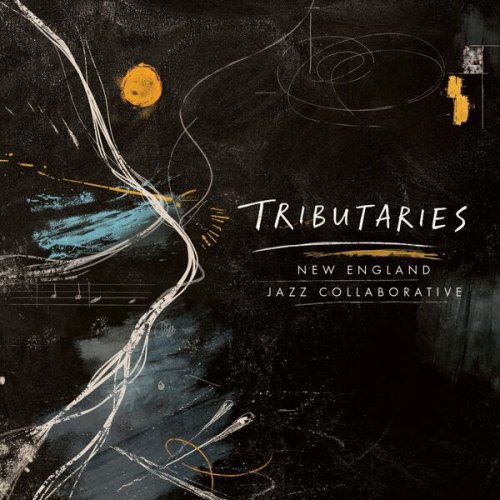
Artist: New England Jazz Collaborative
Title: Tributaries
Year Of Release: 2026
Label: ACP Records
Genre: Jazz
Quality: mp3 320 kbps / flac lossless (tracks)
Total Time: 00:40:25
Total Size: 94 / 225 mb
WebSite: Album Preview
TracklistTitle: Tributaries
Year Of Release: 2026
Label: ACP Records
Genre: Jazz
Quality: mp3 320 kbps / flac lossless (tracks)
Total Time: 00:40:25
Total Size: 94 / 225 mb
WebSite: Album Preview
01. Another Brighter Day
02. Ol’ Liminal
03. Kiss Me Again
04. The Secret
05. Gee, Em...
06. Green Turtle Strut
ACP Records is not a label of any kind I’m used to writing about. It belongs to Amherst College Press, the college’s scholarly publishing arm, and it applies the machinery of academic publishing to jazz recordings: collaborative peer review, Creative Commons licensing, free digital distribution. The music is given away, on terms the artists themselves set. That a university press has concluded a seventeen-piece jazz orchestra constitutes publishable scholarship seems to me the most striking thing about this release, and the promotional copy gives it half a sentence. There is a limited vinyl pressing and a CD sitting alongside the free download, which places the physical object in an unfamiliar position — you are being asked to buy something you could otherwise take.
The New England Jazz Collaborative was formed in Cambridge, Massachusetts in 2021 by the percussionist and composer Jeremy Cohen and seven fellow composers, in the flat aftermath of two years of shuttered venues. The problem it was built to solve is mundane and, for anyone who writes large-ensemble music, crushing: scores accumulate, and the resources to have seventeen skilled players realise them do not. Instead of assembling an orchestra around one leader’s book, the NEJC commissions, performs and documents work by whichever of its member composers has something ready. Over thirty new pieces in five years, an ensemble-in-residence post at the Longy School of Music, and a debut record carrying six works by four hands. Several of those hands are in the band: Bob Nieske, Randy Pingrey, Ellie Pruneau, Temidayo Balogun and Eric Hofbauer all sit in the orchestra as member composers, and Sam Spear plays second alto on his own piece.
The LP takes three pieces a side, 20:19 and 20:02. What the credits reveal, and the promotional copy never admits, is that the seventeen-piece figure describes only part of the record. The band sizes run nineteen, eighteen, seventeen across Side A, then seventeen, seventeen and twenty across Side B. Cohen’s two compositions carry every addition, and the largest band he assembled is the one you hear last.
The opener is the outsized event, at 10:14, taking a quarter of the album while everything after it runs between six and seven and a half minutes. ‘Another Brighter Day’ spends the room on dawn imagery, layered harmony and doubling: Felipe Salles carries soprano, flute and piccolo, Brian Landrus comes off baritone onto flute, Ian Buss switches to clarinet, Balogun takes a soprano turn, and a six-man reed section ends up covering ten instruments. Angel Subero adds a second bass trombone, Nieske plays electric bass, Mitch Selib takes the guitar alone. This is the composition that made me sit up. Selib‘s guitar arrives first, then Balogun‘s soprano, and then a groove flushes through the whole thing with an easy authority I associate with Bob James at his best. Ten minutes, and I wanted another ten.
Then comes ‘Ol’ Liminal’ at 3:54, the shortest thing here and the one chosen as the lead single — sharp judgement, since a ten-minute opening statement makes a poor calling card. Nobody doubles on it. Five reeds on their chair horns, four trumpets, four trombones, Nieske back on upright, and Hofbauer’s guitar alongside Selib’s as the one addition. Matan Rubinstein sets the collective improvisation of early New Orleans against material the Jerusalem-born composer draws from rock, hip hop and electronic music, and the staccato figure driving it comes from Lumanyano Mzi and Nieske.
Darryl Harper closes the side and opens the next one. ‘Kiss Me Again’ is the first piece played by the seventeen-piece band as advertised, and its two doublings both work towards softening: Landrus onto bass clarinet, Mark Tipton onto flugelhorn. Its direct source is George Russell’s Lydian Chromatic Concept, and it carries three solo voices rather than the one the promotional copy names — Tipton’s flugelhorn, Pruneau’s piano, and a tenor turn from Balogun, who had taken soprano on the opener. Pruneau gets the most exposed moment on the album here—a ballad to end a side on. Execution is not in question; this is handled beautifully. The pendulum swings a good way from jazz, though, and I found it a struggle to stay with across its six minutes.
Turn the disc over, and Harper is straight back with ‘The Secret’, an odd-meter funk and, at 7:29, the longest piece outside the opener. This is the barest scoring on the record: seventeen players, nobody doubling anything. The round robin of short solo statements goes to Bijon Watson and Chris Gagne, first chairs of the trumpet and trombone sections, with Mzi answering from the kit. On CD the two Harper pieces run consecutively, and the contrast is abrupt; on vinyl the flip sits between them, which suits both. Harper himself, an in-demand clarinettist, plays nothing on the record — he is here purely as a writer, which is what the collaboration was built for. This is where the record freshens up for me. There is a good deal of trombone work, Nieske keeps a swagger going underneath throughout, and only a muted trumpet pulled these ears away for a moment.
‘Gee, Em…’ is the outlier of the six, and the only piece with a single featured soloist. Spear, a Cleveland-born Schuller disciple, builds it on a twelve-tone row and hands the statement to Allan Chase at alto 1, while sitting in the section at alto 2 himself. The title nods to Gunther and Marjorie Schuller.
Cohen closes with ‘Green Turtle Strut’, and this deserves spelling out, since nobody in the promotional material does. Cohen studied Ewe drumming with the Ghanaian master drummer C.K. Ladzekpo, continued that study in Ghana under Emmanuel and Ruben Agbeli, played in Boston’s Agbekor Drum & Dance Society and spent a decade running study-abroad music and dance programmes in West Africa and Cuba. ‘Green Turtle Strut’ is his reading of Ghanaian highlife, with a rhythmic feel drawn from Congolese sebene, and the scoring follows from the idiom. The piece works in pairs — two sopranos, two flutes, two guitars, two bass trombones, and Balogun on talking drum, with Mzi adding auxiliary parts beside the kit. Highlife is interlocking music, and one of anything will not do the work. The feature goes to Hofbauer, the additional guitar rather than the chair. This is not a composer reaching for a colour he read about; it is a record ending where its founder’s musical education began.
The rhythmic engine underneath all six pieces is worth a paragraph of its own. Mzi is from Cape Town, came up through the University of Cape Town’s South African College of Music, built the Unity Band from a trio into an eight-piece and won a Mzantsi Jazz Award with them before Berklee brought him to Boston. He now holds the drum chair in Bokani Dyer’s trio. His presence on a New England composers’ record is precisely the sort of detail the collaborative’s stated ethos ought to be shouting about, and it goes unremarked.
Ken Schaphorst conducts, and the orchestra mixes established Boston-area names — Watson, Jason Palmer, Landrus, Hofbauer — with players far less familiar. Whether a collective like this can sustain a distinctive ensemble identity across composers this far apart remains an open question, and one album is too early to answer it. What the record establishes is that the model works. Not every piece connected with me — the opener is the one I would return to, and a couple of the others washed past without leaving much behind. Set against that is the scale of what has been assembled: six new orchestral works written, played, recorded and released by a nonprofit five years old, and hosted open access by a college press so that anyone can hear it. Judged on ambition and on what it took to get here, it stands up well.
![Karate Boogaloo - Access All Areas (2026) [Hi-Res]](https://www.dibpic.com/uploads/posts/2026-10/1791384435_1.jpg "Karate Boogaloo - Access All Areas (2026) [Hi-Res]")