Nico Widdowson - On Fools And Clowns (2026)
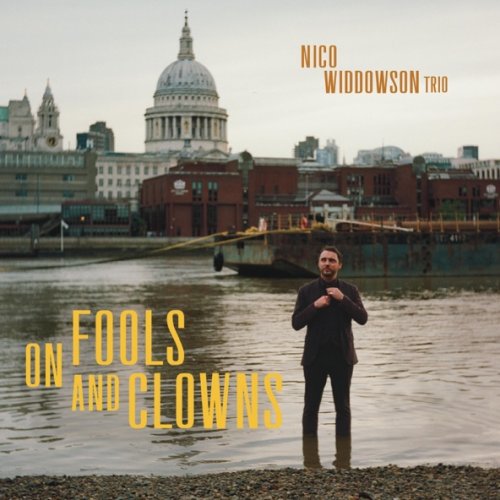
Artist: Nico Widdowson
Title: On Fools And Clowns
Year Of Release: 2026
Label: Trash City Records
Genre: Jazz
Quality: mp3 320 kbps / flac lossless (tracks)
Total Time: 00:44:34
Total Size: 103 / 268 mb
WebSite: Album Preview
TracklistTitle: On Fools And Clowns
Year Of Release: 2026
Label: Trash City Records
Genre: Jazz
Quality: mp3 320 kbps / flac lossless (tracks)
Total Time: 00:44:34
Total Size: 103 / 268 mb
WebSite: Album Preview
01. Angela Scott
02. Are You There Lion?
03. Duke's Blues
04. Nicotine Fingers
05. ¿Who Shot Pinetop?
06. And Also Her Mother
07. Today I've Been Feelin' Blue
08. You Can Fire Me In The Morning
09. On Fools And Clowns
10. To Those I love
11. Maple Leaf Rag
Nico Widdowson – Piano; Joe MacLaren – Double Bass; Jordan Hadfield – Drums (Tracks 1, 3 & 7); Charlie Hutchinson – Drums (Tracks 4, 5, 8, 9 & 11)
Nico Widdowson, a young British pianist, has already made a name for himself in the UK as a member of Ferg’s Imaginary Big Band. On Fools and Clowns, his debut trio album, he puts stride piano alongside freer playing. Widdowson knows jazz history. You can hear Willie “The Lion” Smith, Duke Ellington and Thelonious Monk in his playing, but he keeps nudging those sounds in different directions.
Widdowson can play a sturdy stride figure one minute and then start pulling the music apart the next. Joe MacLaren’s bass and the drums of Jordan Hadfield and Charlie Hutchinson give him plenty to push against, and the trio sounds comfortable when the music gets loud, loose or slightly unruly.
Stride arrives immediately on “Angela Scott,” with Widdowson hitting the lower piano notes hard while MacLaren walks underneath and the drums clomp and crash around them. But the music won’t stay put for long. The bass wanders into freer territory, the drums get noisier, and Widdowson pulls at the stride style, stretching it into something looser before settling back into the groove. Then he starts throwing in scattered, dissonant chords—a big wink to Monk—and takes the piano somewhere else again.
“Are You There Lion?” is more straightforward. His piano stays close to the sound of Willie “The Lion” Smith, although Widdowson keeps playing with the tempo, speeding things up, really pushing the music before backing off again. He hits the low notes hard, giving the old stride style plenty of weight.
“¿Who Shot Pinetop?” moves at a slow, almost drunken pace, with notes tumbling off the top of the keyboard while bass and drums thump and shuffle along. Widdowson keeps messing with the tempo, speeding up and yanking it back. The piano takes on a lopsided quality that sounds as if it could topple over. His right hand stays closer to the old style while the left wanders into bop, slips into boogie-woogie and then back. The bass and drums keep pushing, as if they’re egging him on. For a moment, the whole thing feels like one of those old Western saloons where the piano player is being told to play it again, only faster, because his life may depend on it.
The trio’s humor becomes even more obvious on “You Can Fire Me In The Morning,” where piano notes are scrambled and tossed about like something dumped out of a box too heavy to carry around anymore. The bass and drums settle into something approaching hard bop, with a touch of New Orleans raggedness. Somebody laughs in the background. These guys are having way too much fun.
There are quieter moments, too. “To Those I Love” starts almost sweetly, with soft chords and single notes giving the piano a dreamy feel. Widdowson gradually begins to push harder, then pulls back, playing with dynamics, leaving space and accenting some of the notes. MacLaren’s bass solo has a fluid, woody, resonant quality that gives the piece another kind of warmth. By the end, Widdowson is hitting the keys with both hands, and the sweetness has acquired some muscle.
Widdowson eventually brings all these strands together on “Maple Leaf Rag,” taking Scott Joplin’s familiar melody apart and putting it back together. The trio keeps returning to the original ragtime shape even as they pull it in different directions. It’s loud, unruly and unmistakably affectionate toward Joplin’s classic piece. Widdowson knows the rules. He just seems to enjoy finding out what happens when he breaks a few.
![Andrew Toombs - Alloy (2026) [Hi-Res]](https://img.israbox.com/img/2026-10/16/v4o9bebsygzui4yjpkyt7md5q.jpg "Andrew Toombs - Alloy (2026) [Hi-Res]")


![Deborah Swiney - You Taught My Heart to Sing (2026) [Hi-Res]](https://img.israbox.com/img/2026-10/16/zefjoeszlf4u2jtu1ay28nqe5.jpg "Deborah Swiney - You Taught My Heart to Sing (2026) [Hi-Res]")