Artist:
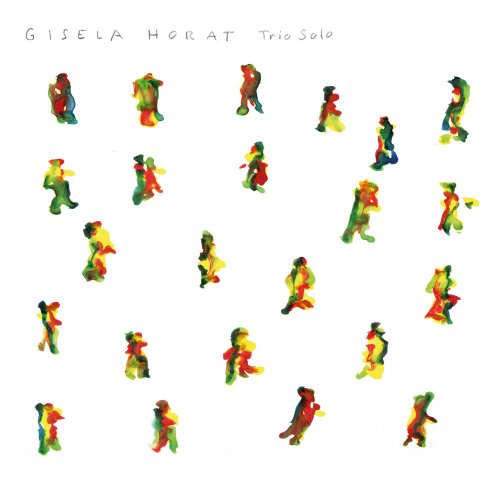
Gisela Horat
Title:
Trio Solo
Year Of Release:
2026
Label:
u n i t
Genre:
Jazz
Quality:
FLAC (tracks) [96kHz/24bit]
Total Time: 2:02:54
Total Size: 2.12 GB / 488 MB
WebSite:
Album Preview
Tracklist:01. Leben (Trio)
02. Ein Schicksalsschlag (Trio)
03. Verloren (Trio)
04. Angst (Trio)
05. Blick in die Welt (Trio)
06. Der kleine Gnom (Trio)
07. Im Stress (Trio)
08. Einfach müde (Trio)
09. Innere Unruhe (Solo)
10. Zerstreutheit (Solo)
11. Mutter (Solo)
12. Leben (Solo)
13. An meine Schwester Denken (Solo)
14. Angst (Solo)
15. Spielerei (Solo)
16. Dem Tode nahe (Solo)
17. Leben! (Solo)
18. Vergessen (Solo)
19. Abschied (Solo)
Diving into sound, gliding into it and letting it gently fade away. With silence as a sonic element, as deep immersion and careful exploration of sound as texture and of a pulse that dissolves and resonates only as a thought.
“My music emerges from my everyday life,” says Gisela Horat. As a narrative of deeply personal thoughts and experiences. At the same time, it should always contain beauty and allow listeners peace, space for introspection, and reflection on their own being and feelings.
This was also the case on that day in November 2024 in Stalden, Switzerland, just a few days after the U.S. elections, when the world seemed to stand still in shock. Alone in the studio with a Bösendorfer Imperial, Gisela Horat embarks on an inner journey of sonic exploration. With pieces that have, in part, accompanied her for a long time and that emerge anew, time and again, from the moment itself. With silence as a sonic element, as a reduced soundscape, as a cautious exploration of sound as texture.
The calm is a central part of her music, which moves between jazz and minimalism, emerging from the moment and from the respective feeling of an inner sense of place. As a moment of pause, of tuning in, and then of collective improvisation. This is how compositions emerge like living organisms. Like a network of shapes that constantly arise anew, only to dissolve again. Shapes that flow into one another, with melodic lines that gently play around a thought.
Listening closely to a single note and feeling it holds great significance for her. “I play only what is necessary,” says Horat. In this conscious omission, space is created for emotional depth. It is always a challenge for herself and the listeners to allow for endurance, patience, and calm.
She has been playing with her trio for more than ten years, with Simon Iten on bass and Samuel Büttiker on drums and percussion. The deep mutual trust allows her great freedom. The double album, which combines her solo and trio performances, was recorded over a total of three days; she herself went back into the studio alone in October 2025.
The music illustrates her journey as a trinity of solo – trio – solo, particularly in her composition “Leben” (Life) which can be heard here in three variations. As a lyrically melancholic snapshot and as a defiant, affirmative improvisation with a zest for life, endowed with an exclamation mark. “Leben” is based on an improvisational idea she developed twenty years ago and which she plays time and again during her recordings and concerts. How does life feel right now, as a reflection of the moment? The only guideline is the basic idea of a chord and a rhythm, which, however, does not necessarily have to be played; it merely serves as an improvisational concept, as an anchor point. “I also ask myself, how much can I reduce it,” she explains.
In her improvisations, she also works with acoustic preparations. Such as with placed cymbals, dampening the strings with felt or ping-pong balls that dance on the chords while she plays. “I like playing with chance,” says Horat. The detached, playful quality. But also the exhilarating feeling of diving into the sounds and listening to and feeling every single note and its vibrations.
The pieces “Innere Unruhe” (Inner Turmoil) and “Zerstreutheit” (Distraction) are based on spontaneous improvisations created in the studio. The other pieces use composed short phrases and ideas as their starting point. She describes “Verloren” (Lost) as the feeling of not belonging anywhere, perhaps of having lost one’s home, but also the hope of being able to find what was lost again. As a preparation, she placed sea shells on the strings here.
She begins with melodic fragments that, through improvisation, become musical narratives. Through shifts and interruptions, moving away from and back into tonality. “I don’t want to be ruled by the sound,” says Horat. Often, the titles deal with pain and darkness and can simultaneously be read as compositional guidelines for the joint improvisations. As descriptions of a state of being, yet also connected to hope, to what may follow. Curiosity remains, the experimentation and exploration, with listening and feeling as the essence of music. As inner scores of great beauty and vulnerable tenderness.

![Gabriel Palatchi - Give Me the Beat (2026) [Hi-Res]](https://img.israbox.com/img/2026-10/18/606eq9qel1z8irs9yv6q7g5l5.jpg "Gabriel Palatchi - Give Me the Beat (2026) [Hi-Res]")
![Kelly Green - Eat Your Greens (Deluxe Edition) (2026) [Hi-Res]](https://www.dibpic.com/uploads/posts/2026-10/1792119522_cover.jpg "Kelly Green - Eat Your Greens (Deluxe Edition) (2026) [Hi-Res]")

![Fiona Monbet, Ensemble Miroirs Etendus - Chassol-Reich (2026) [Hi-Res]](https://img.israbox.com/img/2026-10/15/yn170ls98q0ovxmny9lx5uw6l.jpg "Fiona Monbet, Ensemble Miroirs Etendus - Chassol-Reich (2026) [Hi-Res]")