Tyler Henderson - The Long Game (2026)
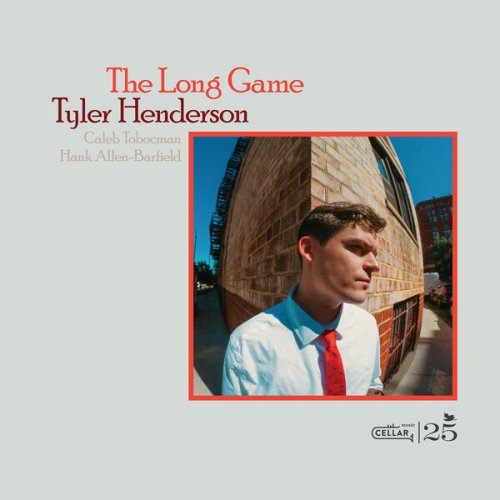
Artist: Tyler Henderson
Title: The Long Game
Year Of Release: 2026
Label: Cellar Live
Genre: Jazz
Quality: Mp3 320 kbps / FLAC (tracks)
Total Time: 42:45
Total Size: 98.9 / 239 MB
WebSite: Album Preview
Tracklist:Title: The Long Game
Year Of Release: 2026
Label: Cellar Live
Genre: Jazz
Quality: Mp3 320 kbps / FLAC (tracks)
Total Time: 42:45
Total Size: 98.9 / 239 MB
WebSite: Album Preview
1. Covered Bridge Bounce (3:50)
2. Mahogany (4:33)
3. More Beautiful Than a Flower (4:13)
4. Tokyo Nights (5:00)
5. Lisa’s Tune (5:17)
6. I’m Gonna Laugh You Out of My Life (5:58)
7. The Green Groove (4:24)
8. All This and Heaven Too (5:03)
9. Eight Ball (feat. Jacob Chung) (4:31)
There is an archetype of pianist that has compelled me from my beginnings as a jazz musician.
These players are the lifeblood of the New York jazz scene, and they share the same characteristics: quality, consistency, and patience. They are pillars of our music, and help to make our scene globally
recognized as the torchbearer for high-level playing. These musicians play The Long Game. In turn, I believe these traits can be effectively applied to one’s own life, and provide a path to creating real, long-lasting value in any endeavor.
The idea for this concept came after doing a deep dive into the careers of many of the great sidemen through history: Wynton Kelly, Cedar Walton, Barry Harris, Walter Davis Jr., Horace Parlan, Junior Mance, Kenny Drew, John Hicks, Larry Willis, Ronnie Matthews, George Cables, Kirk
Lightsey, Kenny Barron, Kenny Kirkland, Benny Green—the list goes on. What I first recognized in the playing of these greats (besides the pervasive influence of Bud Powell) is something I subconsciously dubbed “The New York Sound.” The more I thought about this, however, the more I realized that this shared sound is simply a prolonged commitment to excellence; the long game. They spent multiple decades making the highest level of music, because New York requires nothing less.
I have also come to the realization that one must—at least partially—move in the shadows to play this “long game.” No bandleader likes a sideman that makes their life more difficult. The great purveyors of the long game learned long ago that, to be a great sideman, one’s presence must be felt,
not seen. These pianists make the music better in ways that the other musicians often don’t even recognize. They change a chord symbol when they understand the bandleader’s unwritten implication.
They accommodate a singer’s alternate melody in a way that goes unnoticed (success!). They sense a sagging of the beat and switch to comping rhythms that slowly right the sinking ship. It is a commitment to quality when no one is looking.
This quality is best served when it is paired with patience that is tied to a sort of self-effacing disposition. Because these musicians weren’t driven by becoming world-renowned jazz celebrities, their stars did not burn out early. They didn’t have any era of “flops” or “lulls” because they had always moved in the shadows, and their consistency is what made them who they were. They were the connective tissue of the scene, and the reason that the level of musicianship was so high.
Moreover, the entirety of life can be approached with this outlook. A great parent will patiently show their child their love, over and over. A great basketball player will work into the silent hours of their supposed free time. A great dog will be waiting at its owners door every day. This greatness is forged over the course of time. This type of greatness has nothing to do with a single moment.
Why am I calling this album The Long Game? Am I putting myself into this category? Certainly not. I don’t have the decades of output, nor the prolonged excellence of these musicians.
This record is a tribute to these musicians who have quietly held up the music. I often connect with their playing so heavily because it was weathered over time to create something beautiful, like a diamond. I aspire to achieve this sound eventually, but for now I can only continue the slow opening moves of The Long Game.
Tyler Henderson - piano
Caleb Tobocman - bass
Hank Allen-Barfield - drums
Jacob Chung - tenor saxophone (track 8)
These players are the lifeblood of the New York jazz scene, and they share the same characteristics: quality, consistency, and patience. They are pillars of our music, and help to make our scene globally
recognized as the torchbearer for high-level playing. These musicians play The Long Game. In turn, I believe these traits can be effectively applied to one’s own life, and provide a path to creating real, long-lasting value in any endeavor.
The idea for this concept came after doing a deep dive into the careers of many of the great sidemen through history: Wynton Kelly, Cedar Walton, Barry Harris, Walter Davis Jr., Horace Parlan, Junior Mance, Kenny Drew, John Hicks, Larry Willis, Ronnie Matthews, George Cables, Kirk
Lightsey, Kenny Barron, Kenny Kirkland, Benny Green—the list goes on. What I first recognized in the playing of these greats (besides the pervasive influence of Bud Powell) is something I subconsciously dubbed “The New York Sound.” The more I thought about this, however, the more I realized that this shared sound is simply a prolonged commitment to excellence; the long game. They spent multiple decades making the highest level of music, because New York requires nothing less.
I have also come to the realization that one must—at least partially—move in the shadows to play this “long game.” No bandleader likes a sideman that makes their life more difficult. The great purveyors of the long game learned long ago that, to be a great sideman, one’s presence must be felt,
not seen. These pianists make the music better in ways that the other musicians often don’t even recognize. They change a chord symbol when they understand the bandleader’s unwritten implication.
They accommodate a singer’s alternate melody in a way that goes unnoticed (success!). They sense a sagging of the beat and switch to comping rhythms that slowly right the sinking ship. It is a commitment to quality when no one is looking.
This quality is best served when it is paired with patience that is tied to a sort of self-effacing disposition. Because these musicians weren’t driven by becoming world-renowned jazz celebrities, their stars did not burn out early. They didn’t have any era of “flops” or “lulls” because they had always moved in the shadows, and their consistency is what made them who they were. They were the connective tissue of the scene, and the reason that the level of musicianship was so high.
Moreover, the entirety of life can be approached with this outlook. A great parent will patiently show their child their love, over and over. A great basketball player will work into the silent hours of their supposed free time. A great dog will be waiting at its owners door every day. This greatness is forged over the course of time. This type of greatness has nothing to do with a single moment.
Why am I calling this album The Long Game? Am I putting myself into this category? Certainly not. I don’t have the decades of output, nor the prolonged excellence of these musicians.
This record is a tribute to these musicians who have quietly held up the music. I often connect with their playing so heavily because it was weathered over time to create something beautiful, like a diamond. I aspire to achieve this sound eventually, but for now I can only continue the slow opening moves of The Long Game.
Tyler Henderson - piano
Caleb Tobocman - bass
Hank Allen-Barfield - drums
Jacob Chung - tenor saxophone (track 8)
![Miles Davis - Birth Of The Cool (2026) [Vinyl]](https://www.dibpic.com/uploads/posts/2026-10/1791435810_0060254782276_600.jpg "Miles Davis - Birth Of The Cool (2026) [Vinyl]")
![Vince Guaraldi - A Charlie Brown Christmas (Remastered 2026) (1965) [Hi-Res]](https://www.dibpic.com/uploads/posts/2026-10/1791472670_cover.jpg "Vince Guaraldi - A Charlie Brown Christmas (Remastered 2026) (1965) [Hi-Res]")