Satoko Fujii Orchestra Nagoya - Korekara (2026)
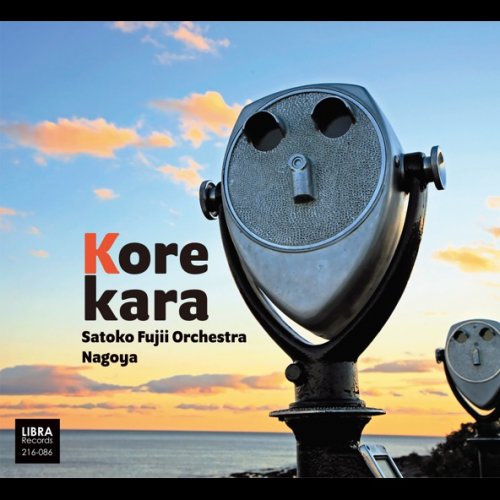
Artist: Satoko Fujii Orchestra Nagoya
Title: Korekara
Year Of Release: 2026
Label: Libra Records
Genre: Jazz
Quality: mp3 320 kbps / flac lossless (tracks)
Total Time: 01:01:33
Total Size: 150 / 340 mb
WebSite: Album Preview
TracklistTitle: Korekara
Year Of Release: 2026
Label: Libra Records
Genre: Jazz
Quality: mp3 320 kbps / flac lossless (tracks)
Total Time: 01:01:33
Total Size: 150 / 340 mb
WebSite: Album Preview
01. Korekara Part 1
02. Korekara Part 2
03. Korekara Part 3
04. Korekara Part 4
Satoko Fujii — composer, conductor; Shingo Takeda — alto saxophone; Ryoko Ono — alto saxophone; Takuya Matsumoto — tenor saxophone; Yoshiyuki Hirao — tenor saxophone; Daion Kobayashi — baritone saxophone; Natsuki Tamura — trumpet; Tsutomu Watanabe — trumpet; Takahiro Tsujita — trumpet; Misaki Ishiwata — trumpet; Toshinori Terukina — trombone; Tatsuki Nakamura — trombone; Toshihiro
Furuike — trombone; Yasuhiro Usui — guitar; Toru Kasai — bass; Hisamine Kondo — drums
Twenty years is a long time for a little café to become a home for music, movies and literature. When Rojiura no Matahari in Nagoya asked Satoko Fujii to write something for its 20th anniversary, she called the four-part suite Korekara, which means “from now.” “I wanted to compose for their future, not for the past,” Fujii says. It is the fourth of five orchestral albums she is releasing in 2026, this one with Orchestra Nagoya.
From the opening moments of “Korekara Part 1,” the orchestra sounds like it has wandered into a parade where nobody agrees on what tune they’re supposed to be playing. They spit out short, noisy blasts before Toru Kasai’s bass jumps out of the pack, woody as hell as it wanders through what’s churning around him. A lone trumpet comes in a little woozy, poking around in the upper register until it seems to find its footing. Then the horns pile on, the drums start marching, and suddenly that parade has a real destination, even if nobody seems quite sure where it is.
Things get a little crazy in “Korekara Part 2.” What first sounds like scratching turns out to be Natsuki Tamura blowing into his trumpet. Then he starts vocalizing these weird little phrases while the other horns gradually join in. It’s like a noisy traffic jam at a corner where no one can get through, so they’re all complaining. A trombone repeats a few simple phrases while the rest of the band bickers around him. Later, Tamura starts crying, whining, farting and quacking through the trumpet, while other musicians coax noises out of their instruments that you wouldn’t expect to hear from them. Toward the end, he switches between vocalizing and playing, joyously blasting away with the full band behind him.
“Korekara Part 3” gives Yasuhiro Usui’s guitar a long stretch to make trouble. Widely spaced drumbeats and guitar notes ring like a gong, setting up a slow procession, until the brass erupts with a regal blast and the music sinks back into rhythmic sludge. A saxophone starts squealing his ass off while the band stays almost sedate. Then the guitar picks its way through the ensemble like someone stumbling through a crowded alley, knocking things over as he goes. The band sneaks up and nearly drowns him out, but he pushes back, picking harder as a low rumble builds. His guitar starts sounding like a Jew’s harp, then spits out faster notes before slowing to let the low ones ring. It finally erupts in a fuzz-tone rock cry that reverberates off the wall of the band. The drums bang in his direction and the brass joins the racket, but he isn’t interested. He keeps going right to the end.
The final section opens with a plaintive trumpet melody, so simple it sounds like someone forced to play taps, then wandering off into a solo just because he can. A trombone joins in, and the two horns seem to be competing to see which can make the other shut up. They fall into a pulsing rhythm before the other horns barge in. A lone saxophone chirps away, briefly finding a phrase that makes sense before veering off into angry squeals. The trombone blares like an angry bull, then a rock-funk beat takes hold, the music sounding like party night in the French Quarter. After a pause, the drums rumble and the cymbals shimmer as the trumpet screams, trills and blares. The full band returns near the end, hammering out choppy lines in unison.
Korekara is an affectionate tribute, but there’s nothing solemn about it. It sounds like people who have been making music together for a long time and are still having a hell of a good time doing it.