Les Cornets Noirs, La Guilde des Mercenaires, Alvise Mason - L'eredità di Gabrieli (2026) [Hi-Res]
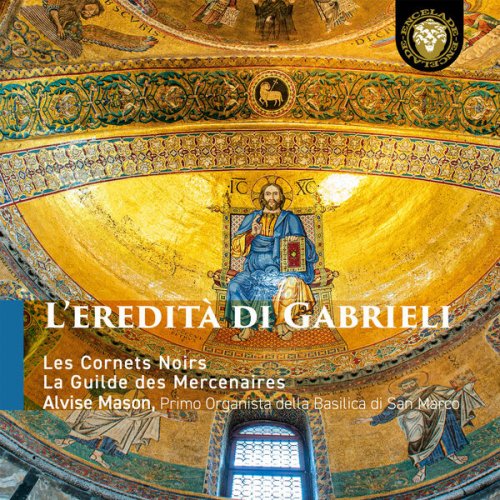
Artist: Les Cornets Noirs, La Guilde des Mercenaires, Alvise Mason
Title: L'eredità di Gabrieli
Year Of Release: 2026
Label: L'encelade
Genre: Classical
Quality: flac lossless (tracks) / flac 24bits - 96.0kHz
Total Time: 01:00:09
Total Size: 298 mb / 1.06 gb
WebSite: Album Preview
TracklistTitle: L'eredità di Gabrieli
Year Of Release: 2026
Label: L'encelade
Genre: Classical
Quality: flac lossless (tracks) / flac 24bits - 96.0kHz
Total Time: 01:00:09
Total Size: 298 mb / 1.06 gb
WebSite: Album Preview
01. Sacrae Symphoniae, Venezia 1597: Canzon Septimi et Octavi Toni
02. Compositioni armoniche, Venezia 1619: Canzon Prima à 8
03. Sacrorum Concentuum, pars prima, Venezia 1618: Sonata Prima à 8
04. Il Transilvano, Venezia 1597: Toccata del Secondo Tuono
05. Sacri Concentus ac Symphoniae, Venezia 1618: Canzon Pian e Forte
06. Musiche Sacre, Venezia 1656: Canzone à 4
07. Canzoni per sonare, Venezia 1608: Canzon Vigesimaquarta à 8
08. Selva morale e spirituale, Venezia 1641: Ab aeterno
09. Sonata XXI con tre violini
10. Canzoni et sonate, Venezia 1615: Canzon Vigesimaottava à 8 Sol sol la sol fa mi (Canzoni et sonate, Venezia 1615)
11. Seconda raccolta de sacri canti, Venezia 1624: Ego flos campi
12. Concerti di Andrea e di Giovanni Gabrieli, Venezia 1587: Lieto godea à 8 per cantar & sonar
13. Canzoni per sonare, Venezia 1608: Canzon Trigesimaprima à 8 in Echo
14. Canzoni et sonate, Venezia 1615: Canzon XII
Playing inside the Saint Mark’s Basilica in Venice is, for a musician who performs Seicento music, a waking dream. Thanks to Alvise Mason’s initiative and commitment, and the collaboration between two ensembles, Les Cornets Noirs and the Guild of Mercenaries, this project was able to come to life.
During the second half of the 16th century, the presence of instrumental music within the ceremonial soundscape of the Ducal Chapel of St Mark’s in Venice became increasingly prominent. Alongside the two organists, the use of instruments (particularly cornetts and trombones) became an established practice for the celebrations held on some of the most important feasts of the liturgical calendar: Christmas, Epiphany, Easter, Ascension, Whitsun, Corpus Christi, the most important Marian feasts, the feasts linked to the cult of St Mark, and some specific ceremonies, such as the coronation of the Doge. Positioned on special platforms or in the organ lofts, the instruments could interact in complex ways with the singers and the chapel organ, taking part in the performance of large-scale polyphonic compositions.
In the process of emancipation that characterised the Venetian musical production in the late sixteenth century, the ever-increasing instrumental contribution led not only to the development of a specific repertoire of its own, but also to a more complex interaction with the vocal parts. Thus began those « concerti », that came to identify the soundscape of the great Venetian solemnities.
It was against this backdrop that Claudio Monteverdi arrived in Venice, a year after the death of Giovanni Gabrieli, one of the leading figures of this extraordinary period of musical experimentation.