Jacob Do - First Chorus (2026)
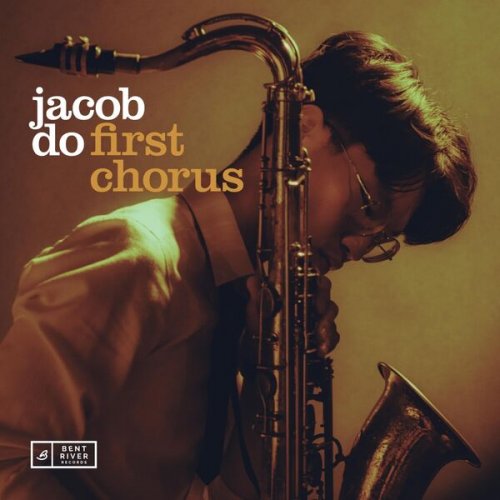
Artist: Jacob Do
Title: First Chorus
Year Of Release: 2026
Label: Bent River Records
Genre: Jazz
Quality: FLAC (tracks)
Total Time: 52:46 min
Total Size: 355 MB
WebSite: Album Preview
Tracklist:Title: First Chorus
Year Of Release: 2026
Label: Bent River Records
Genre: Jazz
Quality: FLAC (tracks)
Total Time: 52:46 min
Total Size: 355 MB
WebSite: Album Preview
01. That's Earl, Brother
02. Flow
03. Stardust
04. La Grande Sortie
05. Hairy Ed
06. Time-Lee
07. All of You
08. The Highest Mountain
First Chorus is Edmonton-based tenor saxophonist Jacob Do’s debut full-length album, set for release on MacEwan University’s Bent River Records on November 6, 2026. Following his well-received EP Maybe, Live at the Yardbird Suite, this release is the culmination of a deep study of the bebop language, combined with the sound and perspective of a contemporary Canadian musician.
The album reunites fellow Montréal expats Donny Kennedy (alto saxophone), André White (piano), Paul Johnston (bass), and Dave Laing (drums). Order of Canada recipient and veteran alto saxophonist PJ Perry also appears as a special guest on Cole Porter’s All of You. The rhythm section supports each composition with ease, laying a strong, swinging foundation for soloists to sculpt their stories. Each member of the band has supported Do’s development in their own way, serving variously as mentors, close collaborators, and trusted friends throughout his young career.
Recorded in a single, continuous 9-hour session, First Chorus highlights spontaneity and in-the-moment creativity. Throughout the record, Do explores the balance between written composition and intuitive interaction, moving from hard-swinging original tunes to intimate interpretations of familiar standards. His compositional approach is rooted in the lexicon of great jazz composers — evident in his homages to Eddie Harris (Hairy Ed) and Lee Konitz (Time-Lee) — while concurrently complemented by a careful selection of lesser-known jazz standards, such as That’s Earl, Brother, and The Highest Mountain. As a saxophonist, Do’s approach is direct and deeply melodic, highlighting his attention to sound, phrasing, and rhythmic drive. Shades of the great past tenorists, such as Sonny Rollins and Lester Young, reveal themselves with confidence in his improvising.
The word “first” sustains many meanings in the context of jazz — first sets, first takes, first albums, first notes, first phrases, first choruses. In each of these contexts, a “first” offers a listener an initial glimpse of what is to come: a brief auditory invitation that shapes their expectations and invites them to decide where the music might take them. First Chorus serves not only as Do’s introduction through his debut full-length recording, but as an accessible example of how quickly jazz can evoke emotion and connection in any listener willing to approach the music with open ears.