Imogen Cooper - Liszt & Wagner (2017) FLAC
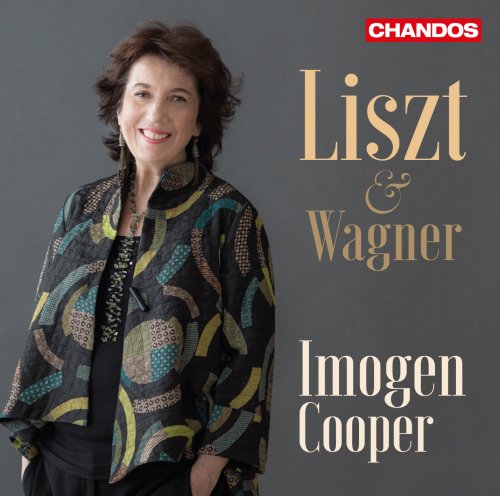
Artist: Imogen Cooper
Title: Liszt & Wagner
Year Of Release: 2017
Label: Chandos Records
Genre: Classical
Quality: FLAC (image + .cue, log, artwork)
Total Time: 74:36 min
Total Size: 208 MB
WebSite: Album Preview
Tracklist:Title: Liszt & Wagner
Year Of Release: 2017
Label: Chandos Records
Genre: Classical
Quality: FLAC (image + .cue, log, artwork)
Total Time: 74:36 min
Total Size: 208 MB
WebSite: Album Preview
Franz Liszt (1811 – 1886)
1. Deuxième Valse oubliée, S 215 / 2
2. Gretchen, S 513
Années de Pèlerinage, Deuxième Année: Italie', S 161
3. 1. Sposalizio. Andante - Andant equieto - Più lento - Quasi allegretto mosso - Adagio
4. 2. Il penseroso. Lento
5. 3. Canzonetta del Salvator Rosa. Andante marziale
6. 5. Sonetto 104 del Petrarca. Agitato assai - Adagio - [ ] - Adagio
7. Nuages gris, S 199
Richard Wagner (1813 – 1883)
8. Elegie, WWV 93
9. Einleitung zu ‘Tristan und Isolde’, WWV 90
Franz Liszt
10. La lugubre gondola I, S 200 / 1
Richard Wagner
11. Isoldens Liebestod aus ‘Tristan und Isolde’, S 447
Franz Liszt
12. Bagatelle sans tonalité, S 216a
Richard Wagner is often cited as the chief innovator of chromatic harmony in late Romantic music, mostly because of his tonally ambiguous Prelude to Tristan und Isolde. Yet the strongest influence on Wagner's harmonic ideas came from Franz Liszt, who ventured further afield than Wagner dared to go. Imogen Cooper's 2017 release on Chandos explores a group of piano works by Liszt, as well as the transcription of Wagner's Prelude to Tristan und Isolde by Zoltán Kocsis, and Liszt's arrangement of the Liebestod, and the program demonstrates the use of unresolved dissonances to create atmosphere and heighten tension. Compare Liszt's Nuages gris with Wagner's Elegie to hear the similarity of approach, and sample La lugubre gondola I and the Bagatelle sans tonalité to hear Liszt go to the far edge of tonality. Somewhat subtler in effect are the Valse Oubliée No. 2, Gretchen (transcribed by Liszt from his Faust Symphony), and the Four Pieces from Années de Pélerinage, Deuxième Année: Italie, which still reflect conventional tonality but share the ambiguity of the rest of the pieces in their subtle use of chromaticism and harmonic coloration. Cooper's playing is suitably delicate and restrained, and she avoids Liszt's flashier displays of virtuosity to emphasize his reflective and darker side. Chandos' recording is clear and reasonably close, with natural resonance. -- Blair Sanderson
Related Release:
![Ed Motta - Toc-Toc (2026) [Hi-Res]](https://www.dibpic.com/uploads/posts/2026-09/1790163812_1.jpg "Ed Motta - Toc-Toc (2026) [Hi-Res]")
![Audrey Powne - Bodies of Water (2026) [Hi-Res]](https://www.dibpic.com/uploads/posts/2026-09/1790174071_1.jpg "Audrey Powne - Bodies of Water (2026) [Hi-Res]")