Bournemouth Symphony Orchestra, Kirill Karabits - Prokofiev: Symphonies Nos. 4, 6 & Movement from Symphony in G (2015)
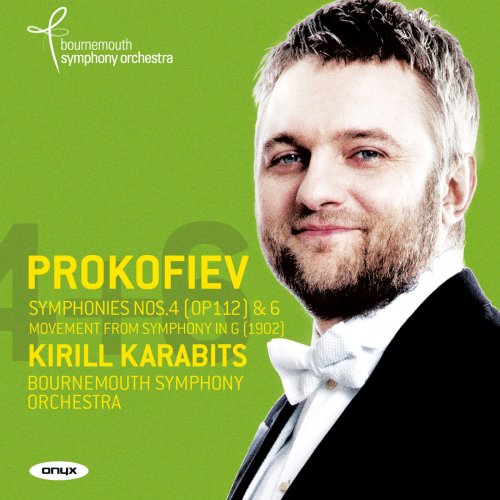
Artist: Bournemouth Symphony Orchestra, Kirill Karabits
Title: Prokofiev: Symphonies Nos. 4, 6 & Movement from Symphony in G
Year Of Release: 2015
Label: Onyx Classics
Genre: Classical
Quality: flac lossless +Booklet
Total Time: 01:28:30
Total Size: 372 mb
WebSite: Album Preview
TracklistTitle: Prokofiev: Symphonies Nos. 4, 6 & Movement from Symphony in G
Year Of Release: 2015
Label: Onyx Classics
Genre: Classical
Quality: flac lossless +Booklet
Total Time: 01:28:30
Total Size: 372 mb
WebSite: Album Preview
---------
01. Symphony No. 6 in E-Flat Minor, Op. 111: I. Allegro moderato
02. Symphony No. 6 in E-Flat Minor, Op. 111: II. Largo
03. Symphony No. 6 in E-Flat Minor, Op. 111: III. Vivace
04. Symphony in G Major: I. Presto
05. Symphony No. 4 in C Major, Op. 112: I. Andante-Allegro eroico
06. Symphony No. 4 in C Major, Op. 112: II. Andante tranquillo
07. Symphony No. 4 in C Major, Op. 112: III. Moderato, quasi allegretto
08. Symphony No. 4 in C Major, Op. 112: IV. Allegro risoluto
09. Two Poems, Op. 7: I. The White Swan (Bonus Track)
10. Two Poems, Op. 7: II. Wave (Bonus Track)
The last volume of the critically praised Prokofiev Symphony cycle from the Bournemouth Symphony Orchestra under its music director Kirill Karabits. Their recent performance at the BBC Proms of the 5th Symphony was described by The Independent on Sunday as "one of the hits of the summer". This final CD contains the composer’s earliest attempt at a symphony, written in 1902 at the age of just 11. The surviving movement receives its world première recording on this disc. The revised and enlarged version of 4th symphony from 1947 is coupled with the daunting and emotionally charged 6th, which to some represents the greatest of the seven symphonies. "Each of us suffers from wounds that cannot be healed" said the composer of this work to his biographer. Composed during a period of serious illness, the ‘death sentence’ or irregular heart beat depicted by the horns in the opening movement are as striking as the rhythm of Mahler’s 9th, also composed during a similar illness that would soon claim its creator.

![Happy Blue - happy happy jævla blå (2026) [Hi-Res]](https://img.israbox.com/img/2026-10/17/cbpyv9stujfobe1nprk5rg27m.jpg "Happy Blue - happy happy jævla blå (2026) [Hi-Res]")

![Sean Mason - State of the Art (2026) [Hi-Res]](https://img.israbox.com/img/2026-10/15/gqet2cuiy54j74qyz1tg32yjf.jpg "Sean Mason - State of the Art (2026) [Hi-Res]")