Christine Schäfer - The Art of Christine Schäfer (2020)
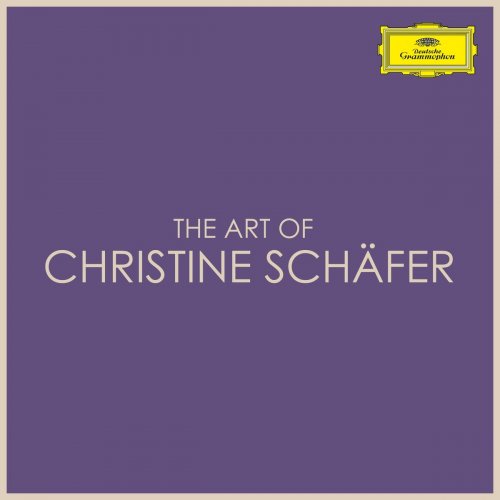
Artist: Christine Schäfer
Title: The Art of Christine Schäfer
Year Of Release: 2020
Label: UMG Recordings, Inc.
Genre: Classical
Quality: FLAC (tracks)
Total Time: 6:11:02
Total Size: 1.41 GB
WebSite: Album Preview
Tracklist:Title: The Art of Christine Schäfer
Year Of Release: 2020
Label: UMG Recordings, Inc.
Genre: Classical
Quality: FLAC (tracks)
Total Time: 6:11:02
Total Size: 1.41 GB
WebSite: Album Preview
01. Le nozze di Figaro, K.492 - Original Version, Vienna 1786 / Act 1 : "Non so più cosa son, cosa faccio" (Live)
02. Le nozze di Figaro, K.492 - Original Version, Vienna 1786 / Act 2 : "Voi che sapete" (Live)
03. Nehmt meinen Dank, K. 383
04. Zaide, K. 344 / Act 1 : "Ruhe sanft, mein holdes Leben"
05. Fünf Lieder, Op. 41, TrV 195 : 1. Wiegenlied
06. Vier Lieder, Op. 36, TrV 186 : 1. Das Rosenband
07. Fünf Lieder, Op. 32, TrV 174 : 3. Liebeshymnus
08. Drei Lieder, Op. 88, TrV 264 : 1. Das Bächlein
09. Vier Lieder, Op. 27, TrV 170 : 4. Morgen!
10. Wachet auf, ruft uns die Stimme Cantata, BWV 140 : Arie (Duett): "Wann kommst du, mein Heil?"
11. Pierrot Lunaire, Op.21 (1912) / Part 1 : 1. Mondestrunken
12. Cantata, BWV 210 "O holder Tag, erwünschte Zeit" : 1. Recit: O holder Tag, erwünschte Zeit
13. Cantata, BWV 210 "O holder Tag, erwünschte Zeit" : 2. Aria: Spielet, ihr beseelten Lieder
14. Cantata, BWV 210 "O holder Tag, erwünschte Zeit" : 3. Recit: Doch haltet ein, ihr muntern Saiten
15. Cantata, BWV 210 "O holder Tag, erwünschte Zeit" : 4. Aria: Ruhet hie, matte Töne
16. Cantata, BWV 210 "O holder Tag, erwünschte Zeit" : 5. Recit: So glaubt man denn, daß die Musik verführe
17. Cantata, BWV 210 "O holder Tag, erwünschte Zeit" : 6. Aria: Schweigt, ihr Flöten, schweigt ihr Töne
18. Cantata, BWV 210 "O holder Tag, erwünschte Zeit" : 7. Recit: Was Luft? was Grab?
19. Cantata, BWV 210 "O holder Tag, erwünschte Zeit" : 8. Aria: Großer Gönner, dein Vergnügen
20. Cantata, BWV 210 "O holder Tag, erwünschte Zeit" : 9. Recit: Hochteurer Mann, so fahre ferner fort
21. Cantata, BWV 210 "O holder Tag, erwünschte Zeit" : 10. Aria: Seid beglückt
22. Cantata No.202 "Weichet nur, betrübte Schatten" (Wedding Cantata), BWV 202 : 1. Adagio: Weichet nur, betrübte Schatten
23. Cantata No.202 "Weichet nur, betrübte Schatten" (Wedding Cantata), BWV 202 : 2. Recit: Die Welt wird wieder neu
24. Cantata No.202 "Weichet nur, betrübte Schatten" (Wedding Cantata), BWV 202 : 3. Aria: Phöbus eilt mit schnellen Pferden
25. Cantata No.202 "Weichet nur, betrübte Schatten" (Wedding Cantata), BWV 202 : 4. Recit: D'rum sucht auch Amor sein Vergnügen
26. Cantata No.202 "Weichet nur, betrübte Schatten" (Wedding Cantata), BWV 202 : 5. Aria: Wenn die Frühlingslüfte streichen
27. Cantata No.202 "Weichet nur, betrübte Schatten" (Wedding Cantata), BWV 202 : 6. Recit: Und dieses ist das Glücke
28. Cantata No.202 "Weichet nur, betrübte Schatten" (Wedding Cantata), BWV 202 : 7. Aria: Sich üben im Lieben
29. Cantata No.202 "Weichet nur, betrübte Schatten" (Wedding Cantata), BWV 202 : 8. Recit: So sei das Band der keuschen Liebe
30. Cantata No.202 "Weichet nur, betrübte Schatten" (Wedding Cantata), BWV 202 : 9. Gavotte: Sehet in Zufriedenheit
31. Jauchzet Gott in allen Landen Cantata, BWV 51 (Additional Instrumentation By W.F. Bach) : 1. "Jauchzet Gott in allen Landen"
32. "Jauchzet Gott in allen Landen" Cantata, BWV 51 : Recitativo: "Wir beten zu dem Tempel an"
33. "Jauchzet Gott in allen Landen" Cantata, BWV 51 : Aria: "Höchster, Höchster mache deine Güte ferner alle Morgen neu"
34. "Jauchzet Gott in allen Landen" Cantata, BWV 51 : Chorale: "Sei Lob und Preis mit Ehren"
35. "Jauchzet Gott in allen Landen" Cantata, BWV 51 (Additional Instrumentation By W.F. Bach) : Aria: "Alleluja"
36. Exsultate, jubilate, K. 165
37. Dans la foret du charme et de l'enchantement,op.36, no.2 (Jean Moréas)
38. 4 Mélodies, Op.13 : 1. Apaisement
39. 4 Mélodies, Op.13 : 2. Sérénade
40. 4 Mélodies, Op.13 : 3. L’aveu
41. 4 Mélodies, Op.13 : 4. La cigale
42. Le Temps des Lilas, op.19, No.3 (Maurice Bouchor)
43. Fêtes galantes, L. 80 : 1. En sourdine
44. Fêtes galantes, L. 80 : 2. Fantoches
45. Fêtes galantes, L. 80 : 3. Clair de lune
46. Proses lyriques, L.84 : 1. De rêve
47. Proses lyriques, L.84 : 2. De grève
48. Proses lyriques, L.84 : 3. De fleurs
49. Proses lyriques, L.84 : 4. De soir
50. Nuits Blanches (Claude Debussy): 1. Nuit sans fin
51. Nuits Blanches (Claude Debussy): 2. Lorsqu'elle est entrée
52. Sept Mélodies op.2, No.6 Hébé (L. Ackermann)
53. Le Colibri, Op.2 No.7
54. 4 Mélodies, Op. 8 : 1. Nocturne
55. 4 Mélodies, Op. 8 : 3. Printemps triste
56. Deux Duos op 11 - 1. La Nuit (Thédore de Banville)
57. Deux Duos op 11 - 2. Réveil (Honoré de Balzac)
58. Pierrot Lunaire, Op.21 (1912) / Part 1 : 2. Colombine
59. Pierrot Lunaire, Op.21 (1912) / Part 1 : 3. Der Dandy
60. Pierrot Lunaire, Op.21 (1912) / Part 1 : 4. Eine Blasse Wäscherin
61. Pierrot Lunaire, Op.21 (1912) / Part 1 : 5. Valse De Chopin
62. Pierrot Lunaire, Op.21 (1912) / Part 1 : 6. Madonna
63. Pierrot Lunaire, Op.21 (1912) / Part 1 : 7. Der Kranke Mond
64. Pierrot Lunaire, Op.21 (1912) / Part 2 : 8. Die Nacht
65. Pierrot Lunaire, Op.21 (1912) / Part 2 : 9. Gebet An Pierrot
66. Pierrot Lunaire, Op.21 (1912) / Part 2 : 10. Raub
67. Pierrot Lunaire, Op.21 (1912) / Part 2 : 11. Rote Messe
68. Pierrot Lunaire, Op.21 (1912) / Part 2 : 12. Galgenlied
69. Pierrot Lunaire, Op.21 (1912) / Part 2 : 13. Enthauptung
70. Pierrot Lunaire, Op.21 (1912) / Part 2 : 14. Die Kreuze
71. Pierrot Lunaire, Op.21 (1912) / Part 3 : 15. Heimweh
72. Pierrot Lunaire, Op.21 (1912) / Part 3 : 16. Gemeinheit!
73. Pierrot Lunaire, Op.21 (1912) / Part 3 : 17. Parodie
74. Pierrot Lunaire, Op.21 (1912) / Part 3 : 18. Der Monfleck
75. Pierrot Lunaire, Op.21 (1912) / Part 3 : 19. Serenade
76. Pierrot Lunaire, Op.21 (1912) / Part 3 : 20. Heimfahrt
77. Pierrot Lunaire, Op.21 (1912) / Part 3 : 21. O Alter Duft
78. Herzgewachse, Op.20
79. Ode To Napoleon Buonaparte Opus 41
80. St. Matthew Passion, BWV 244 / Part Two : No.51 "Gebt mir meinen Jesum wieder"
81. Vorrei spiegarvi, oh Dio, K. 418
82. Mia speranza adorata, K. 416
83. Ch'io mi scordi di te?, K. 505
84. Cantata, BWV 204 "Ich bin vergnügt" : Aria "Die Schätzbarkeit der weiten Erde"
85. Zerreißet, zersprenget, zertrümmert die Gruft Dramma per musica, BWV 205 : 9. Aria Soprano: "Angenehmer Zephyrus"
86. Mass in B minor, BWV 232 / Gloria : Laudamus te
87. Cantata, BWV 58 "Ach Gott, wie manches Herzeleid" : Aria "Ich bin vergnügt in meinem Leiden" (Soprano)
88. Der Friede sei mit dir: Cantata, BWV 158 : 2. Aria & Choral: Welt, ade, ich bin dein müde
89. St. Matthew Passion, BWV 244 / Part Two (Arr. Mendelssohn 1841) : 39. Aria (Alto): "Erbarme dich"
90. Cantata, BWV 197 "Gott ist unsere Zuversicht" : Aria "Vergnügen und Lust" (Soprano)
91. Pli selon Pli (1957-62/84/89) Portrait de Mallarmé : No. 1 Don (version nouvelle 1989) ["Je t'apporte l'enfant d'une nuit d'Idumée"]
92. Pli selon Pli (1957-62/84/89) Portrait de Mallarmé : No. 2 Improvisation I sur Mallarmé (1958/62) le vierge, le vivace et le bel aujourd'hui
93. Pli selon Pli (1957-62/84/89) Portrait de Mallarmé : No. 3 Improvisation II sur Mallarmé (1957) une dentelle s'abolit
94. Pli selon Pli (1957-62/84/89) Portrait de Mallarmé : No. 4 Improvisation III sur Mallarmé (1959/84) à la nue accablante tu
95. Pli selon Pli (1957-62/84/89) Portrait de Mallarmé : No. 5 Tombeau (1959-62) ["une peu profond ruisseau calomnié la mort"]
Christine Schäfer established one of the most stellar careers of any young German soprano in the 1990s and became known for her sensational acting and her mastery of a wide range of repertory and styles.
She enrolled in the Berlin Conservatory in 1984 and studied with Ingrid Figur, whom she considers her primary teacher and credits with giving her a firm technical foundation and a knack for clear projection of German words. She studied with American soprano Arleen Augér who, Schäfer said, taught her how to give total concentration to the work of understanding a musical compossition. Of composer Aribert Reimann, another of her teachers, she says, "His music is fantastic, and as a teacher he is even more so." From him she learned lieder interpretation. She also had master classes with Dietrich Fischer-Dieskau and Sena Jurinac.
After winning several prestigious prizes, she made a highly acclaimed recital debut at the Berlin Festival in 1988, singing Reimann's cycle Nachträume, and began to establish a promising recital and concert career. She has sung in Europe with the Gächinger Kantorei, the Windsbacher Knabenchor, the Stuttgarter Hymnus Chorknaban, the RIAS Kammerchor, the Cologne Chamber Orchestra, the Amsterdam New Sinfonietta, and Musica Antiqua of Cologne.
Her concert and recital career included a debut with the Boston Symphony Orchestra in Mahler's Symphony No. 4 in Boston and New York with Seiji Ozawa conducting. Other conductors with whom she has worked are Sir Charles Mackerras, Uwe Gronostay, Wolfgang Schafer, Leopold Hager, Nikolaus Harnoncourt, Sir Simon Rattle, Helmuth Rilling, and Dietrich Fischer-Dieskau.
She is active on the festival circuit, with appearances at the Baroque Festival in Würzburg, the Oregon Bach Festival, the Bach Festival of Los Angeles, the Salzburg Mozart Week, and the Ansbach Bach Week.
Her operatic debut was in 1991 as Papagena in Mozart's Magic Flute at the Théâtre du Monnaie in Brussels. Soon she sang Pamina in the same production when it was given in Salzburg, Zerlina (Don Giovanni) and Gilda in Verdi's Rigoletto in Bern, and Berg's Lulu in Innsbruck, with stage direction by Brigitte Fassbaender.
Her American operatic debut was with the San Francisco Opera during their Strauss Festival of 1993, when she appeared as Sophie in Der Rosenkavalier and then as Zdenka in Arabella at the Houston Grand Opera, conducted by Christoph Eschenbach. Her debut at the Metropolitan Opera in New York was in the 2000-2001 season.
She moved into the first rank of German opera stars when she appeared in Peter Mussbach's controversial production of Lulu at the Salzburg Festival in 1995, her debut role in that Festival. When she returned two years later, it was in a drastically different role, Konstanze in Mozart's Die Entführung aus dem Serail. Other roles she has sung include the title role in Donizetti's Lucia di Lamermoor (Welsh National Opera); Elisa in Mozart's Il Rè Pastore (Amsterdam); Tytania in Britten's A Midsummer Night's Dream (Tel Aviv); Infantin in Der Zwerg by Zemlinsky at the Paris Opéra-Bastille; Zerbinetta in Strauss' Ariadne auf Naxos (Houston); and Reimann's The House of Bernarda Alba in Munich.
She has appeared on several discs in Graham Johnson's Hyperion Schubert series and for the label also recorded a solo recital of Robert Schumann songs, also with Johnson. ~ Joseph Stevenson
She enrolled in the Berlin Conservatory in 1984 and studied with Ingrid Figur, whom she considers her primary teacher and credits with giving her a firm technical foundation and a knack for clear projection of German words. She studied with American soprano Arleen Augér who, Schäfer said, taught her how to give total concentration to the work of understanding a musical compossition. Of composer Aribert Reimann, another of her teachers, she says, "His music is fantastic, and as a teacher he is even more so." From him she learned lieder interpretation. She also had master classes with Dietrich Fischer-Dieskau and Sena Jurinac.
After winning several prestigious prizes, she made a highly acclaimed recital debut at the Berlin Festival in 1988, singing Reimann's cycle Nachträume, and began to establish a promising recital and concert career. She has sung in Europe with the Gächinger Kantorei, the Windsbacher Knabenchor, the Stuttgarter Hymnus Chorknaban, the RIAS Kammerchor, the Cologne Chamber Orchestra, the Amsterdam New Sinfonietta, and Musica Antiqua of Cologne.
Her concert and recital career included a debut with the Boston Symphony Orchestra in Mahler's Symphony No. 4 in Boston and New York with Seiji Ozawa conducting. Other conductors with whom she has worked are Sir Charles Mackerras, Uwe Gronostay, Wolfgang Schafer, Leopold Hager, Nikolaus Harnoncourt, Sir Simon Rattle, Helmuth Rilling, and Dietrich Fischer-Dieskau.
She is active on the festival circuit, with appearances at the Baroque Festival in Würzburg, the Oregon Bach Festival, the Bach Festival of Los Angeles, the Salzburg Mozart Week, and the Ansbach Bach Week.
Her operatic debut was in 1991 as Papagena in Mozart's Magic Flute at the Théâtre du Monnaie in Brussels. Soon she sang Pamina in the same production when it was given in Salzburg, Zerlina (Don Giovanni) and Gilda in Verdi's Rigoletto in Bern, and Berg's Lulu in Innsbruck, with stage direction by Brigitte Fassbaender.
Her American operatic debut was with the San Francisco Opera during their Strauss Festival of 1993, when she appeared as Sophie in Der Rosenkavalier and then as Zdenka in Arabella at the Houston Grand Opera, conducted by Christoph Eschenbach. Her debut at the Metropolitan Opera in New York was in the 2000-2001 season.
She moved into the first rank of German opera stars when she appeared in Peter Mussbach's controversial production of Lulu at the Salzburg Festival in 1995, her debut role in that Festival. When she returned two years later, it was in a drastically different role, Konstanze in Mozart's Die Entführung aus dem Serail. Other roles she has sung include the title role in Donizetti's Lucia di Lamermoor (Welsh National Opera); Elisa in Mozart's Il Rè Pastore (Amsterdam); Tytania in Britten's A Midsummer Night's Dream (Tel Aviv); Infantin in Der Zwerg by Zemlinsky at the Paris Opéra-Bastille; Zerbinetta in Strauss' Ariadne auf Naxos (Houston); and Reimann's The House of Bernarda Alba in Munich.
She has appeared on several discs in Graham Johnson's Hyperion Schubert series and for the label also recorded a solo recital of Robert Schumann songs, also with Johnson. ~ Joseph Stevenson
![Dino Siani - Strings & Brass (2026) [Hi-Res]](https://img.israbox.com/img/2026-09/03/oy4f2kp2rpqzqo9et08d7n9tf.jpg "Dino Siani - Strings & Brass (2026) [Hi-Res]")
![Fania All Stars - Fania All Stars Live In Japan 1976 (Remastered 2026) (2026) [Hi-Res]](https://img.israbox.com/img/2026-08/30/fx6f4l5motbsy457ouy6qnxft.jpg "Fania All Stars - Fania All Stars Live In Japan 1976 (Remastered 2026) (2026) [Hi-Res]")
![Julia Vari, Negroni’s Trio - Somos (2026) [Hi-Res]](https://www.dibpic.com/uploads/posts/2026-08/1788167588_h86bc0h0nd7sa_600.jpg "Julia Vari, Negroni’s Trio - Somos (2026) [Hi-Res]")