Seiji Ozawa, Berliner Philharmoniker - Tchaikovsky: Symphony No. 5, Overture Solennelle "1812" (1995)
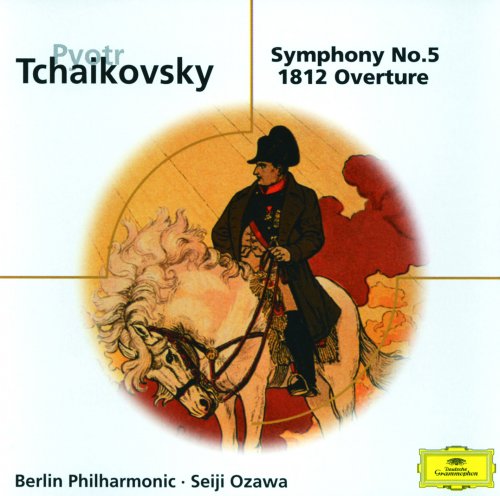
Artist: Seiji Ozawa, Berliner Philharmoniker
Title: Tchaikovsky: Symphony No. 5, Overture Solennelle "1812" «
Year Of Release: 1995
Label: Deutsche Grammophon
Genre: Classical
Quality: FLAC (tracks)
Total Time: 01:00:46
Total Size: 309 Mb
WebSite: Album Preview
Tracklist: Title: Tchaikovsky: Symphony No. 5, Overture Solennelle "1812" «
Year Of Release: 1995
Label: Deutsche Grammophon
Genre: Classical
Quality: FLAC (tracks)
Total Time: 01:00:46
Total Size: 309 Mb
WebSite: Album Preview
Symphony No.5 In E Minor, Op.64, TH.29 (Pyotr Illitch Tchaïkovski)
1. 1. Andante - Allegro con anima 14:41
2. 2. Andante cantabile, con alcuna licenza - Moderato con anima 12:50
3. 3. Valse (Allegro moderato) 06:05
4. 4. Finale (Andante maestoso - Allegro vivace) 12:10
Overture 1812, Op.49 (Pyotr Illitch Tchaïkovski)
5. Largo - Allegro giusto 15:00
Performers:
Berliner Philharmoniker
Seiji Ozawa, conductor
For me, Ozawa and Tchaikovsky go together like fish and chips. Ozawa's recording of Tchaikovsky's Violin Concerto with Viktoria Mullova and the Boston Symphony is my favourite; this rendering of the 5th Symphony is equally enjoyable. Ozawa conducts the symphony at a lively tempo but at the same time giving time for quiet reflection in all four movements, and his changes of pace are quite masterful.
The first movement is played in a traditionally slow tempo. Ozawa's timing is 14.44, close to Solti's with the Chicago Symphony but nowhere near as breakneck as Daniel Gatti's 12.46. The Andante's clarinet theme is sonorous and almost funereal, and the march follows at a similar pace, allowing the strings to contrast and build intensity nicely with a sweet and poignant restatement of the motif. The pizzicato is delicate, the waltz balletic and the brass fanfares restrained, giving the entire movement a wistful quality, emphasized by the haunting and lovely double basses which bring the movement to an unresolved and doubting close.
The second movement opens with the famous horn solo, and the soloist really draws it out with great tenderness and melancholy and a very sweet tone. This is my favourite horn solo of all the 5th recordings I have. The emotion is really brought out here, but Ozawa never allows it to get away from him into mawkishness. The oboe introduces the counterpoint quietly and the orchestra gradually takes it up in full. Ozawa varies the pace without rushing or awkward changes, and builds the intensity in a measured way towards the climax, allowing the brass to drop in the Fate theme almost as a thunderclap. You can feel the audience hold their breath. A very dramatic moment, as Tchaikovsky meant it to be, and also very sad. The end of the movement has a contrasting pensive and very pictorial quality.
Ozawa keeps a firm hand on the pacing and intensity of the waltz, preventing the third movement from being a happy one despite the overtly positive character of the theme. Doubt, feelings of bittersweet joy, and even irony prevail throughout. You wonder if Tchaikovsky ever felt true happiness, or thought he deserved to. It's an intensely personal passage which seems to alternate between happy and sad, as though neither emotion is free from the other.
The last movement opens with great grandeur and majesty, and the introduction is extended and processional. The movement is busy, introducing new mottoes and different variations which are all kept bubbling away nicely until the climax and false ending which are triumphant but again contain elements of irony. Fate's theme appears again in melodramatic fashion with much drama and narrative. The coda is lively and triumphant, but leaves room for the overall doubting nature of the symphony to prevail.
I can't help contrasting this wonderful interpretation of Ozawa's with Herbert von Karajan's DVD recording of the 5th with the Vienna Philharmonic, which is a tedious, unsympathetic and self-glorifying mess.
The 1812 symphony which follows is almost like an anticlimax. I'm not a fan of this piece so can't critique it properly, perhaps other reviewers will provide better insights.
Ozawa doesn't overdo Tchaikovsky, he allows great emotion without descending into tragedy, and allows his audience their own insights into Tchaikovsky's music as well. The clarity of the recording is excellent and well-balanced. Overall a very enjoyable performance which made me feel I had re-discovered the 5th all over again.
The first movement is played in a traditionally slow tempo. Ozawa's timing is 14.44, close to Solti's with the Chicago Symphony but nowhere near as breakneck as Daniel Gatti's 12.46. The Andante's clarinet theme is sonorous and almost funereal, and the march follows at a similar pace, allowing the strings to contrast and build intensity nicely with a sweet and poignant restatement of the motif. The pizzicato is delicate, the waltz balletic and the brass fanfares restrained, giving the entire movement a wistful quality, emphasized by the haunting and lovely double basses which bring the movement to an unresolved and doubting close.
The second movement opens with the famous horn solo, and the soloist really draws it out with great tenderness and melancholy and a very sweet tone. This is my favourite horn solo of all the 5th recordings I have. The emotion is really brought out here, but Ozawa never allows it to get away from him into mawkishness. The oboe introduces the counterpoint quietly and the orchestra gradually takes it up in full. Ozawa varies the pace without rushing or awkward changes, and builds the intensity in a measured way towards the climax, allowing the brass to drop in the Fate theme almost as a thunderclap. You can feel the audience hold their breath. A very dramatic moment, as Tchaikovsky meant it to be, and also very sad. The end of the movement has a contrasting pensive and very pictorial quality.
Ozawa keeps a firm hand on the pacing and intensity of the waltz, preventing the third movement from being a happy one despite the overtly positive character of the theme. Doubt, feelings of bittersweet joy, and even irony prevail throughout. You wonder if Tchaikovsky ever felt true happiness, or thought he deserved to. It's an intensely personal passage which seems to alternate between happy and sad, as though neither emotion is free from the other.
The last movement opens with great grandeur and majesty, and the introduction is extended and processional. The movement is busy, introducing new mottoes and different variations which are all kept bubbling away nicely until the climax and false ending which are triumphant but again contain elements of irony. Fate's theme appears again in melodramatic fashion with much drama and narrative. The coda is lively and triumphant, but leaves room for the overall doubting nature of the symphony to prevail.
I can't help contrasting this wonderful interpretation of Ozawa's with Herbert von Karajan's DVD recording of the 5th with the Vienna Philharmonic, which is a tedious, unsympathetic and self-glorifying mess.
The 1812 symphony which follows is almost like an anticlimax. I'm not a fan of this piece so can't critique it properly, perhaps other reviewers will provide better insights.
Ozawa doesn't overdo Tchaikovsky, he allows great emotion without descending into tragedy, and allows his audience their own insights into Tchaikovsky's music as well. The clarity of the recording is excellent and well-balanced. Overall a very enjoyable performance which made me feel I had re-discovered the 5th all over again.

![Shabazz Palaces - It's a Style Sport (2026) [Hi-Res]](https://img.israbox.com/img/2026-10/23/sg46cd1c0g4grpz54hxf5ng54.jpg "Shabazz Palaces - It's a Style Sport (2026) [Hi-Res]")
![ALLVEI - Allvei (2026) [Hi-Res]](https://img.israbox.com/img/2026-10/25/7yhdzh18ajqi1uda0no4lcs1p.jpg "ALLVEI - Allvei (2026) [Hi-Res]")
![Oren Ambarchi - Prophetic Perfect Tense (2026) [Hi-Res]](https://img.israbox.com/img/2026-10/24/aledqvnuptndqa6io95rcpla4.jpg "Oren Ambarchi - Prophetic Perfect Tense (2026) [Hi-Res]")
![Mario Iannuzziello - THE TOWN DOES NOT EXIST (2026) [Hi-Res]](https://img.israbox.com/img/2026-10/24/o97zshoynrqek0h1duwcd3tn3.jpg "Mario Iannuzziello - THE TOWN DOES NOT EXIST (2026) [Hi-Res]")