Veneranda Dies Ensemble - Los Trovadores del Rey. Música de Trovadores Occitanos Durante la Cruzada Contra los Cátaros (2020)
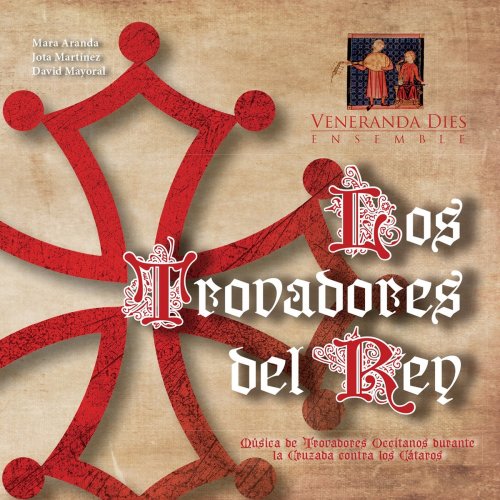
Artist: Veneranda Dies Ensemble
Title: Los Trovadores del Rey. Música de Trovadores Occitanos Durante la Cruzada Contra los Cátaros
Year Of Release: 2020
Label: Severalia
Genre: Classical
Quality: FLAC (tracks+booklet)
Total Time: 59:11 min
Total Size: 351 MB
WebSite: Album Preview
Tracklist:Title: Los Trovadores del Rey. Música de Trovadores Occitanos Durante la Cruzada Contra los Cátaros
Year Of Release: 2020
Label: Severalia
Genre: Classical
Quality: FLAC (tracks+booklet)
Total Time: 59:11 min
Total Size: 351 MB
WebSite: Album Preview
01. Tant M’abelis
02. Casutz Sui de Mal en Pena
03. Ai Tal Domna
04. A L’entrada del Temps Clar
05. No M’agrad Iverns Ni Pascors
06. Ara Lausetz
07. Un Serventes Novel Vueill Comensar
08. N’en Puis Ma Grant Joie Celer & Domna, Pos Vos Ay Chausida
09. En Mai, Au Douz Tens Nouvel
10. Kalenda Maia & No Puesc Sofrir ça la Dolor
11. Quant Ay Lo Mon Consirat
12. La Canso (Canción de la Cruzada Contra los Albiguenses)
Los Trovadores del Rey · is about a hypothetical trip by a group of Occitan troubadours from Carcassonne, in the French Midi, to the city of Santiago de Compostela, in Galicia. Something difficult but not impossible, since, in fact, there was a diaspora (very similar to that of the Sephardic Jews) towards the south of France and through the Pyrenees of musicians who had to flee because of the Crusade against the Albiguenses , reaching Catalonia and even Castile. In this album he fantasizes about the fact that it is very likely that some of them could continue their route to Galicia through the Camino de Santiago (it must be taken into account that the Camino also crosses the Languedoc). When placing it in the year 1215, this small group coincides with one of the kings most concerned about the Culture of his time: Alfonso IX of León. This king, in love with Galicia, was a change for the lyric of the time, which led to an increase in the collection of poems created by the troubadours and their end ’love. During his reign the Cathedral of Santiago was consecrated and the foundations were laid for the future University of Salamanca. What's more, he died in the town of Sarria on the Camino, and his body is buried in the Compostela cathedral. It is said of him that he was also a troubadour, but documents that can prove this point have not survived to this day. On the other hand, others have reached us that prove the services that known troubadours of the time had for him.
![Raymond Roussel - no one asked us yet (2026) [Hi-Res]](https://img.israbox.com/img/2026-08/22/tdf51z389dpo49dojv7nfaj0a.jpg "Raymond Roussel - no one asked us yet (2026) [Hi-Res]")
![Mark Murphy - A Beautiful Friendship: Remembering Shirley Horn (2014) [Hi-Res]](https://www.dibpic.com/uploads/posts/2026-08/1787324201_cover.jpg "Mark Murphy - A Beautiful Friendship: Remembering Shirley Horn (2014) [Hi-Res]")