Ludovico Einaudi - Nightbook (2009)
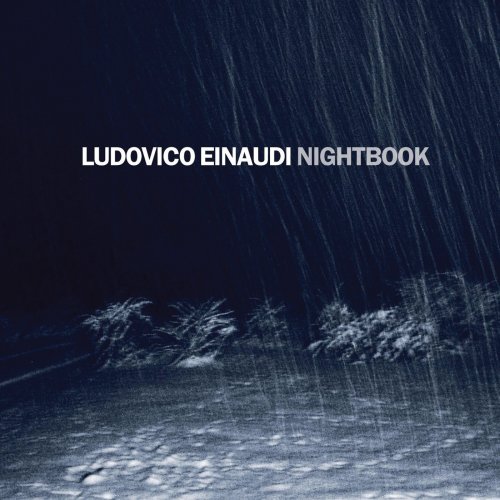
Artist: Ludovico Einaudi
Title: Nightbook
Year Of Release: 2009
Label: Ponderosa Music & Art
Genre: Neo-Classical
Quality: FLAC (tracks) / MP3 320 Kbps
Total Time: 01:09:47
Total Size: 297 / 172 Mb
WebSite: Album Preview
Tracklist: Title: Nightbook
Year Of Release: 2009
Label: Ponderosa Music & Art
Genre: Neo-Classical
Quality: FLAC (tracks) / MP3 320 Kbps
Total Time: 01:09:47
Total Size: 297 / 172 Mb
WebSite: Album Preview
01. In Principio (02:51)
02. Lady Labyrinth (05:30)
03. Nightbook (05:50)
04. Indaco (05:21)
05. The Snow Prelude N. 15 (04:29)
06. Eros (05:37)
07. The Crane Dance (03:04)
08. The Snow Prelude N. 2 (04:09)
09. The Tower (04:41)
10. Rêverie (04:40)
11. Bye Bye Mon Amour (07:37)
12. The Planets (07:07)
13. Solo (08:46)
Personnel:
Ludovico Einaudi - Piano, Electric Piano, Celestra, Cembalo, Tubular Bells, Acoustic Guitars
Marco Decimo - Cello
Antonio Leofreddi - Viola
Alberto Martini - Violin
Laura Riccardi - Violin
Robert Lippok - Live Electronics, Percussions, Bass Drum, Snare Drum
Mauro Durante - Frame Drums
Paolo Giudici - Live Electronics
Harald Kündgen - Marimba, Vibraphone
Italian pianist and composer Ludovico Einaudi describes his album Nightbook in this way: "A night-time landscape. A garden faintly visible under the dull glow of the night sky. A few stars dotting the darkness above, shadows of the trees all around. Light shining from a window behind me. What I can see is familiar, but it seems alien at the same time. It's like a dream -- anything may happen." Although such language may sound like it has little if anything to do with music, it communicates the mood of this album as well as can be done with words. Consisting of chamber works for various combinations of classical and modern instruments (violin, viola, cello, live electronics, vibraphone, frame drums, electric bass, acoustic guitar, etc.), Nightbook succeeds most fully when it embraces that mood of shadowy mystery: pieces like "The Snow Prelude N. 2" and the almost pointillistic "The Planets" use spacious arrangements and relatively minimal melodic foundations to create deceptively simple-sounding soundscapes of ravishing beauty. When Einaudi tries to rock out, the results are a bit shakier: "Lady Labyrinth" suffers from blocky rhythms and a simplistic, rather than simple, chord progression -- it ends up sounding like your uncle the piano professor trying to identify with the younger generation's music. The vast majority of these pieces are spectacularly lovely, though, even as they gently deceive the listener with surface simplicity.
![Skinny Hightower - Feels Like Destiny (2026) [Hi-Res]](https://www.dibpic.com/uploads/posts/2026-08/1787153225_1.jpg "Skinny Hightower - Feels Like Destiny (2026) [Hi-Res]")
![Teemu Kekkonen - Dance of the Introverts (2026) [Hi-Res]](https://www.dibpic.com/uploads/posts/2026-08/1787064644_folder.jpg "Teemu Kekkonen - Dance of the Introverts (2026) [Hi-Res]")
![Majken Christiansen - An Occasional Man (2026) [Hi-Res]](https://www.dibpic.com/uploads/posts/2026-08/1787112096_g2mzflza3rgx7_600.jpg "Majken Christiansen - An Occasional Man (2026) [Hi-Res]")



![John Goldsby - NYC 1993 — Tale of the Fingers (2026) [Hi-Res]](https://img.israbox.com/img/2026-08/20/6y3g820syvgo5fepas1z7l2p5.jpg "John Goldsby - NYC 1993 — Tale of the Fingers (2026) [Hi-Res]")