Staatskapelle Dresden - Schubert: Sinfonie No. 8 "Die Große" (2021) Hi-Res
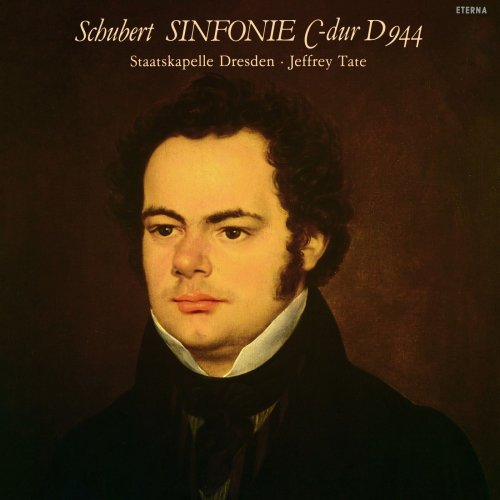
Artist: Staatskapelle Dresden, Jeffrey Tate
Title: Staatskapelle Dresden - Schubert: Sinfonie No. 8 "Die Große" (2021) Hi-Res
Year Of Release: 2021
Label: Eterna
Genre: Classical
Quality: FLAC (tracks) / FLAC 24 Bit (88,2 KHz / tracks)
Total Time: 63:39 min
Total Size: 273 / 996 MB
WebSite: Album Preview
Tracklist:Title: Staatskapelle Dresden - Schubert: Sinfonie No. 8 "Die Große" (2021) Hi-Res
Year Of Release: 2021
Label: Eterna
Genre: Classical
Quality: FLAC (tracks) / FLAC 24 Bit (88,2 KHz / tracks)
Total Time: 63:39 min
Total Size: 273 / 996 MB
WebSite: Album Preview
1. Sinfonie No. 7, D 944 "Die Große": I. Andante - Allegro ma non troppo (Remastered)
2. Sinfonie No. 7, D 944 "Die Große": II. Andante con moto (Remastered)
3. Sinfonie No. 7, D 944 "Die Große": III. Scherzo. Allegro vivace (Remastered)
4. Sinfonie No. 7, D 944 "Die Große": IV. Allegro vivace (Remastered)
Franz Schubert was wandering in search of it. In search of a new symphonic path that he wanted to take after Haydn and Mozart and different from Beethoven. After the six symphonies of his earlier creative period, in which Schubert was still caught up in the classical model, even though he often found an unmistakable tone of his own in them, he set out for new symphonic fields from 1820 onwards, but repeatedly paused and dared himself not to go on. Sketches for three symphonies, two in D major and one in E major, have survived, some only in the piano draft, some already orchestrated. But Schubert broke everything off before starting a symphony in B minor in 1822. If one applies the traditional symphonic standard of four movements, he did not finish this symphony either. But he executed two movements in which he achieved his goal of a new symphonic language in an impressive way. Due to the missing movements three - Schubert broke off the violent Scherzo draft after a few bars - and four the symphony was given the famous nickname "The Unfinished". The question as to why Schubert did not continue to compose the B minor symphony in the remaining six years of his life can also lead to the answer that he considered it to be complete in its two movements.
But he continued to strive to "pave the way for the great symphony", as he reported in a letter to his friend Leopold Kupelwieser in the spring of 1824 with regard to several composition plans. “The great symphony”, with this Schubert wanted on the one hand to correspond to a format that had been filled by Beethoven's symphonies with philosophical, social, global aspirations, and on the other hand to implement his own ideas of a musical form that was spacious in structure and expression. Schubert's thinking did not amount so much to the enlightenment appeal with which Beethoven addressed mankind symphonically, but rather, influenced by reading Schlegel's writings, he saw human existence and its connection in the power and secrets of nature established by a creator. So it is certainly no coincidence that the C major symphony D 944, with which Schubert started his next venture in this challenging genre, was largely composed on his trip to Austria from Steyr and Gmunden to Gastein, combined with the experience of impressive natural beauties of the Salzkammergut lakes and the mountains in Salzburg's Pongau. ...
Staatskapelle Dresden
Jeffrey Tate, conductor
Digitally remastered
But he continued to strive to "pave the way for the great symphony", as he reported in a letter to his friend Leopold Kupelwieser in the spring of 1824 with regard to several composition plans. “The great symphony”, with this Schubert wanted on the one hand to correspond to a format that had been filled by Beethoven's symphonies with philosophical, social, global aspirations, and on the other hand to implement his own ideas of a musical form that was spacious in structure and expression. Schubert's thinking did not amount so much to the enlightenment appeal with which Beethoven addressed mankind symphonically, but rather, influenced by reading Schlegel's writings, he saw human existence and its connection in the power and secrets of nature established by a creator. So it is certainly no coincidence that the C major symphony D 944, with which Schubert started his next venture in this challenging genre, was largely composed on his trip to Austria from Steyr and Gmunden to Gastein, combined with the experience of impressive natural beauties of the Salzkammergut lakes and the mountains in Salzburg's Pongau. ...
Staatskapelle Dresden
Jeffrey Tate, conductor
Digitally remastered
![Lisa Cat-Berro - Solaxis (2026) [Hi-Res]](https://img.israbox.com/img/2026-09/18/z0zw2evjfdbiqm7w42e8b7k4q.jpg "Lisa Cat-Berro - Solaxis (2026) [Hi-Res]")
![Tubby Hayes With Clark Terry - New York Sessions (1961) [1990 Columbia Jazz Masterpieces]](https://img.israbox.com/uploads/posts/2017-06/1496338026_folder.jpg "Tubby Hayes With Clark Terry - New York Sessions (1961) [1990 Columbia Jazz Masterpieces]")


![Chris McCarthy - Too Late to Quit (2026) [Hi-Res]](https://img.israbox.com/img/2026-09/17/e3obsd9l7fnhsg54klqrtpe5v.jpg "Chris McCarthy - Too Late to Quit (2026) [Hi-Res]")
![Bria Skonberg - Indigo (Deluxe) (2026) [Hi-Res]](https://www.dibpic.com/uploads/posts/2026-09/1789563008_1.jpg "Bria Skonberg - Indigo (Deluxe) (2026) [Hi-Res]")